Seasonal Affective Disorder Yoga: Light, Routine and Heat Facts

By Mr. Ian Terry, E-RYT 500, founder of YogaFX · Published
Seasonal affective disorder yoga is a supporting routine, not a treatment. The sources we checked put daylight, steady sleep times and regular movement first, and yoga can carry those habits through the dark months. It works alongside medical care, never instead of it, so speak to a doctor if your low mood stays.
This seasonal affective disorder yoga guide is for adults who study online through winter and want a plan that is honest about the evidence. Mr. Ian Terry, Founder and Lead Instructor at YogaFX and an E-RYT 500 teacher with 12,000+ teaching hours, asks us to keep every claim small and sourced. That is what follows.
Medical note: this article is general education, not a diagnosis or treatment plan. Please consult a healthcare professional about your mood, your sleep and any change to your care.
This article is part of our Hot Yoga for Men guides.
Seasonal Affective Disorder Yoga: What the Sources Say
Let us start with what we can and cannot say. Three trusted health sources describe the treatment of this condition, and none of them lists a yoga class as a treatment. They do recommend habits that a yoga practice can hold in place. That is the honest shape of seasonal affective disorder yoga.
The National Institute of Mental Health (NIMH) lists four main treatments: light therapy, psychotherapy, antidepressant medication and vitamin D. Light therapy comes first. The NHS guidance on seasonal affective disorder tells people to get as much natural daylight as they can, exercise regularly and keep the same bedtime and wake time.
Mayo Clinic says the same about exercise and sleep, and it adds that you may try relaxation techniques such as yoga. So the sources don’t ignore yoga. They place it in the coping toolkit, next to the habits that matter more.
| Source | What it says | What it means for your routine |
|---|---|---|
| NIMH | Light therapy is listed first among four treatments | Ask your provider about light before you add a class |
| NHS | Get natural daylight daily, exercise regularly, keep the same sleep and wake times | Practise at a fixed hour and walk outside in daylight |
| Mayo Clinic | Exercise regularly, keep reliable sleep times, and you may try yoga for relaxation | Use yoga as one relaxation habit, not as the plan itself |
| Mayo Clinic | It is not clear how effective mind-body techniques are for this condition | Keep expectations small and keep your doctor involved |
What Seasonal Affective Disorder Is, and What It Is Not
The NIMH describes seasonal affective disorder as a type of depression with a recurrent seasonal pattern, with symptoms lasting about 4 to 5 months of the year. The NHS says it usually happens in winter. So it is not simply "winter blues" or a lack of discipline. It’s a recognised condition, and it deserves proper care. That is also why we treat seasonal affective disorder yoga as an add-on.
That is why we keep the yoga claim modest. A mat cannot replace a clinician, and we will not pretend otherwise. If you suspect you have the condition, these steps come from the sources above:
- See a GP if you think you might have seasonal affective disorder, as the NHS advises.
- Talk to a health care provider or a mental health specialist about your concerns, as the NIMH advises.
- Speak to a GP before trying light therapy, as the NHS advises.
- Do not stop or change medication without talking to the person who prescribed it.
Light First: Why a Warm Room Is Not a Light Box
Light is the part of this story that yoga cannot copy. The NIMH describes a very bright light box of 10,000 lux, used every day for about 30 to 45 minutes, usually first thing in the morning. Mayo Clinic describes sitting near a light box within the first hour of waking.
The NHS adds that light boxes are not usually available on the NHS, because there is not enough evidence to tell whether they work.
Those details matter for a heated practice. Our class room in Bali runs at 40 degrees Celsius and 40% humidity for 90 minutes, so it is warm. But warm is not bright. A hot room does the job of a hot room, and it does not do the job of a light box. So when you plan seasonal affective disorder yoga, do not swap one for the other.
Symptoms last about 4 to 5 months of the year, says the NIMH.
Used for about 30 to 45 minutes, usually in the morning (NIMH).
Go to bed and wake up at the same time every day (NHS).
Light therapy within the first hour of waking (Mayo Clinic).
Routine: The Part Seasonal Affective Disorder Yoga Can Carry
When energy is low, deciding what to do each day is tiring in itself. A fixed practice time removes that decision. That’s the real contribution of seasonal affective disorder yoga: it gives the sleep, movement and daylight advice a place in your diary.
For example, if you study online in the evening after work, the dark months can mean a whole day indoors. So we suggest tying the practice to daylight instead of to the clock alone. Here is a simple day built from the sources above.
| Time block | Habit | Source behind it |
|---|---|---|
| Wake time | Same time every day, even at weekends | NHS, Mayo Clinic |
| Morning | Go outside in daylight; ask your doctor about a light box | NHS, NIMH, Mayo Clinic |
| Midday or late afternoon | Practice or a walk, so movement happens before dark | NHS, Mayo Clinic |
| Evening study | Lessons and short practice at a set hour | Routine, not a treatment |
| Bedtime | Same time every night | NHS, Mayo Clinic |
Notice that the plan has no dramatic step, and that’s deliberate. Seasonal affective disorder yoga works as a routine only when it stays easy. It is small habits, repeated. If you want a gentler start, read how to practise the sequence at home without a heated room. It shows the sequence in a living room, which suits a dark January evening better than a commute.
A short routine that stays small
- Fix the hour. Choose one time and keep it for four weeks.
- Start short. Twenty minutes is enough, because a habit you finish beats one you skip.
- Open the curtains. Practise near a window in daylight when you can.
- Note your mood. One line a day helps you and your doctor see a pattern.
Three mistakes to avoid
Most people who try seasonal affective disorder yoga at home make the same few errors. They are easy to fix once you spot them.
- Doing too much too soon. A 90 minute practice in week one often ends in a skipped week two.
- Practising only in the dark. If every session happens after sunset, you miss the daylight the sources recommend.
- Treating the mat as the whole plan. Sleep, light and professional care carry as much weight as any posture.
A Four-Week Seasonal Affective Disorder Yoga Start for Online Trainees
Here is how we would ease into seasonal affective disorder yoga if you study online and work full time. Keep it light. The aim is a routine you’ll still follow in February, not a perfect first week.
- Week 1. Fix your wake time and step outside in daylight each morning. Add a ten minute stretch if you like.
- Week 2. Add a twenty minute practice at one set hour, three days a week.
- Week 3. Move one session to daylight hours, near a window, and keep the other two where they are.
- Week 4. Review your one-line mood notes. Share them with your doctor if low mood is still part of your week.
This plan borrows its logic from the NHS advice on sleep and daylight. It is not a prescription, and you can change any step. What matters is that you repeat it, because repetition is what makes seasonal affective disorder yoga useful as a routine.
Questions to Bring to Your Doctor
A short list makes the appointment easier, especially when low mood makes it hard to find words. You might ask:
- Could my low mood follow a seasonal pattern, and how would we check?
- Is light therapy suitable for me, and when in the morning should I use it?
- Is a yoga routine safe alongside my current treatment?
- Should I avoid heated rooms because of my health or medication?
Bring your mood notes and your practice schedule. A doctor can then judge whether seasonal affective disorder yoga fits your plan, and which parts of the routine deserve more attention than others.
What the Research Says About Heated Yoga and Low Mood
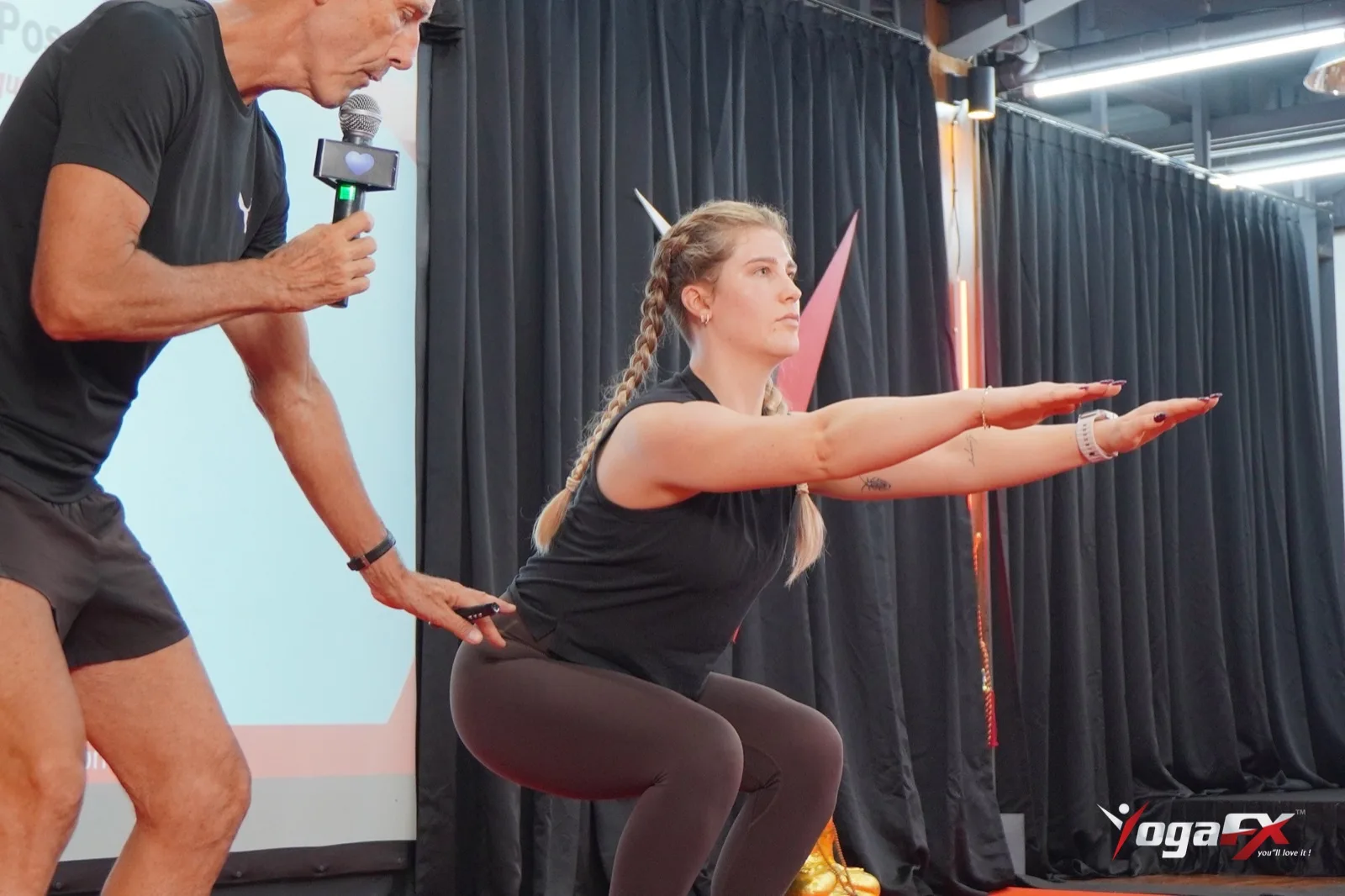
Now the evidence on yoga itself. A 2023 randomized trial from Massachusetts General Hospital (Nyer et al.), published in the Journal of Clinical Psychiatry, tested heated yoga over 8 weeks. About 59% of the yoga group had their depression symptoms fall by half or more, against about 6% of the waitlist group.
That is encouraging. But read it carefully. The trial studied depression in general, and we did not find that it tested a seasonal pattern. So it does not prove that seasonal affective disorder yoga works. It tells us that a heated yoga routine was worth studying for low mood. Our hot yoga depression study article walks through the trial and what online trainees can learn from it.
Mayo Clinic is blunter. It says it is not clear how effective mind-body techniques are for this condition. We agree with that caution, and so should any teacher you trust. As a result, we describe yoga as a habit and a relaxation tool, and we leave treatment to clinicians.
There is one more practical point about seasonal affective disorder yoga for people who study alone. Online study can be quiet, and a quiet winter can feel long. So build in contact on purpose: book a call with a friend after practice, or share your schedule with someone who will ask how it went. A routine feels easier to keep when someone expects to hear from you.
Heat Facts for Dark Months
Heat is the part of our method that deserves a plain explanation in winter. A warm room can feel welcome when the weather is cold. Still, a few plain facts keep the idea in proportion.
- Warm is not bright. A 40 degree room does not give you the 10,000 lux of a light box.
- Heat is optional. You can build the habit at home without a heated room.
- Check with your doctor first. This matters most if you take medication for low mood or have a medical condition.
- Stop if you feel unwell. Sit down, drink water and leave the practice for another day.
If you are curious about how heat compares with other warm options, we explain how a home sauna compares with a hot class in a separate guide.
What Our Students Say About a Steady Routine
We do not claim that anyone in these reviews treated a medical condition. They describe what a regular practice felt like. That is useful, because a routine only works if you enjoy returning to it.
"Very good for beginners, after I do it regularly my body always feels fresh."
Sony, Google review, 2024
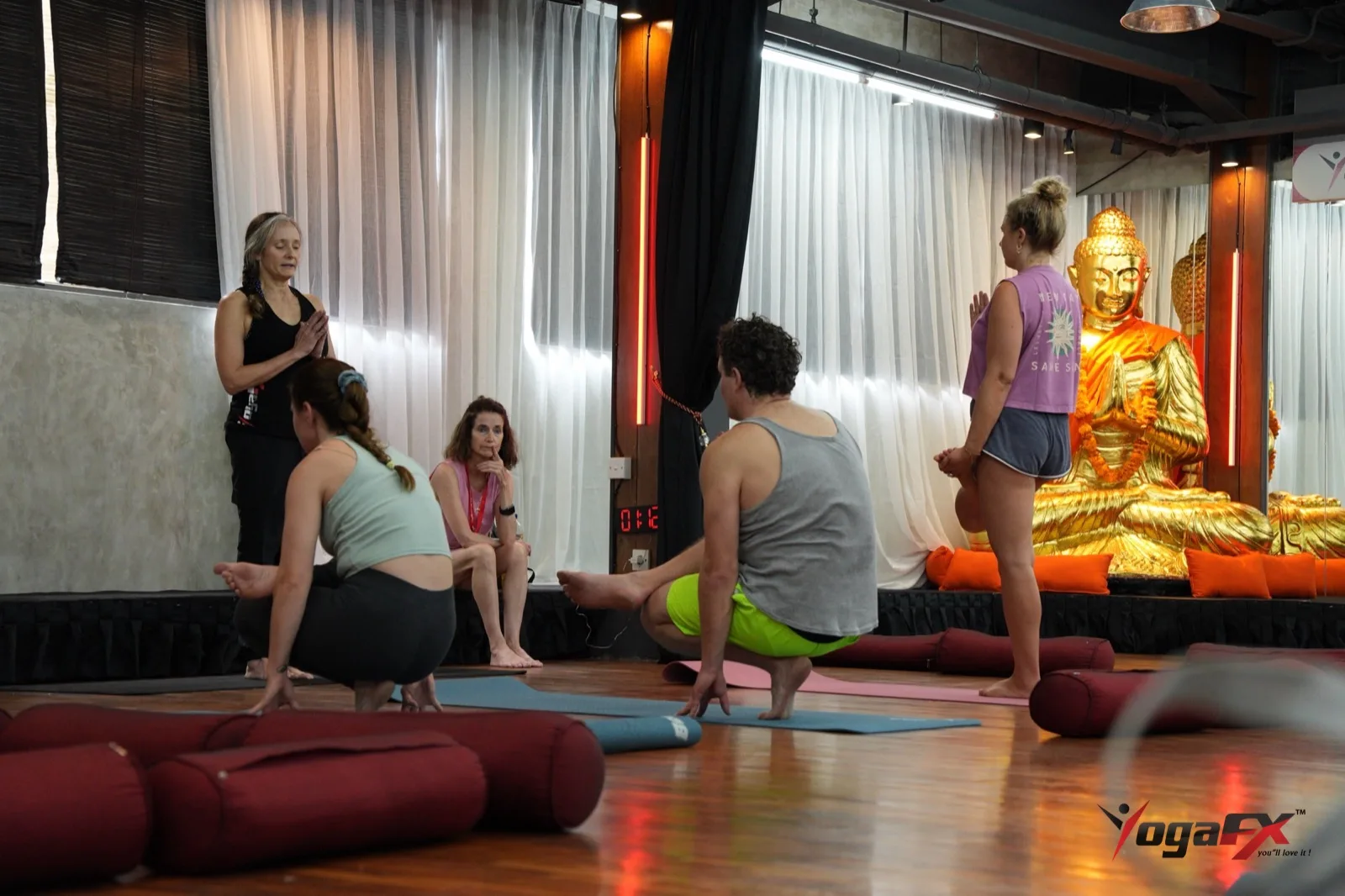
A trainee in our YouTube review from 2024 says "Authentic stuff, and this is what I need, genuinely." She also says the group felt connected. Another trainee in a 2023 video review calls the place beautiful. You can watch the first one below, filmed on the YogaFX channel.
Study Online With YogaFX, Practise in Bali When You Can
YogaFX was founded in 2017 and has trained 1,500+ graduates from 80+ countries. The online course costs USD 329, or 4 x USD 82, so you can start from your own living room and keep the same weekly rhythm through winter. When you are ready for the heat, the Seminyak studio in Bali is where the practical work happens.
If you want to know how the online part works, read about online hot yoga teacher training. If you are already in Bali, ask about the free 1-Day Guest Pass, where your first class is free.
Whatever you choose, please keep your doctor in the loop. A routine helps most when it sits inside a plan your health provider knows about.
FAQ
Does yoga help with seasonal affective disorder?
No yoga trial we could confirm shows that it treats the condition. Mayo Clinic says it is not clear how effective mind-body techniques are. Yoga can still support the routine that health sources recommend: regular movement, steady sleep times and daily daylight, alongside medical care.
Does exercise help seasonal affective disorder?
The NHS and Mayo Clinic both advise regular exercise for people with the condition. Exercise is a self-care step that sits beside treatment, not in place of it. A yoga class counts as movement, and a daylight walk adds natural light too.
Why do I get depressed in the winter?
The NIMH describes seasonal affective disorder as a type of depression with a seasonal pattern, with symptoms lasting about 4 to 5 months of the year. The NHS says it usually happens in winter. If low mood returns each year, see a GP.
What helps seasonal affective disorder?
The NIMH lists four main treatments: light therapy, psychotherapy, antidepressant medication and vitamin D. The NHS also advises daily daylight, exercise and regular sleep times. Which option suits you is a decision for you and your doctor, so ask before you start.
Which type of yoga is good for depression?
Researchers at Massachusetts General Hospital (Nyer et al., 2023) studied heated yoga over 8 weeks in people with depression, with encouraging results. That trial did not test seasonal depression, so choose a style you enjoy returning to and keep your doctor informed.
Still have questions? Message Mr. Ian and the YogaFX team on WhatsApp and we will answer them personally.