Hot Yoga, Mental Health and Men: Finding Calm During a Career Change

Hot yoga mental health men can use during a career change comes down to routine, not heat. Research shows heated yoga can lift mood and well-being, and a fixed class schedule gives a stressed week a steady anchor. This guide shows how to build that anchor, what the studies found, and where yoga stops helping.
Hot Yoga Mental Health Men Can Use While Changing Careers
If you are changing careers, your days have probably lost their shape. Maybe you left a job, started a course at night, or are working out what to do next. The old routine is gone and the new one has not formed yet. That gap is where stress grows, and it is also where a simple weekly practice can help.
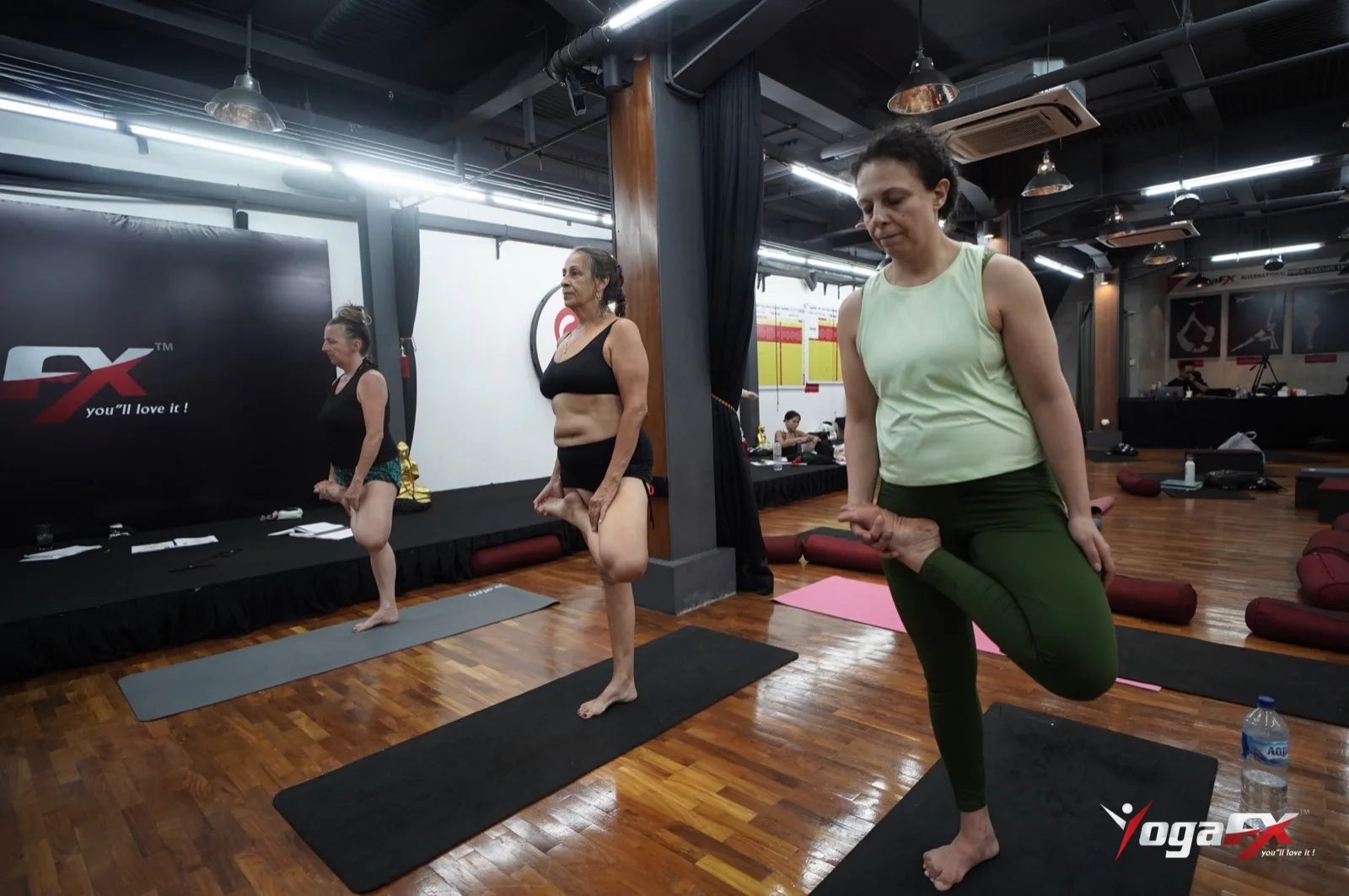
A hot class is a useful anchor for a few plain reasons, which is why hot yoga mental health men guides keep returning to routine. It happens at a fixed time, it lasts a fixed 90 minutes, and it follows the same order every time. You don't have to decide anything once you're inside the room. For a man whose head is full of decisions, that matters.
So the honest answer to the hot yoga mental health men question is this: the practice is a reliable routine with some promising research behind it. It is not a treatment, and it is not magic. Here is what a good anchor gives you:
- Structure. One or two fixed slots a week that do not move, whatever else changes.
- A small win. Finishing a hard 90 minutes proves you can still do difficult things.
- A break from the screen. Nobody checks job boards or email in a heated room.
- Company without conversation. You share a room with others, but you are not asked to talk.
The rest of this guide stays practical. We will look at why a career change is so hard on many men, what the research really measured, and how to turn a class into a weekly habit you can keep.
Why a Career Change Hits Men So Hard
A career change is a real stressor, even when you chose it. You lose your title, your colleagues and your daily rhythm at the same time. You also go from expert to beginner overnight, which is humbling at any age. Many men carry an extra weight on top of that.
A 2016 systematic review by Zac Seidler and colleagues, published in Clinical Psychology Review, examined how masculine norms shape men's help-seeking for depression. Its central theme was that ideals such as self-reliance and emotional control can make it harder for men to ask for support. So the stress builds quietly, and a man may only notice when sleep or mood slips.
Why Talking Is Not Always the First Step
That is why so many hot yoga mental health men searches come from guys who would never book a counsellor. An activity with no talking required can be an easier first step than a counselling room.
It isn't a replacement for help. It is a way of doing something while you work out what comes next. The table below maps common career-change pressures to a practical anchor that any hot yoga mental health men routine can use.
| Career-change pressure | How it often feels | Practical anchor | Time cost |
|---|---|---|---|
| Lost daily structure | Days blur together and mornings feel aimless | Two fixed class slots a week, booked in advance | About 3 hours a week |
| Being a beginner again | Frustration and self-doubt in new tasks | A scripted class where progress is easy to see | 90 minutes per class |
| Money and time pressure | A busy head, poor sleep, short temper | A 20-minute home session on non-class days | 20 minutes, no heat needed |
| Isolation from old colleagues | Little contact, and no one to talk to | Practising beside others in a shared room | Part of your class time |
Notice that none of the anchors asks you to feel better on command. That's deliberate. They simply give each pressure a small, repeatable response. If you are in your forties or fifties and weighing a bigger move, our guide on yoga for men over 40 who are changing careers covers how to build up the practice without hurting your body.
What the Research Says About Hot Yoga and Mood
The hot yoga mental health men evidence rests on two randomised trials. Both compared heated yoga with a wait-list group. Both found benefits. Here is what matters most for a man in a stressful year.
The Massachusetts General Hospital Depression Trial
Researchers randomised 80 adults with moderate to severe depression. People in the yoga group were asked to attend two 90-minute classes a week for 8 weeks in a room heated to 105°F. According to the Harvard Gazette summary, 59.3 percent of the yoga group had a 50 percent or greater drop in symptoms, compared with 6.3 percent of the wait-list group.
Two details help a busy man. First, people attended an average of 10.3 classes, not the full 16. Second, symptoms still improved in people who completed only half of the prescribed dose, which suggests that one class a week could be worthwhile. MGB Psychiatry News also reports no serious adverse events. Around 81.5 percent of the people analysed were women, so the evidence on men is still thin.
The Cambridge Well-Being Trial
The second study asked whether hot yoga helps people who are not depressed. In a 2022 trial in Psychosocial Intervention, Bryant Hui and colleagues gave 290 healthy yoga beginners six weeks of free 90-minute classes. Participants attended about 17 classes on average. Compared with the wait-list group, they improved on life satisfaction, general health, mindfulness, peace of mind and eudaimonic well-being. Flourishing did not change.
The authors also found the benefits were more notable in people who started with lower well-being. That is worth remembering if you feel flat during a career change. About 79 percent of the sample was female, and the authors call for studies with an active control group.
Put together, these studies support a modest claim. Heated yoga done regularly is linked with better mood and well-being in the people tested. They do not show it works better than a gym class or an unheated session, because neither trial used an active comparison. In short, hot yoga mental health men results are promising but early. That is the honest limit of the evidence.
A Weekly Anchor Plan for Hot Yoga Mental Health Men Can Keep
The best hot yoga mental health men routine is one you will still follow in week six, not a perfect one. Copy the dose from the trials where you can, and scale it down when life gets busy. A plan built for a full work week is in hot yoga for men who work full time. Check with your doctor before you start, especially if you have heart or blood pressure issues.
- Pick two fixed slots. Choose class times you can protect, such as Tuesday and Saturday mornings. Treat them like job interviews you cannot miss.
- Add one short home session. Twenty minutes of unheated standing postures and breathing on a third day keeps the habit alive.
- Track one number. Rate your mood from 1 to 10 after each session. In Cambridge, researchers tracked mood four times a day for the same reason.
- Protect the first month. Expect the first two or three classes to feel rough. That is normal and it eases.
- Keep your other support. Do not drop therapy, medication or conversations with friends because you started a class.
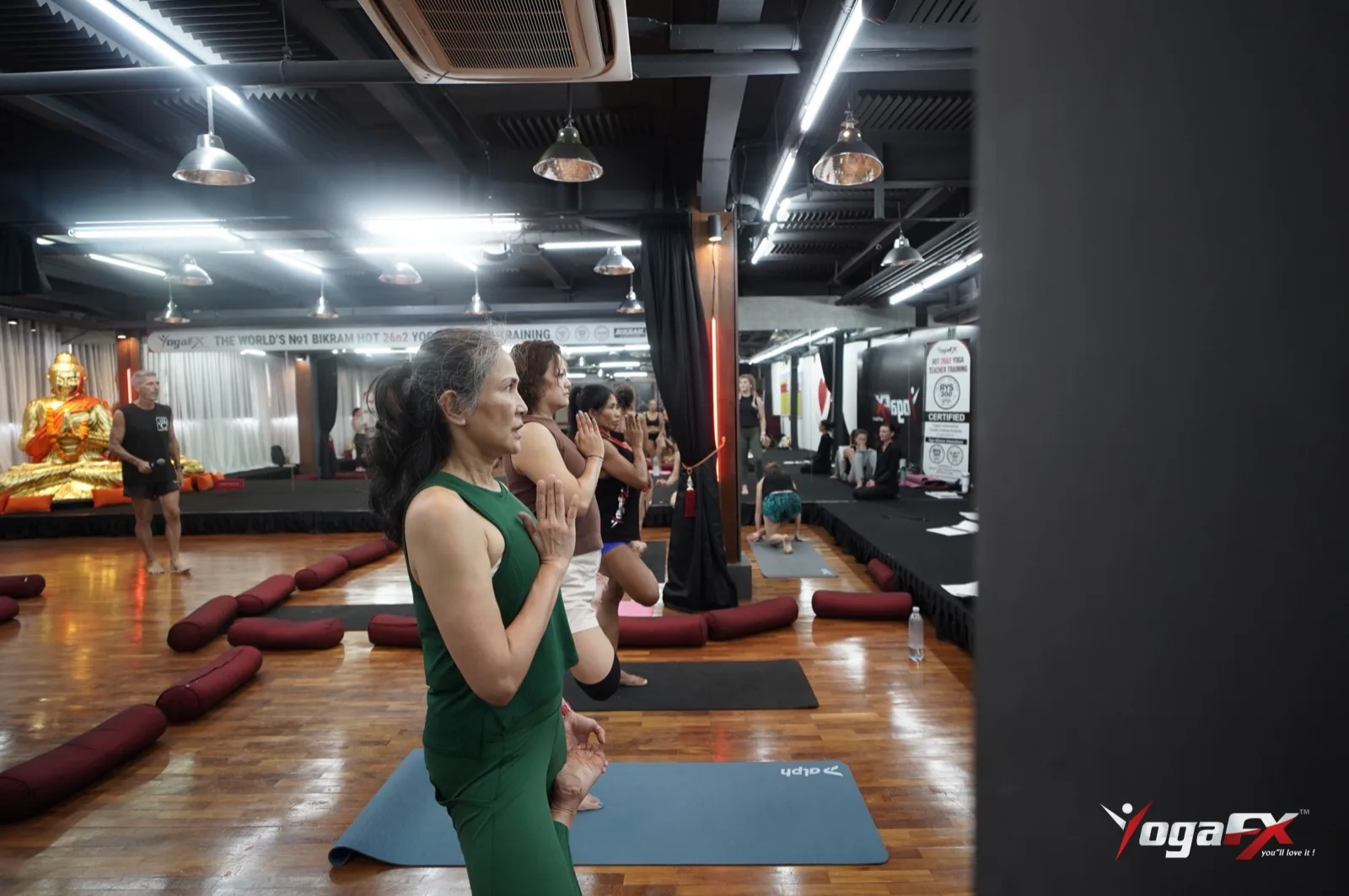
If you are not ready for a heated room yet, start at home. Our guide to preparing for hot yoga as a man explains how to build heat tolerance gently, and why online study suits men who prefer privacy covers learning the sequence before you walk into a class.
Be patient with the heat itself. Our post on feeling tired after hot yoga explains why the first weeks can drain you, and what to eat and drink so that tiredness does not wreck your next workday.
What Trainees Say About Calm, Effort and Change
Research gives averages. Trainees tell you how it feels, and their comments add colour to the hot yoga mental health men question. These comments come from students who changed direction to learn this method, and they are quoted in their own words.
"I felt my body and mind pushed to new limits, but also experienced a deep sense of calm and clarity."
Michelle, Google review, 2025
"Actually changed me, it changed my brain, changed my mind, changed my body, changed my future."
Erick, YouTube review, 2024
"I thought about pulling out at times... it was the most challenging course I've ever done in my life but I'm so thankful that I've achieved it."
Adam, YouTube review, 2024
Adam's words will sound familiar to anyone mid-change. The urge to quit usually shows up right before the turning point. His full graduation comment is below.
Practise Safely and Know When to Get More Help
Heat is a real physical stressor, and it's the reason hot yoga mental health men advice always starts with pacing. Hot yoga is safe for many healthy adults, but it needs respect. Anyone using hot yoga for mental health should treat the heat as part of the dose. Sit down when you need to, drink steadily and stop if you feel dizzy or confused. Pushing through proves nothing.
Watch for signs that a class is not enough on its own:
- Low mood that lasts more than two weeks.
- Losing interest in things you used to enjoy.
- Drinking more to cope, or sleeping very badly for weeks.
- Any thoughts of harming yourself.
If any of these sound like you, please consult a healthcare professional. If you are thinking about suicide, call or text 988 in the US, or your local emergency number, today. This article is general information, not medical advice. The rule for hot yoga mental health men is simple: add it to professional care, never swap it in.
Common Worries About Hot Yoga Mental Health Men Raise
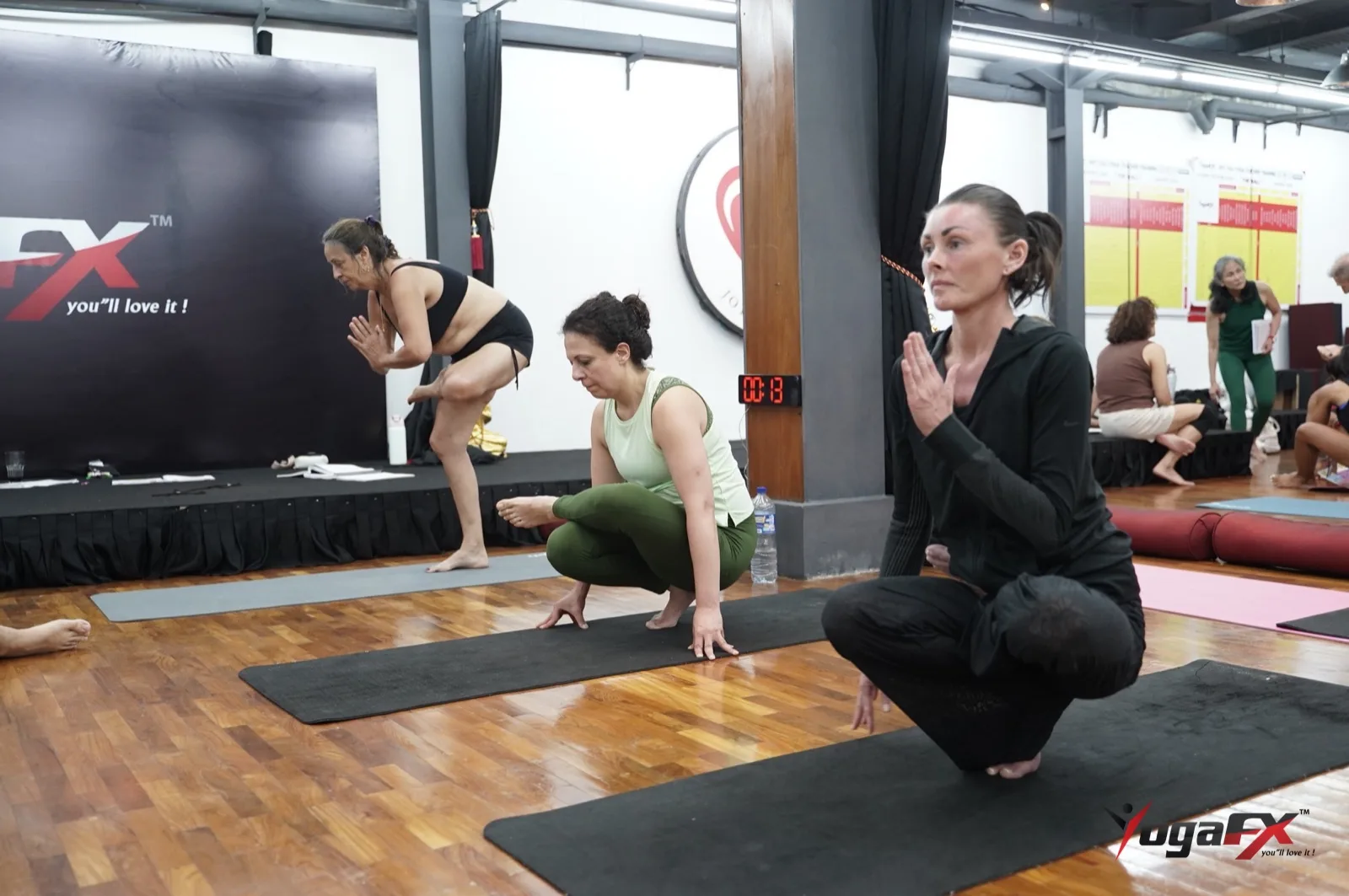
When men ask about hot yoga mental health benefits, the same worries come up again and again. Here are the most common ones, each with a plain answer.
- "I am not flexible enough." Flexibility is an outcome, not an entry test. The Cambridge participants were yoga beginners, and most improved on their well-being scores.
- "I will look foolish." Everyone in the room faces forward and watches their own balance. Nobody has spare attention to judge yours.
- "I cannot cope with the heat." Heat tolerance grows with practice. Start by staying for the first half, sit when you need to, and build up over several weeks.
- "I do not talk about feelings." You do not have to. The teacher speaks a scripted dialogue and no group sharing is expected.
- "I have no income right now." Begin with the free option: a 20-minute unheated home session costs nothing and still builds the habit.
These worries matter because hot yoga mental health men benefits only appear if you actually attend. Every worry has a small first step. That is the point of an anchor. You don't need to solve the whole career question before you start, because the practice only asks you to show up.
Why a Class Feels Like Training, Not Therapy
Many men who search for men's mental health yoga want something that feels like training, not therapy. A hot class is closer to a sport session: you turn up, work hard and leave. That framing isn't a trick. It simply matches how many men prefer to look after themselves, as long as they still reach out for proper support when they need it. If the training side appeals, our look at hot yoga as a workout for busy men shows what a class demands.
You may also see this topic written as bikram yoga mental health. The Massachusetts General Hospital trial used Bikram yoga in a 105°F room, and today the same method is taught as Original Hot 26&2. The sequence, the dialogue and the timing are what the research tested, so they are what we keep fixed.
Where Online Teacher Training Fits a Career Change
Some men who try hot yoga for mental health end up wondering about teaching. That is a real career path, and it can be built around a current job. Teaching also keeps a hot yoga mental health men routine going, because you stay close to the room.
Mr. Ian Terry, E-RYT 500, leads the training. He has more than 12,000 teaching hours and trained for five years, from 2014 to 2019, with the founder of the method. Since 2017, YogaFX has trained more than 1,500 graduates from 80+ countries.
The online route lets you study the 26 postures, the dialogue and the science at home, at your own pace.
When you are ready for the heat, the next step is the 6-day Bikram Hot 26&2 Yoga Teacher Training MasterClass in Bali. The next batch checks in on Sunday 24 January 2027 and checks out on Friday 29 January, at Soham Wellness Center in Seminyak. The Early Bird price is US$1,899, normally US$1,999, with payment plans from US$250 a month.
Not sure where to start? Read our overview of hot yoga teacher training when there is no studio nearby to compare your options.
For a research-first take on the same question, see our sister site's guide to what the studies show for men.
FAQ
What type of yoga is best for mental health?
The best type is the one you will actually keep doing. Gentle styles suit a first month, and hot classes add structure and effort. Trials of heated yoga found gains in mood and well-being, but no style has been proven best. Pick a routine you can repeat weekly.
Why does yoga help mental health?
Researchers suspect several reasons working together: steady breathing, a break from screens, regular exercise and the social lift of a shared room. In a Cambridge trial, mood rose on days people attended class. The exact mechanism is still being studied, so treat yoga as one helpful habit, not a proven fix.
Who is hot yoga good for?
Hot yoga suits healthy adults who like structure and can tolerate heat. Beginners improved in the Cambridge trial, and people with lower starting well-being gained the most. It is less suitable if you have heart problems, high blood pressure, or heat-sensitive medication. Check with a doctor first.
When is hot yoga too hot?
Hot yoga is too hot when you feel dizzy, nauseous, confused or unusually breathless. Those are signs to stop, sit down and cool off, not to push through. The Massachusetts General Hospital trial used a 105°F room, about 40 degrees Celsius, so a room far hotter than that is worth avoiding.
Can yoga replace therapy for mental illness?
No. Yoga can sit beside professional care, but it does not replace it. In the Massachusetts General Hospital trial, some people were already on stable medication and yoga was added to it. If low mood lasts more than two weeks, speak with a doctor or therapist.
Still have questions? Message Mr. Ian and the YogaFX team on WhatsApp and we will answer them personally.