Hot Yoga Depression Study: What Online Trainees Learn From the Trial
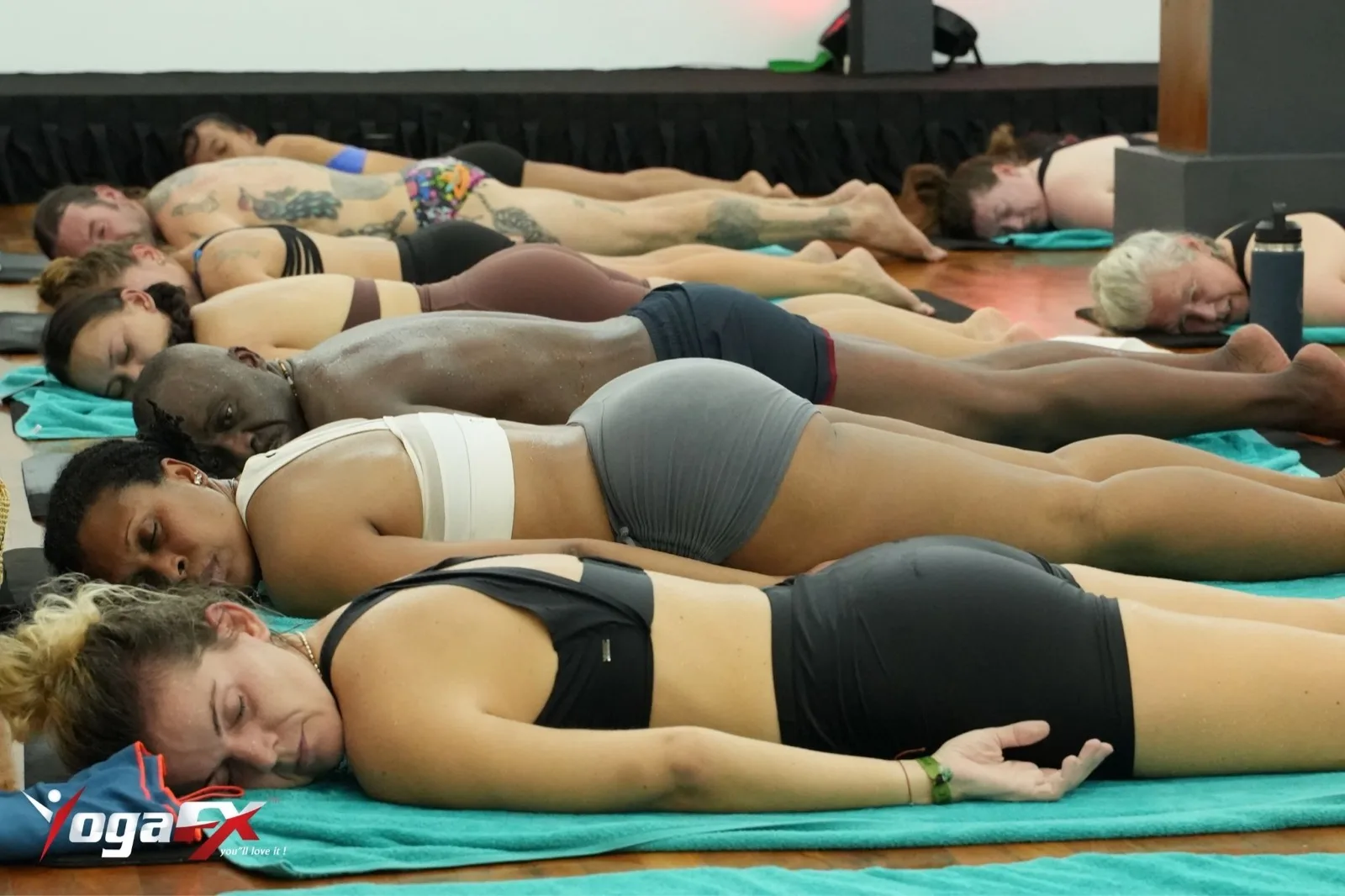
A hot yoga depression study run at Massachusetts General Hospital in 2023 found that 59% of people in the heated yoga group had their depression symptoms fall by half or more after eight weeks. On the waitlist, the figure was 6.3%. This article explains what the trial measured, what it could not prove, and what it means for trainees learning online.
What the Hot Yoga Depression Study Actually Tested
The trial was a randomized controlled trial led by Maren Nyer and David Mischoulon at Massachusetts General Hospital (MGH). Many readers know it as the Harvard hot yoga study, since MGH is a Harvard teaching hospital.
The Harvard Gazette reported the results in October 2023. Eighty adults were randomized, but the analysis included 65 of them: 33 in the yoga group and 32 on the waitlist. People on the waitlist did not start a new class during the eight weeks.
The yoga group practised Bikram yoga in a room heated to 105°F, about 40.6°C, according to the Gazette's account of the trial. That detail matters for anyone comparing this study with a gentle class at room temperature. The heat is part of the intervention, so the result belongs to heated practice, not to yoga in general.
Two other details matter for anyone who teaches or trains. The trial measured depression on a clinical rating scale, not general mood. It also ran for eight weeks, not a year. Both limits shape what the hot yoga depression study can tell us, and neither one makes the result meaningless.
The Numbers Behind the 59% Figure
The 59% is a share of people, not an average score. It counts how many people in each group saw their symptoms fall by 50% or more. The table sets the two groups side by side, using the figures the Harvard Gazette reported from this heated yoga depression study.
| Group | People analyzed | Share with a 50% or greater drop in symptoms | What the group did |
|---|---|---|---|
| Yoga group | 33 | 59% | Bikram yoga in a 105°F room, for eight weeks |
| Waitlist group | 32 | 6.3% | No new class during the eight weeks |
Read the gap between those two rows with care. The difference is large, but the groups are small. With 33 and 32 people, a handful of individuals changing their result would move the percentages a lot. That's why the hot yoga depression study is best read as a strong reason to test further, not as proof that every reader will feel better.
Think of the hot yoga depression study as one piece of a larger picture. A single trial can be well designed and still be one of only a few studies on the question. The honest position is to hold the result with interest and wait for replication, ideally in larger groups followed for longer.
The trial at a glance
What 59% Does and Does Not Mean
It's tempting to read 59% as the share of people who got better. That's not what the number says. It says 59% of the yoga group had a drop of half or more in their symptom score. Someone can fall by half and still feel unwell. Someone else can fall by a smaller amount and still notice real changes in daily life. A rating scale does not capture that.
When a headline reads like a guarantee, go back to the design and ask what was measured, for how long, and against what comparison. Nothing in the reporting of the MGH hot yoga trial shows how long the change lasted after the eight weeks.
A short trial can show that a change happened. It cannot show whether the change held for months, which is what most people with depression want to know.
What This Hot Yoga Depression Study Does Not Tell You
A trial answers a narrow question, and this one is no exception. The reporting describes a yoga group and a waitlist. It does not describe a medication arm, so the hot yoga depression study cannot tell you how heated yoga compares with antidepressants or talking therapy. Anyone choosing between those options needs that comparison, and it has to come from a different kind of study.
It also does not tell you who will respond best, because a sample of 80 adults cannot show how age, fitness, previous experience with yoga or the severity of symptoms change the result. Those questions are still open. A teacher who claims to know the answer is going beyond the evidence.
The trial also does not measure the things many trainees care about most, such as sleep, energy at work or confidence in a class. Those may matter a great deal to a person's day. They were simply outside what this hot yoga depression study was designed to show.
What Online Trainees Can Take From a Trial Like This
If you are training to teach, the most useful lesson is about study design rather than depression. The researchers used a comparison group, a fixed length and a defined measure. For example, those three choices make the result easier to interpret, and they give you a checklist for the next health claim you read about yoga.
- A comparison group. Did the study compare yoga with a waitlist, usual care or doing nothing?
- A fixed length. Eight weeks is short, so results over months or years may look different.
- A defined outcome. A 50% drop on a rating scale can be measured. Feeling better cannot, without a definition.
The last point matters most for teachers, because running a class is not the same as treating a condition. If a student tells you they feel low, the kind response is to listen, keep the room safe, and suggest they speak with a doctor or therapist. Don't promise that a sequence will fix it.
Mr. Ian Terry, E-RYT 500, has taught more than 12,000 hours and holds the Master Trainer title from the Republic of Indonesia Yogasana Sports Federation. His graduates number more than 1,500 from over 80 countries.
He frames the question the same way at YogaFX: a class can support wellbeing, but it does not replace medical care. That boundary is worth keeping in mind when a student asks whether hot yoga will help their mood.
What the Wider Research Says About Yoga and Depression
One trial is one data point. The National Center for Complementary and Integrative Health (NCCIH), part of the US National Institutes of Health, takes a more cautious line than most headlines. Its consumer page says that research suggests yoga may help people manage anxiety symptoms or depression. It also says yoga can be a helpful addition to treatment for depression. NCCIH: Yoga, effectiveness and safety
The NCCIH clinical digest is more modest still. It says there is some evidence that yoga may be helpful in reducing depressive symptoms. NCCIH digest: depression and complementary health approaches Notice the words may and some evidence. They are not weak words. They describe what a body of studies can honestly support.
Read together, the hot yoga depression study and the NCCIH pages give a fair answer. Yoga can be a sensible part of a wellbeing plan for many people. It is not a replacement for medication, therapy or medical advice, especially when depression is severe. Three checks help before you start:
- Is the depression diagnosed? If you are unsure what you are dealing with, see a doctor first.
- Is heat safe for you? Heart and blood pressure conditions need medical advice before any heated class.
- Is yoga adding to care or replacing it? Yoga works best alongside the care you already have.
What Students Say About the Training
Reviews do not measure depression, so we do not use them as evidence for one. They describe the training itself. Two reviews from YogaFX students show the tone of that experience, and both are quoted word for word.
Mr. Ian is both tough on us when necessary, and loving when called for.
Liz, Google review, 2025
Great inspiration, a great way to learn!!
Jeanett, Google review, 2019
Liz's review describes a balance between rigor and care. That is the same balance the hot yoga depression study asks readers to keep in mind: a strong structure, with a real person on the other side of it. The second review is shorter, but it says the same thing in fewer words.
If you read a student review that mentions mood, treat it as an experience report. It can tell you that a class felt supportive or that a teacher was patient. It cannot tell you that a condition improved, so it should never be used as a medical claim about depression.
What a Regular Class Can Offer Beyond a Score
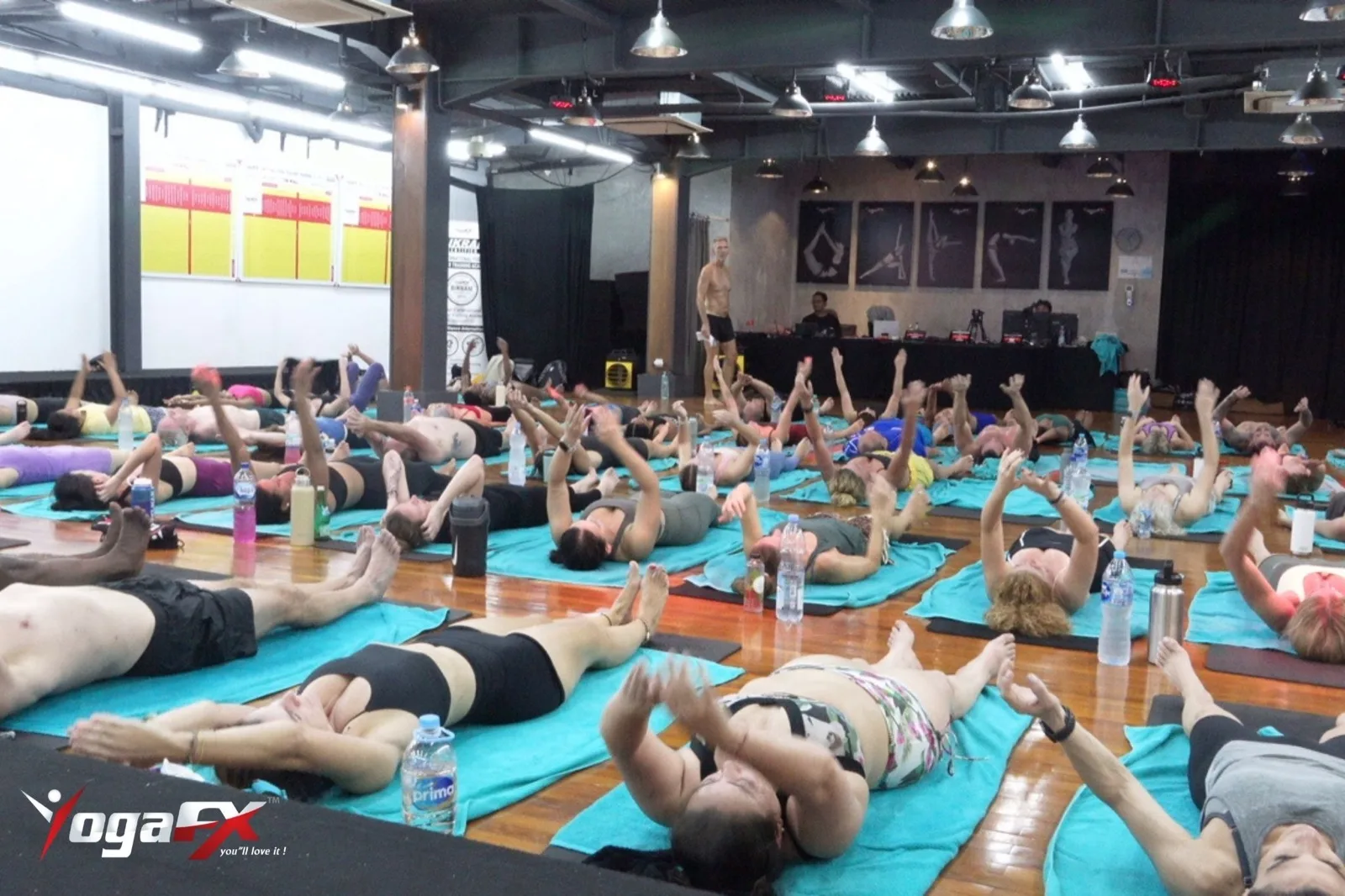
The yoga group in the hot yoga depression study did something most people find hard during a low mood: they showed up on a schedule. Structure, a set time and a room full of other people are not medical treatments, but they are real features of a class. Whatever a rating scale shows, those features are worth noticing in your own practice.
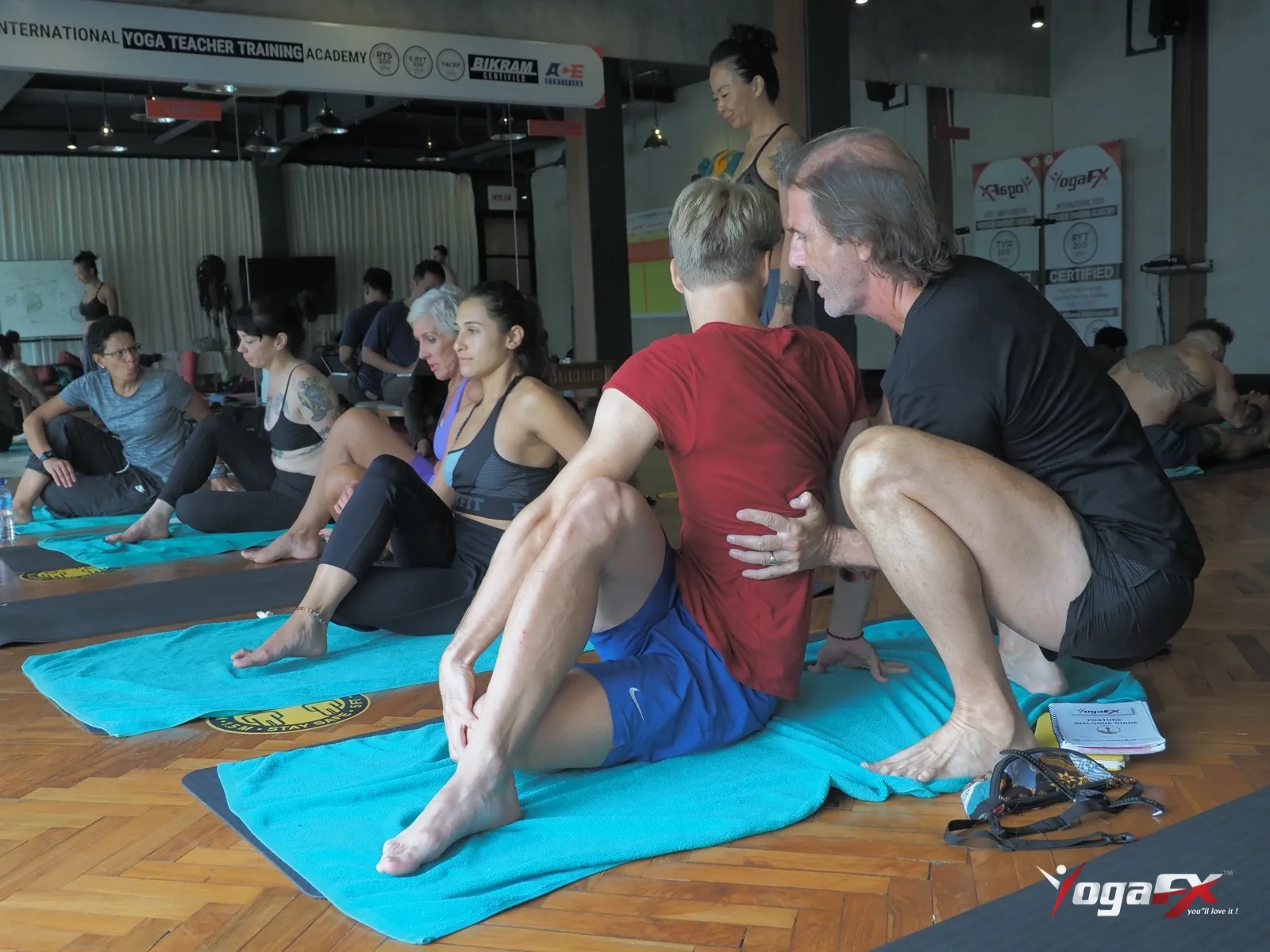
For a teacher, that structure is also a responsibility. A regular class is a place where a student may mention how they feel. Staying calm, listening without diagnosing, and knowing when to point someone toward professional help are skills that matter as much as sequencing.
The breathing and the longer holds also give some students a clear point of focus for an hour. Several describe that focus as a break from a busy mind. That is an experience report, not a clinical outcome. It belongs next to the trial, not in place of it.
Training Online Before You Teach in Bali
The Bikram Hot 26&2 Yoga Teacher Training MasterClass runs as a six-day hybrid. Trainees complete the pre-course online, then join an intensive in Bali. The next intensive begins with check-in on Sunday, 24 January 2027 and check-out on Friday, 29 January 2027, at the Soham Wellness Center in Seminyak. Check the current dates before you book, because schedules change between batches.
Certification covers the Yoga Alliance RYT 200-Hour and the Bikram Hot 26&2 200-Hour International Yoga Certification. If the RYT 200 designation is new to you, read What Does RYT 200 Mean? Earning It Online Around a Full-Time Job first.
Original Hot 26&2 Yoga is the method taught in this training, and the online pre-course lets you build the sequence at home before you travel. Students who want to see how that works day to day can read Original Hot Yoga at Home: Can You Practise the Sequence Without a Heated Room?

Home Practice Around a Busy Life
If you are reading this because you practise at home, the trial's eight-week span is a useful frame. Many students start without a heated room, build the routine first, and add heat later.
Readers who came here for the hot yoga depression study may find that routine advice more useful than the numbers. How Long Does Hot Yoga Take to See Results With a Busy Schedule? looks at realistic timelines for a full-time job.
Men who weigh training against work and family may find Hot Yoga, Mental Health and Men: Finding Calm During a Career Change useful. It covers the same wellbeing question from a practical angle, without promising more than the evidence can support.
How to Talk About a Study Like This With a Student
Teachers are often asked about research in class, usually after a student has read a headline. A simple, honest reply helps more than a confident one. You might say that a 2023 trial found a large effect in a small group. You might add that the research is still early, and that the student should check with their own doctor before changing anything.
Here is one way to put it. The hot yoga depression study is encouraging, the sample was small, and the eight-week timeline was short. That is enough to say hot yoga may help some people, and not enough to say it will help you. Students tend to trust a teacher who draws that line clearly.
Three things are worth avoiding in that conversation:
- Promising a result. Quoting 59% as a recovery rate gets the number wrong.
- Suggesting a student stop treatment. A class is never a reason to stop medication or therapy.
- Calling heat a treatment. Heat is a setting for practice, and the study describes it as one part of the intervention.
Picture a trainee who works full time and practises for twenty minutes at home before the working day starts. After eight weeks of that routine, the most useful sign is not a rating scale score. It is whether they still look forward to practice, and whether their sleep and mood feel steadier. Those are the outcomes a teacher can actually watch for.
FAQ
Does hot yoga help with depression?
A 2023 Massachusetts General Hospital trial found that 59% of people in a heated yoga group had their depression symptoms fall by 50% or more after eight weeks, against 6.3% on a waitlist. It suggests hot yoga may help, but it does not prove it will. Talk with a healthcare professional before changing any treatment.
Can yoga help with depression?
The National Center for Complementary and Integrative Health says research suggests yoga may help people manage depression symptoms, and that it can be a helpful addition to treatment. Yoga is not a replacement for medication or therapy. If your mood is severe or you feel unsafe, contact a doctor or your local emergency number straight away.
How hot is a hot yoga studio?
The trial's yoga group practised in a room heated to 105°F, about 40.6°C. At YogaFX in Bali, classes run at about 40°C with around 40% humidity, and the warmth is natural tropical heat rather than electric heaters. Heat is only one part of a class. Start slowly, drink water, and leave the room if you feel dizzy, faint or unwell.
Is hot yoga high intensity?
It can be. A 90-minute class in heat asks a lot of your heart, muscles and breathing, so build up gradually. Home practice is a good way to learn the sequence before you join a full class. Bring water, rest in savasana when you need to, and speak with a doctor first if you have heart or blood pressure conditions.
Still have questions? Message Mr. Ian and the YogaFX team on WhatsApp and we will answer them personally.