

Yoga for athletes recovery works best the day after hard training as a gentle, unheated home session of 10 to 20 minutes. Keep your effort low enough to breathe through your nose, choose floor postures and slow breathing, and save hot classes for days when your body has already bounced back.
This guide is written for one kind of man. You lift, run, ride or play on a club team, and you hold down a full-time job as well. The morning after a big session, your legs feel like concrete and your lower back complains when you get out of the car. You don’t want another workout. Instead, you want something that helps you feel human again before the next one.
Yoga for Athletes Recovery: The Short Answer for the Day After
The short answer is that yoga for athletes recovery should feel easy. If a session leaves you sweating hard or out of breath, it was training, not recovery. That’s the single most common mistake we see in busy men who start practising at home.
So match the session to how hard yesterday was. Here’s the simple version:
- After an easy run or light gym day: nothing special is needed. A 5-minute breathing routine before bed is plenty.
- After a tempo run, a hard ride or a heavy leg day: a 15 to 20-minute floor routine the next day, at about half effort.
- After intervals, a race or a match: two easy days. Gentle floor work on day one, a slightly longer session on day two.
- Once you feel fresh again: that’s the time for a full hot class, if you enjoy one.
You don’t need a studio for any of this. A mat, a towel and a quiet corner of the living room are enough. In fact, home is the best place for yoga for athletes recovery, because nobody next to you is pushing deeper and tempting you to follow.
How Long Your Body Takes to Recover From Hard Training
Good yoga for athletes recovery starts with timing. Sore muscles are only the part you can feel. Underneath, your nervous system also needs time to settle. One useful marker is how quickly the “rest and digest” side of the nervous system, the parasympathetic system, takes back control of your heart rate after exercise.
In 2013, Stanley, Peake and Buchheit reviewed the research on exactly this in the journal Sports Medicine. Their estimate is a handy rule of thumb. Heart-rate recovery is complete within about 24 hours after low-intensity exercise, takes 24 to 48 hours after threshold work, and needs at least 48 hours after high-intensity sessions.
They found two more details that matter for busy men. First, the length of a session matters less than how hard it was. Second, fitter athletes tended to recover faster. That means your recovery plan should follow intensity, and it should get a little shorter as your fitness grows.
Recovery windows at a glance
| Yesterday’s session | Typical example | Estimated recovery window | Yoga the next day | Heat? |
|---|---|---|---|---|
| Low intensity | Easy jog, light swim, walk | Up to 24 hours | Optional 5 to 10 minutes of breathing | Fine if you feel fresh |
| Threshold | Tempo run, hard group ride, heavy leg day | 24 to 48 hours | 15 to 20 minutes of floor postures at half effort | No, keep it unheated |
| High intensity | Intervals, race, full match | 48 hours or more | Two easy days: 10 minutes, then 20 minutes | Not until day three |
These are averages, not rules. Poor sleep, a stressful week at work or a long drive can all stretch the window. So treat the table as a starting point for yoga for athletes recovery, then listen to how your legs and your mood feel each morning.
Zone 1 Recovery: Why a Hot Class Is Not a Rest Day
Coaches often call easy recovery work Zone 1. It’s the lowest training zone: effort so light that you can breathe through your nose and chat in full sentences. That’s the target for yoga for athletes recovery, and it’s the reason a heated class usually misses it.
Here’s why. A team at Colorado State University measured experienced practitioners during a full 90-minute heated class. Their average heart rate was about 160 beats per minute, and men burned about 460 calories. That’s a solid workout, not a recovery session.
A typical Original Hot 26&2 class runs at about 40 degrees Celsius and 40 percent humidity. The heat adds load to your heart on top of the postures. So on the day after a hard session, the same postures done unheated at home give you the movement without the extra strain. That’s the heart of yoga for athletes recovery.
Is hot yoga good for DOMS?
DOMS stands for delayed onset muscle soreness, the stiffness that builds a day or two after unfamiliar or heavy work. Many men tell us a warm room makes sore legs feel looser. That feeling is real, but it doesn’t mean the heat speeds up repair. When you’re properly sore, gentle unheated movement is the safer choice, and hot yoga for recovery can wait until the soreness eases.
Hot yoga after a workout: same day or next day?
Doing hot yoga after a workout on the same day stacks two hard sessions together. That can suit an experienced practitioner in an easy training block. For most busy men, though, it simply doubles the load. Instead, keep the evening gentle and book the hot class for a day when your legs feel fresh.
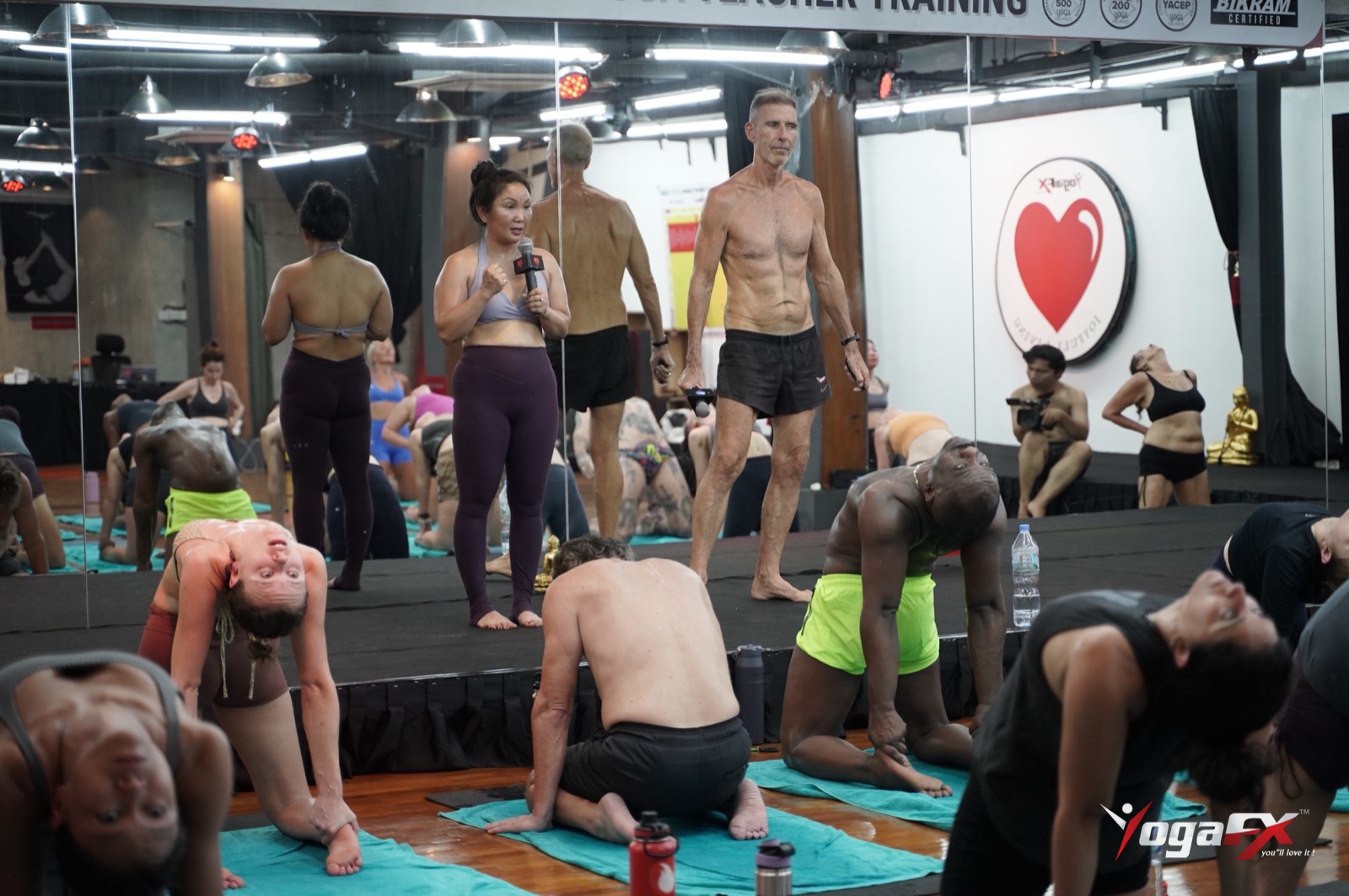
Three Gentle Home Routines for Sore, Busy Men
These three routines are the practical side of yoga for athletes recovery. Each one uses postures from the Original Hot 26&2 sequence, the fixed set of 26 postures and 2 breathing exercises that YogaFX teaches. Because the order never changes, you don’t have to think about what comes next. Practise every one of them unheated, in normal room temperature.
Routine 1: The 5-minute wind-down (after any hard day)
- Standing Deep Breathing, 2 rounds. Slow breaths through the nose while you lift and lower the elbows.
- Dead Body Pose, 2 minutes. Lie on your back, palms up, and let the breath slow down by itself.
- Blowing in Firm, 1 gentle round. Kneel and breathe out in short, soft blows. Keep it light, not forceful.
Do this one in the evening, ideally before bed. It’s the easiest way to start yoga for athletes recovery if you’ve never practised before.
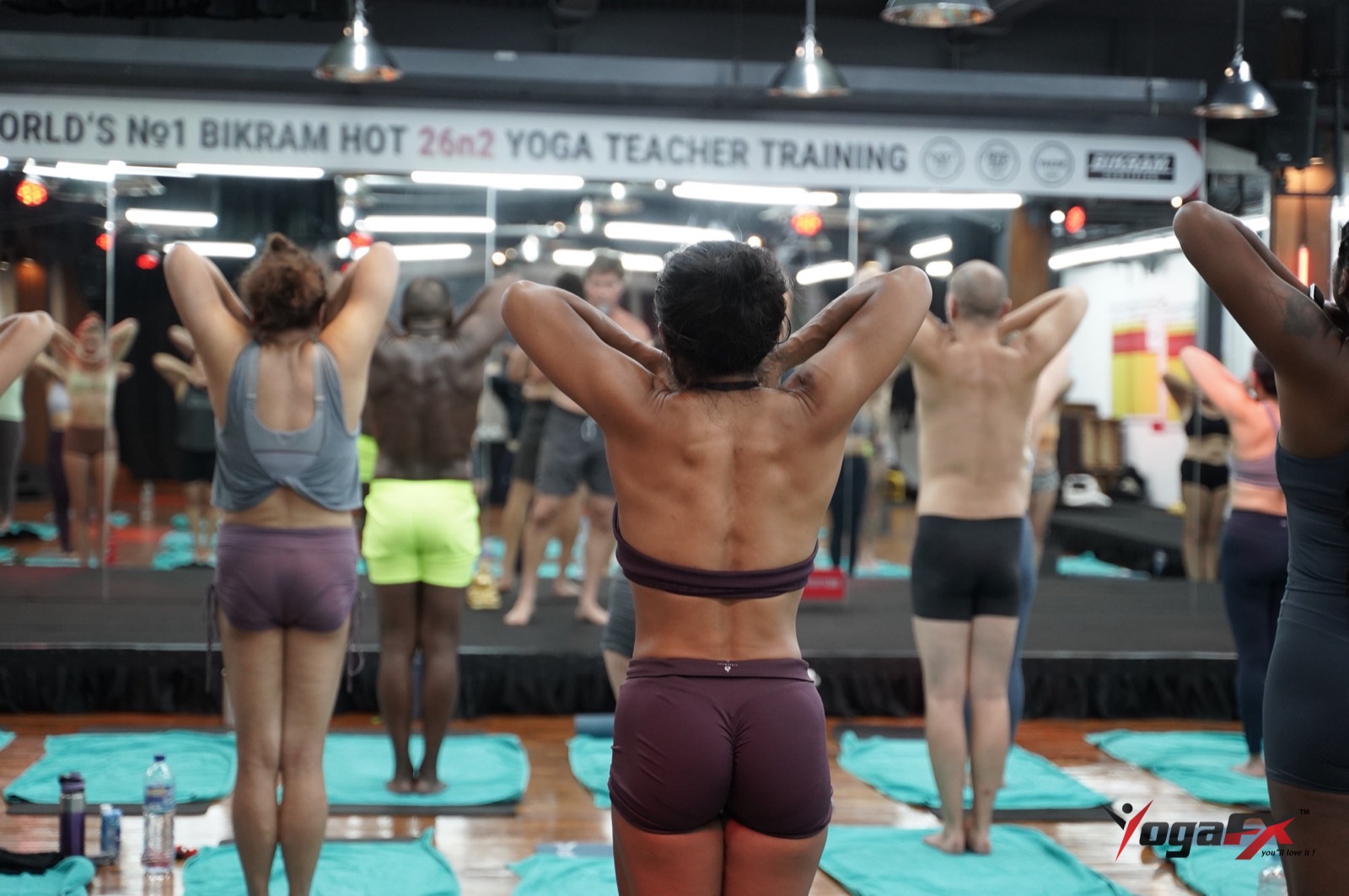
Routine 2: The 15 to 20-minute floor recovery (the day after)
- Wind Removing Pose, 2 sets. Hug one knee, then both, to ease a tight lower back.
- Cobra, 2 short sets. A low backbend that wakes the spine without loading the legs.
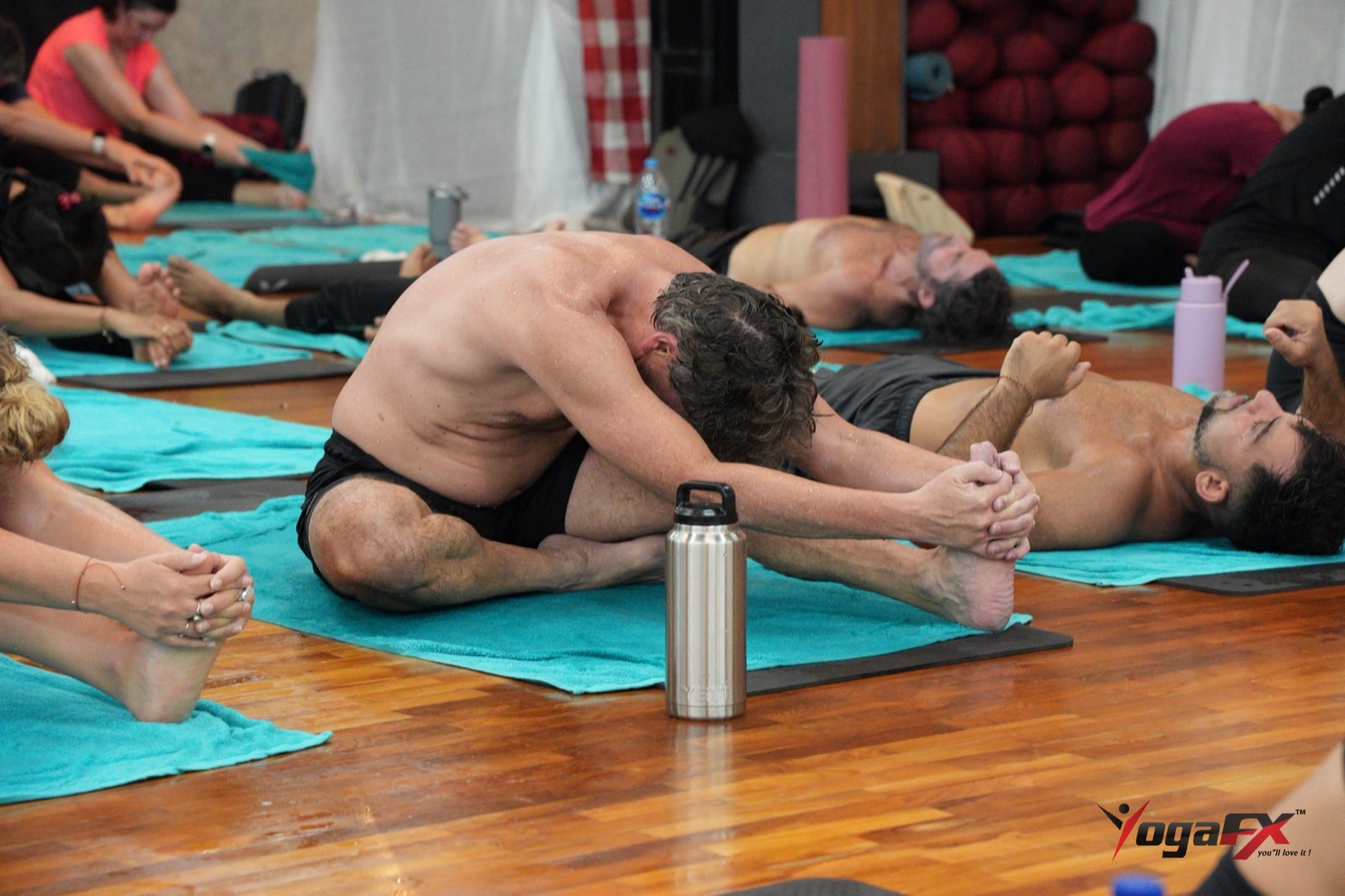
- Half Tortoise, 1 set. Sit on your heels and fold forward. It stretches the upper back and lets the breath slow down.
- Head to Knee with Stretching, 1 set each leg. Bend the knee as much as you like. You want a soft stretch in the hamstring, nothing sharp.
- Spine Twisting, 1 set each side. A calm, seated twist to finish.
- Dead Body Pose, 2 to 3 minutes between the main postures and at the end.
Work at about 50 percent of your usual range. If a muscle feels bruised or sharp, skip it entirely. In yoga for athletes recovery, the aim is blood flow and calm breathing, not new flexibility records.
Routine 3: The day-two standing reset (20 minutes)
Use this day-two session of yoga for athletes recovery after a race, a match or an interval session, once the worst soreness has gone. It adds a few standing postures, still unheated and still easy.
- Half Moon with Hands to Feet. Side bends, then a forward fold with bent knees.
- Awkward Pose, first part only. A shallow chair position to check how the thighs feel.
- Triangle, 1 set each side. A wide stance that opens the hips and groin.
- Tree, 30 seconds each side. A simple balance to wake the feet and ankles.
- Then Routine 2 on the floor to finish.
If any standing posture makes your legs shake, sit down and go straight to the floor work. That’s a sign you need one more easy day.
24 h
Easy session
Heart-rate recovery is complete within about a day after low-intensity work.
24-48 h
Threshold session
Tempo runs and hard rides need one to two days. Keep yoga gentle and unheated.
48 h+
High-intensity session
Intervals, races and matches need at least two days before more hard work.
~160 bpm
Full hot class
Average heart rate in a 90-minute heated class: a workout, not a recovery day.
What the Research Says About Yoga and Recovery
It’s worth being honest here. Very few trials test yoga for athletes recovery directly, so most of the evidence comes from nearby questions. Still, the picture is helpful.
- Recovery timing. As above, Stanley and colleagues (2013) link the length of recovery mainly to intensity, which is why gentle work fits the day after.
- Flexibility and strength. Tracy and Hart’s 2013 Colorado State trial of the hot 26&2 sequence found clear gains in spine, hamstring and shoulder flexibility and in whole-body strength. Aerobic fitness, however, stayed largely the same.
- The bigger picture. A 2025 systematic review by Willmott and colleagues pulled together 43 hot yoga studies with 942 participants. It reported promising effects on health and function.
- Stress. A 2022 study by Hui and colleagues found that hot yoga reduced state anxiety, the short-term stress you feel in the moment.
What does that mean for you? Research suggests yoga for athletes recovery can support your body by keeping you moving, improving range and calming your breathing. It hasn’t been shown to replace sleep, food or sensible training loads, so treat it as one tool among several.
A note on health: if you have a heart condition, high blood pressure, a current injury, or you take medication that affects heart rate or sweating, check with your doctor before any heated practice. This article is general information, so please consult a healthcare professional or your physio about your own situation.
Yoga vs Foam Rolling, Stretching and Complete Rest
Busy men often ask whether yoga for athletes recovery beats other tools when they only have 15 minutes. Each one does a slightly different job:
- Gentle yoga combines easy movement, range of motion and slow breathing in one short session.
- Foam rolling is quick and targeted, but it does little for breathing or posture.
- Static stretching on its own covers range but skips the calming breath work.
- Complete rest is the right call when you’re injured, ill or badly short of sleep.
For most men, the best answer is a mix. Roll the tightest spot for two minutes, then do one of the routines above. That way, yoga for athletes recovery covers the breathing and posture work that the roller misses.
Common Recovery Mistakes Busy Men Make on the Mat
Competitive men bring the same drive to recovery that they bring to training. That’s great in the gym and a problem on the mat. These are the yoga for athletes recovery mistakes we see most often:
- Turning recovery into a workout. If you’re sweating hard, you’ve gone past Zone 1.
- Booking a hot class the morning after a race. Save the heat for day three or later.
- Locking the knees in forward folds. Bend them, so the stretch reaches the hamstrings instead of the lower back.
- Stretching an injured muscle. A fresh strain needs a physio, not a deeper stretch.
- Skipping it on busy weeks. Five minutes of breathing still counts, and it keeps the habit alive.
If you play football, our weekly yoga plan for evening and weekend players shows how these recovery days fit around matches. And if you’re over 40 and carry a few old knocks, read yoga for men over 40 for a slower build-up.
What YogaFX Students Say About Soreness and Healing
Many of our students first found yoga for athletes recovery while tired, sore or carrying old injuries. Here’s what a few of them said about the body side of the journey.
“After going through multiple injury hurdles and extremely difficult life challenges prior to signing up for the course I was consistently reassured by Mr Ian to just come along.”
Adam, Google review, 2024
“The training is roller coaster of body soreness, feeling great, feeling down, tears, feeling up, lots of emotions coming out.”
Marta, Google review, 2025
Chelsea, a trainee in our YouTube review from 2019, called the training life-changing. She said it opened her mind to all the possibilities “from a healing point of view.” That’s one person’s story, not a promise, but it’s a common reason people keep practising.
In total, YogaFX students have left 150 Google reviews, 50 Yoga Alliance reviews and 357 YouTube video testimonials.
From Your Living Room to Bali: The YogaFX Route
Some men enjoy these routines so much that they want to understand the sequence properly, or teach it to their own team or running club. That’s what the Bikram Hot 26&2 Yoga Teacher Training MasterClass is built for. It’s a six-day hybrid: you study the pre-course online at home, around work and training, then join the intensive in Bali.
The next intensive runs from Sunday 24 January to Friday 29 January 2027, at Soham Wellness Center in Seminyak. That’s about five days off work. Graduates earn the Yoga Alliance RYT 200 and the Bikram Hot 26&2 200-Hour International Yoga Certification.
The Early Bird price is US$1,899, against a normal price of US$1,999. Payment plans start from US$250 a month with no interest, which makes it easier to fit around race entries and gym fees.
Who leads the training
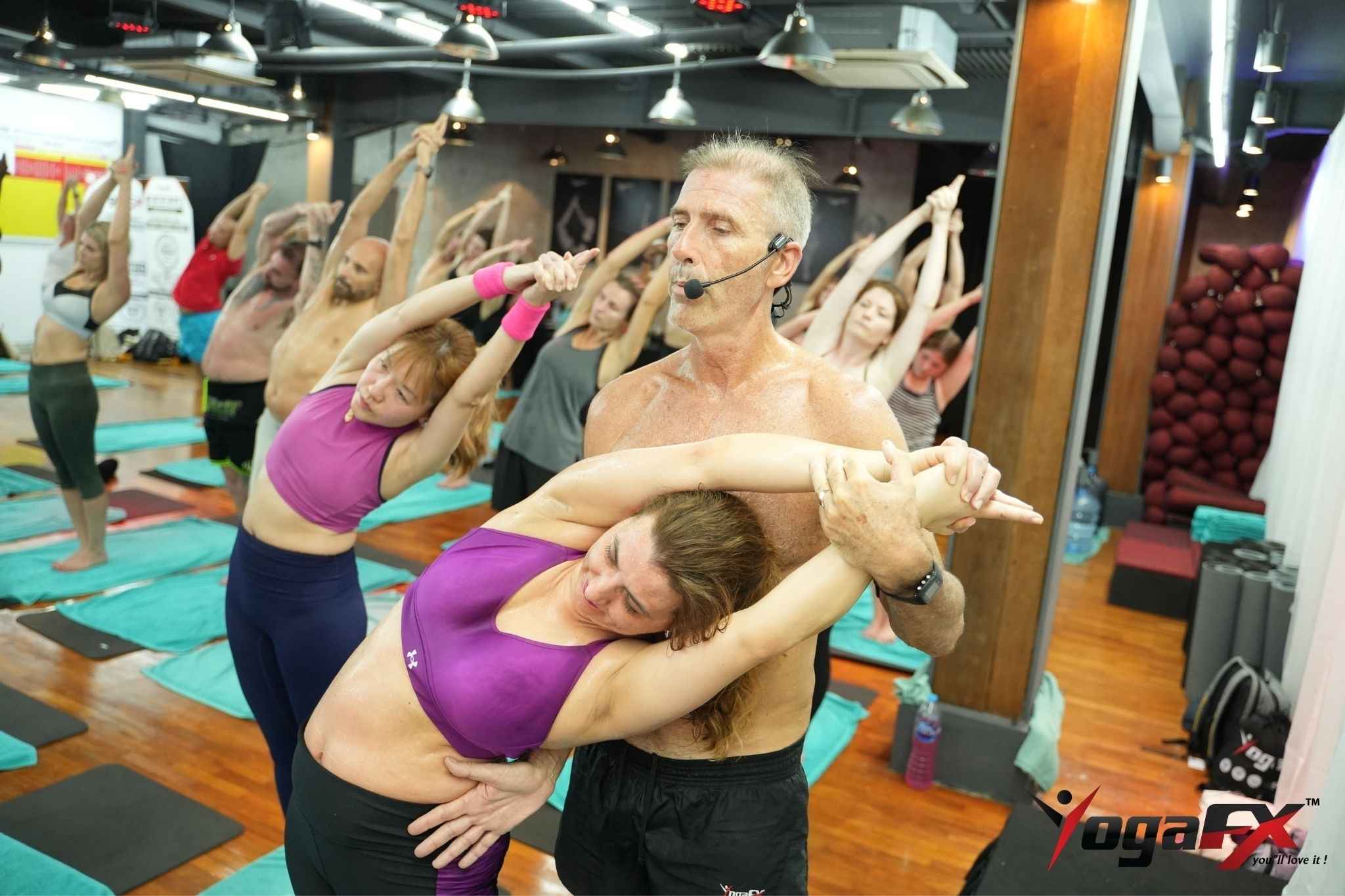
The programme is led by Mr. Ian Terry, an E-RYT 500 instructor with more than 12,000 teaching hours. He trained for five years, from 2014 to 2019, with the founder of the method, and he is a Master Trainer for the Republic of Indonesia Yogasana Sports Federation. Since founding YogaFX in 2017, he has guided over 1,500 graduates from more than 80 countries.
Mr. Ian’s approach to yoga for athletes recovery is simple. Keep the effort low, keep the heat for fresh days, and let the second set of each posture go only a little deeper than the first. To see how the online study works, read our guide to getting certified to teach hot yoga online, or browse the full online teacher training overview.
FAQ
Is yoga good for muscle recovery?
Gentle yoga can support muscle recovery by keeping you moving, easing stiffness and slowing your breathing. Keep it light: 10 to 20 minutes of unheated floor postures at about half effort. It works alongside sleep, food and sensible training loads, not instead of them, and a fresh injury still needs a physio.
Is hot yoga good for recovery?
Not on the day after hard training. A full 90-minute heated class raised average heart rate to about 160 beats per minute in a Colorado State University study, which makes it a workout. Use unheated, gentle yoga on recovery days, and save hot yoga for days when you already feel fresh.
Is hot yoga considered active recovery?
Usually not. Active recovery means very easy movement, light enough to breathe through your nose and talk in full sentences. A full hot class is far harder than that. The same postures done slowly at room temperature, for 10 to 20 minutes, are a much better fit for an active recovery day.
Is hot yoga good for rest days?
It depends on what came before. After an easy session, a hot class on a rest day can be fine. After intervals, a race or a heavy leg day, research suggests your body needs 24 to 48 hours or more, so keep rest days gentle and unheated until you feel recovered.
Is yoga a good recovery workout?
Yes, as long as it doesn’t become a workout. The best yoga for athletes recovery is short, slow and calm: breathing exercises, floor postures and soft hamstring stretches. If you finish sweating hard or out of breath, you pushed too far. Ten easy minutes beat an hour of hard holds on a recovery day.
Still have questions? Message Mr. Ian and the YogaFX team on WhatsApp and we will answer them personally, whatever sport you train for.