
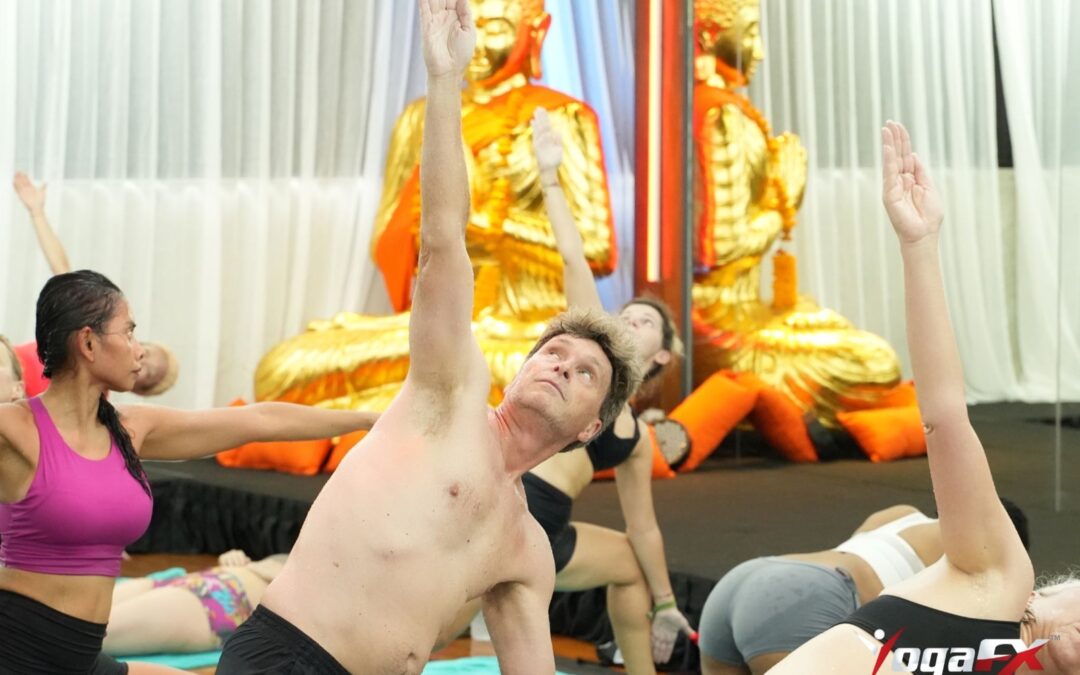
Walking into hot yoga as a man for the first time, the thing that decides how the 90 minutes go is almost never fitness. It is heat. Strong, fit men leave the room in their first class, and desk-bound men in their forties finish it comfortably, and the difference is usually what they did in the two weeks before rather than anything they can bench. That is good news, because the preparation happens at home and costs nothing.
This guide is written for the reader this site is built around: a man with a job, a commute and limited spare hours who is considering the practice seriously rather than casually. It covers what to do in the fortnight before, which postures are worth rehearsing in an unheated room, how to handle the 24 hours either side, and how many classes it realistically takes before the heat stops being the whole experience.
What Actually Makes the First Class Hard for Men
The limiting factor in a 40 degree room is thermoregulation, not strength. A bigger body produces more heat during the same work and sheds it less efficiently relative to its mass, which is why the same class can feel categorically different depending on who is doing it.
There is a measurement behind that. In the one study that reported men separately, Quandt and colleagues in 2015 recorded men’s average peak core temperature at 103.2 degrees Fahrenheit, with one man reaching 104.1. Those are real numbers from a real room, and they explain why pacing matters more than effort. A man who attacks the standing series is not being tougher than the room. He is arriving at that peak sooner, with 60 minutes still to go.
If you have diagnosed heart disease, uncontrolled blood pressure, or you take medication that affects hydration or sweating, speak to a doctor before your first heated class rather than after it. This article is general information, not medical advice.
The Two Weeks Before: What to Do at Home
Nothing here requires a heated room, equipment or a studio membership. It requires about 20 minutes, three times a week.
- Practise unheated, three times a week. Most controlled trials on this style of yoga prescribed around three classes a week, and that is a sensible rhythm to establish before heat is added. Three short unheated sessions teach you the shapes so that the heat is the only new variable on day one.
- Learn the opening breath first. Standing Deep Breathing opens every class. Knowing the arm position and the breathing pattern before you arrive removes the most disorienting 90 seconds of a first class.
- Do not try to get flexible first. This is the most common wasted fortnight. Flexibility is what the practice produces, not what it requires, and stretching cold in a hurry is how people arrive with a strained hamstring.
- Make hydration a habit, not an event. Being well hydrated on the day is a function of the preceding week, not of the litre you drink in the car park.
- Get some heat exposure if you can. A sauna, a warm bath, or simply exercising in the warmest part of the day begins the adaptation. It will not replace classes, but it shortens the shock.
Which Postures to Rehearse at Home, and Which to Leave Alone
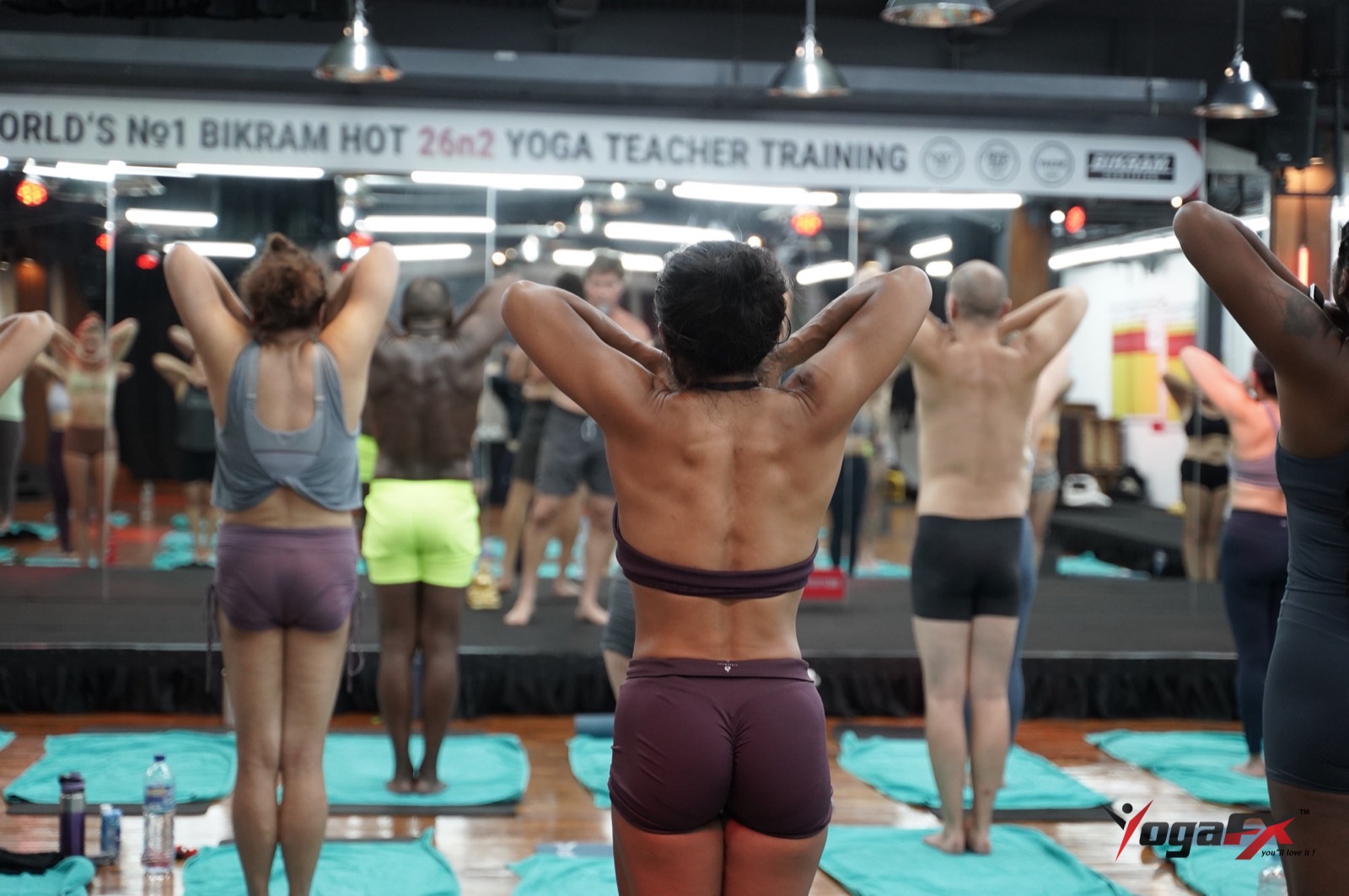
Not every posture in the sequence is suited to an unheated living room. Some are mostly about position and endurance and transfer perfectly. Others depend on warm tissue and are worth leaving until you are in the room.
| Posture | Why it rehearses well cold |
|---|---|
| Standing Deep Breathing | Pure breath and arm position. No flexibility involved, and it is the first thing you will be asked to do. |
| Half Moon, side bend only | Teaches you where the arms and hips go. Skip the backbend portion until you are warm. |
| Awkward Pose | Quadriceps endurance. Safe unheated and genuinely hard, which makes it a useful honesty check. |
| Standing Head to Knee, setup only | The skill is locking the standing knee. Practise the lock and the grip. Do not attempt the extension. |
| Separate Leg Stretching, shallow | Teaches hinging from the hip rather than rounding the spine. Go nowhere near your end range. |
If you want to see what rehearsing the sequence away from a studio actually looks like, this walkthrough covers the setup for Standing Head to Knee, which is the posture most worth practising before you arrive.
Leave the deep backbends alone until you are in a heated room. Camel and Full Locust ask a lot of a cold spine, and Fixed Firm loads the knees in a way that is not worth improvising on a hard floor. If you want the full order of the sequence before you start, read it alongside what the training itself covers in hot yoga teacher training.
Can You Heat a Room at Home Instead?
This question comes up constantly, and the honest answer is partly. You can warm a small room with a portable heater and a humidifier, and that will give you something closer to a warm practice than a cold one. What you cannot easily do at home is hold a consistent temperature and humidity across 90 minutes in a space with enough air volume to stay breathable, which is the part a purpose-built studio is actually solving.
There is also a safety line worth naming. Heating a small, closed room and then working hard in it without a way to monitor temperature is how people get into trouble, and a bathroom with the shower running is not a yoga room. If you do warm a space, keep a thermometer in it, keep a door openable, and do not chase studio numbers.
For preparation purposes you do not need the heat at all. The home practice described above is about learning shapes and building a habit, and both transfer perfectly from an unheated floor. Save the heat for the studio, where somebody else is responsible for the thermostat.
The 24 Hours Before
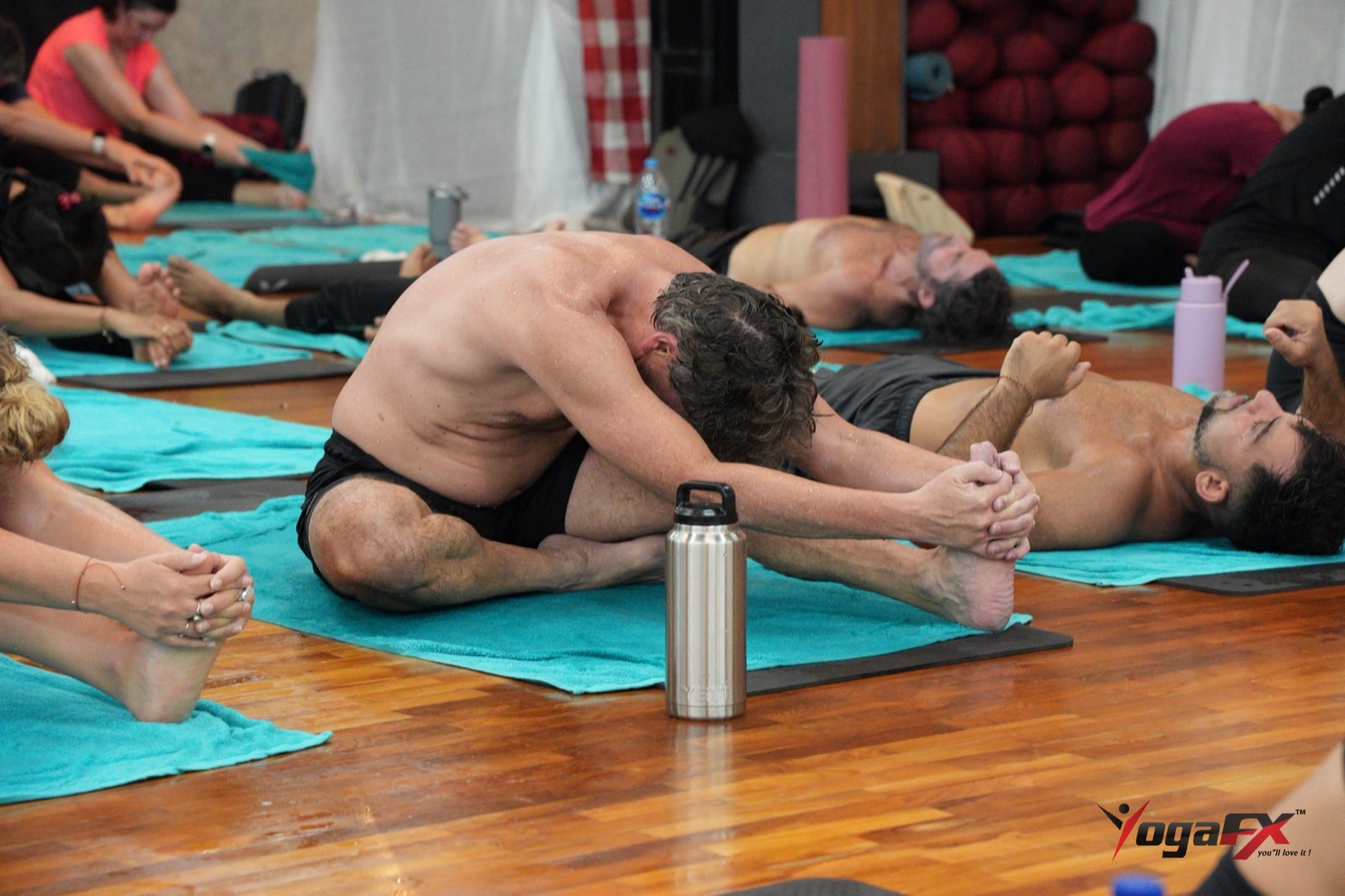
- Food. Finish a proper meal two to three hours before class, and keep it light on fat. A full stomach in the floor series is its own punishment, particularly in the compression postures.
- Fluid, with a caveat. The aim is to replace what you lose without drinking more than you need. Flooding yourself in the hour before class does not store water, it just makes the first 20 minutes uncomfortable, and overdrinking during heavy sweating carries its own risk. Steady intake across the day beats a panic litre.
- Sleep. Heat tolerance drops when you are short of sleep. A first class after four hours in bed is a harder class than it needed to be.
- Morning or evening. A morning class means an empty stomach and a stiffer body. An evening class means a looser body and a day’s fatigue. For a first class, pick whichever one you will actually turn up to.
- Kit. A full-length mat towel, a hand towel, water, and clothes you will not be adjusting. Fitted shorts and either a close top or none. Loose cotton soaks and slides.
The First 90 Minutes
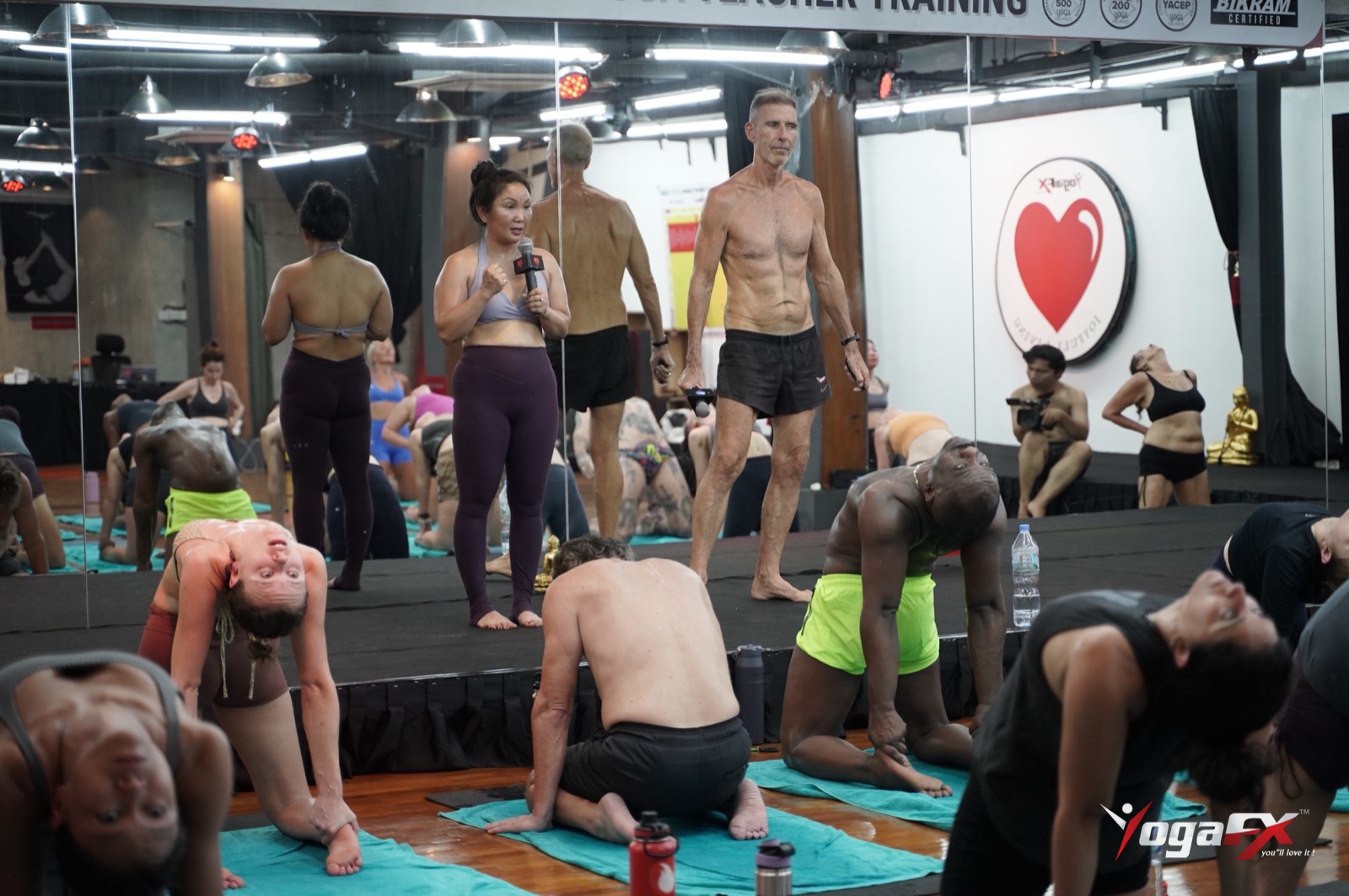
Arrive early enough to lie down in the room for ten minutes before class starts. That is not a ritual. It is the cheapest heat acclimatisation available, and it means the first posture is not also your first experience of the temperature.
Take the first set at around 60 percent. The sequence performs every posture twice, so the first set is reconnaissance and the second is where the work goes. Men new to the heat almost universally get this the wrong way round, spend everything in the standing series, and then lie on the floor for 40 minutes wondering what happened.
Sitting down is part of the class. Kneeling or lying on your mat when the heat spikes is a normal thing that happens in every class to somebody, and it is a better decision than pushing through and leaving the room. Breathe through your nose for as long as you can hold it, because mouth breathing is usually the first sign that effort has got ahead of pacing.
After Class
Cool down gradually rather than stepping straight into cold air or a cold shower. Replace fluid steadily over the following hours and include some salt with your next meal, because what you lost was not only water. Eat properly within about 90 minutes. And expect to feel tired in a way that is out of proportion to the effort, especially after a first class: that is heat strain rather than a fitness verdict, and it fades as adaptation happens.
How Many Classes Before It Gets Easier
Heat adaptation is faster than people expect. Most students report the room stopping being the main event somewhere between the third and fifth class. That is also roughly the frequency the research used: controlled trials on this style of practice generally prescribed about three classes a week, and the recommendation at YogaFX is to build up to three to five.
There is an interesting detail in the Harvard and Massachusetts General Hospital work on heated yoga and depression, reported by Copeland and colleagues in 2026: each additional class was associated with a further fall in symptom scores, with no plateau observed up to 30 classes. That finding concerns depression specifically rather than fitness generally, so it should not be stretched. What it does suggest is that this is a practice where consistency keeps paying rather than levelling off early.
The broader physical case is covered by Tracy and Hart’s 2013 controlled trial, which recorded roughly a 20 percent increase in posterior chain strength across eight weeks, and by Porcari’s 2014 measurements of men burning an average of 460 calories per class at around 80 percent of maximum heart rate. Neither required anyone to arrive flexible.
If You Are Thinking Further Ahead Than One Class
A fair number of men who start this way do not stop at practising. Our published enrolment data shows the median man applying to train as a teacher is 44 years old, and that 83 percent of them already practise the sequence before they apply. The full figures, with sample sizes and method, are in the How Many Men Do Yoga report. If that profile sounds like the next few years of your life rather than the next few weeks, the sequencing matters.
The route this site is built for is deliberately gradual: build a home practice, study the dialogue, theory and anatomy online at your own pace around a job, and finish with the six-day intensive in Bali. Mr. Ian Terry, who leads the programme, is an E-RYT 500 instructor with more than 12,000 teaching hours and over 1,500 graduates from 80 countries, and he trained directly under Bikram Choudhury across five training events between 2012 and 2019. How the online portion works is set out in online yoga teacher certification, and if you are still weighing schools, how to choose a yoga teacher training covers what to compare. The programme overview has dates and detail, and a WhatsApp message to Mr. Ian Terry on +62 811 3888 330 is the fastest way to ask a direct question.
FAQ
What should I do before my first hot yoga class?
Practise the shapes unheated about three times a week for a fortnight, learn the opening breathing exercise, hydrate steadily across the week rather than loading up beforehand, and arrive early enough to lie in the room for ten minutes. Do not try to become flexible first.
What should I eat and drink before hot yoga?
Finish a light, low-fat meal two to three hours before class. Drink steadily through the day rather than a large volume immediately beforehand, since overdrinking during heavy sweating carries its own risk. Afterwards, replace fluid gradually and include some salt with your next meal.
Does hot yoga get easier?
Yes, and faster than most people expect. Heat adaptation usually shifts between the third and fifth class, at which point attention moves from surviving the room to following the instruction. Research on this style of practice generally used about three classes a week as the working frequency.
Can you prepare for hot yoga at home without a heated room?
Yes. Standing Deep Breathing, Awkward Pose, the side bend portion of Half Moon, the setup for Standing Head to Knee and a shallow Separate Leg Stretching all rehearse well unheated. Leave deep backbends and Fixed Firm until you are in a warm room.
Is it normal to sit down during your first hot yoga class?
Completely normal, and it happens to somebody in most classes. Kneeling or lying on your mat when the heat spikes is a better choice than pushing through or leaving the room. The instruction continues either way, and you rejoin whenever you are ready.