What Is Hot Yoga? A Plain Guide Before You Study Online
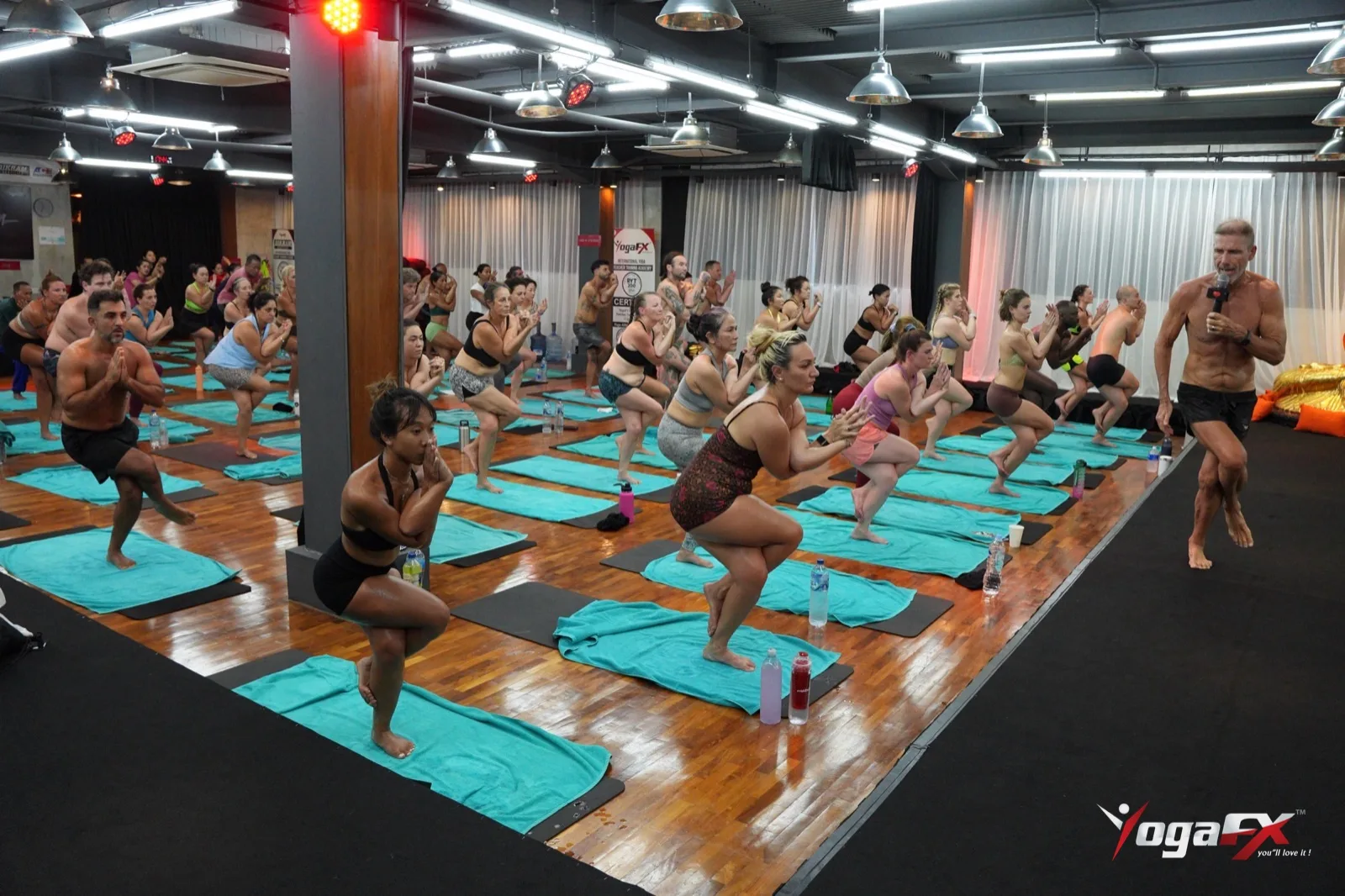
What is hot yoga? It is yoga done in a room that's been warmed on purpose, typically somewhere from 30 to 40°C. The best-known style is the Original Hot 26&2: one fixed 90-minute class at about 40°C with 40% humidity. This plain guide explains the styles, the heat and your first class, and how studying online first can prepare you.
You may have a busy week, a laptop and a lot of questions. That's a good place to start. Asking what is hot yoga before you book anything is smart, because the answer changes how you prepare. Before you book a class or a course, it helps to know what the room is, what the heat does and what you'd be signing up for.
Here's the plan. First we define the term, then we compare the styles. After that we walk through a first class, look at what health agencies say about heat, and show how the online route fits in.
This guide to what is hot yoga is written for working adults who are curious but cautious. Maybe a friend came home from class soaked and smiling. Or maybe you're weighing an online teacher training and want to understand the thing you'd be studying. Either way, the answers below are plain, and we've kept the jargon out.
What Is Hot Yoga? The Plain Definition
The hot yoga meaning is simple, but the label is broad. Hot yoga is an umbrella term. It covers yoga, plus a few yoga-style workouts, done in a space heated above normal on purpose. The warmth makes the body feel looser and adds effort to each posture. Many students also like the focused, sweaty atmosphere it creates, because it keeps the mind from wandering.
So what is hot yoga in one sentence? It's a normal-looking yoga class, moved into a hot room, where pacing and water matter as much as the postures. The postures themselves aren't new, so the room is what changes.
Five facts are worth holding onto before you read further:
- It's a family of styles. Hot vinyasa, hot pilates, yin in a warm room and the Original Hot 26&2 all count.
- The room is the common thread. Temperatures run from gentle warmth to about 40°C, depending on the style.
- Humidity counts. A humid room feels hotter than a dry one at the same temperature, because sweat evaporates more slowly.
- Pacing is a skill. Resting is part of a class, not a failure.
- You can start learning before you arrive. The online route teaches the sequence at home first.
Hot yoga is also not the same thing as hot yoga at home with a heater. Switching up the heating in your living room is a different matter. Our guide to practising the original sequence without a heated room explains why a cool floor works as rehearsal, not replacement.
Where the idea came from
Heated-room classes took off in the 1970s with Bikram yoga, which paired a set order of 26 postures and two breathing exercises with a very hot studio. Later on, studios heated many other formats, including flowing vinyasa and slower floor-based yin.
People who ask "is hot yoga Bikram?" are asking a fair question. That history explains why the words "hot yoga" and "Bikram" get mixed up. Bikram yoga is one specific style of hot yoga, and hot yoga is the wider label. Many studios now call the original format Hot 26&2, 26 and 2, or Original Hot Yoga.
What Is Hot Yoga Not?
Hot yoga isn't a sauna. In a sauna you sit still and rest. In a class you work for 90 minutes, and the heat is only the setting. It isn't a shortcut either, because the postures are just as demanding as they'd be in a cool room, and the heat adds to the effort. And it doesn't claim to flush anything out of your body. It's an exercise class in a warm room, and that's all.
Which Styles Count When You Ask What Is Hot Yoga?
The word "hot" hides real differences, so the types of hot yoga are worth separating. Studios use it for at least four common formats. They differ in room temperature, in whether the order of postures is fixed, and in how fast you move. Exact numbers vary from studio to studio, so treat the table as a rough map.
| Style | Typical room | Is the sequence fixed? | Can you learn it before class? |
|---|---|---|---|
| Original Hot 26&2 | About 40°C, around 40% humidity | Yes: 26 postures and 2 breathing exercises | Yes, from a written dialogue and video study |
| Hot vinyasa | Warm, often low to mid 30s°C | No, it changes each class | Only in part, because every class differs |
| Hot pilates | Warm, often low to mid 30s°C | No, it changes each class | Only in part: you can learn moves, not the class |
| Yin in heat | Gently warm | Loosely: a few long floor holds | Partly: the shapes are simple, the holds are long |
The third column is the one that matters for online students. A fixed sequence can be written down, memorised and rehearsed. A flowing class that changes every time can't be learned from a script in the same way. That's why the Original Hot 26&2 suits study from home, and why we use it for our online courses.
Original Hot 26&2
This is the format we teach. It's one continuous 90-minute class, and the order never changes. Because every class looks the same, you can see your own progress from week to week instead of guessing. The spoken dialogue guides you, so there's no demonstration and no music to follow.
Hot vinyasa
Hot vinyasa links postures to the breath in a flowing chain. The sequence changes from class to class, and the room is often a little cooler. People who enjoy variety and a cardio feel tend to like it. The trade-off is that you can't rehearse a class you haven't seen.
Hot pilates and yin in heat
Hot pilates focuses on core work and repeated low-impact movements. Yin in heat is the opposite pace: a few long floor holds in gentle warmth. Both are valid choices, but they ask different things from you than a fixed 26-posture class does.
If you're choosing between two of these, our comparison of hot vinyasa vs Bikram looks at which is easier to learn and teach from a distance.
How Hot Is the Room, and Why Does It Matter?
Many people ask what is hot yoga temperature, as if one number covered every class. It doesn't. Most rooms land somewhere between 30 and 40°C, depending on the format. The Original Hot 26&2 sits at the top of that range, at roughly 40°C and 40% humidity, for 90 minutes. Vinyasa and pilates rooms tend to run cooler, and yin in heat is only gently warm.
Why does it matter? Heat raises effort. Your heart works harder, you sweat much more, and a posture you hold easily in a cool studio feels tougher. That's why a first-timer's biggest job is pacing, not flexibility.
Don't judge a room by the thermometer alone. Sweat evaporates slowly in humid air, so the same temperature feels warmer and wetter. Dry heat has its own problem: it can irritate your throat and eyes. Two rooms with identical readings can feel quite different, which is one reason students compare notes after class.
If you've only ever practised in a cool room, that's the biggest change. In a cool room you set the pace with your muscles. In a hot room you set it with your breathing and your water bottle.
At the Seminyak and Canggu studios in Bali, the warmth comes from the tropical climate rather than electric heaters. If you'd like a studio-side view of the same question, our Bali team has written a plain description of what a hot class feels like.
What Is Hot Yoga Like in Your First Class?
Most people find their first hot class hotter, wetter and harder than they pictured, especially early on. Plenty of beginners sit out a posture or two, and that's normal. Many describe a calm, heavy, relaxed feeling at the final rest.
So what is hot yoga class structure in the original format? In the Original Hot 26&2, the class has a fixed shape. It opens with a standing breathing exercise, moves through the standing series, then the floor series, and closes with a second breathing exercise. In all, that's 26 postures and 2 breathing exercises in 90 minutes.
There's no music, and the teacher doesn't demonstrate. Instead, a scripted spoken dialogue talks you through each posture. You don't have to know the poses beforehand, but knowing them helps a lot.
What Is Hot Yoga Like Minute by Minute?
Here's the order of a typical Original Hot 26&2 class:
- Standing deep breathing. A slow breathing exercise opens the class, settling your pulse and your attention.
- The standing series. Balancing and strengthening postures warm you from within, and this is the stretch first-timers find toughest.
- A short rest on your back. A brief pause before you move down to the floor.
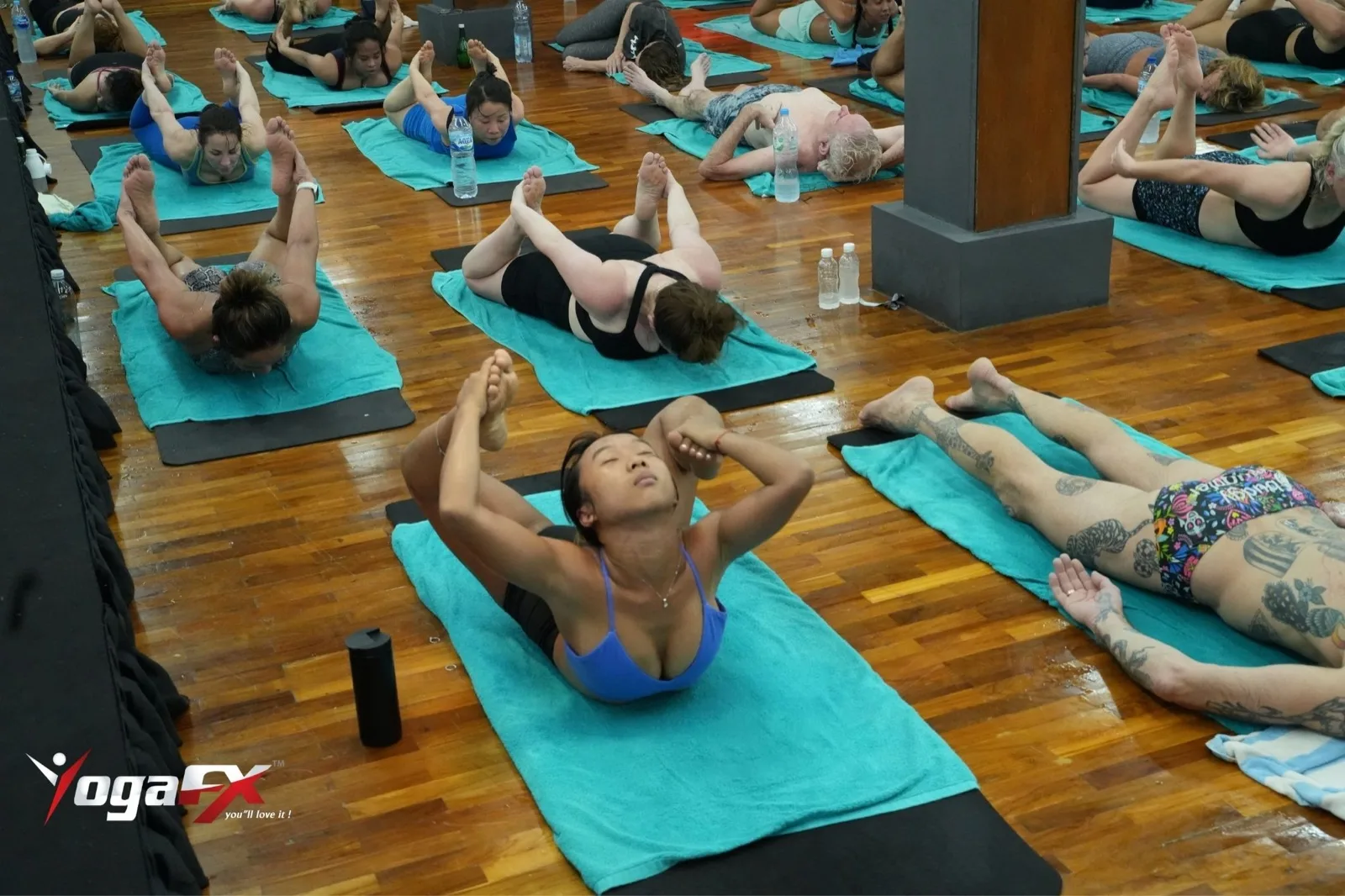
- The floor series. Back bends, forward folds and twists, each followed by a short rest.
- Blowing in firm. A second breathing exercise closes the class, then you rest one last time.
Short rests are built in, so you're never working non-stop. That's useful to know, since many beginners worry they'll have to keep going without a break.
Here are the practical points we repeat to every new student:
- Hydrate all day beforehand. Arriving thirsty makes the first 20 minutes much harder.
- Eat light. Our guide on what to eat before hot yoga covers timing in detail.
- Bring a large bottle and a towel. The towel covers your mat, and you will use it.
- Wear light clothing. Choose fabric that doesn't hold sweat.
One more tip: rest whenever you need to. The room is the challenge, so you don't have to prove anything on top of it.
What Do Health Agencies Say About Practising in Heat?
So what is hot yoga doing to your body, and what should you watch for? Heat is the part that deserves respect. Two well-known health sources explain why. The NHS lists the signs of heat exhaustion as tiredness, dizziness, headache, nausea, heavy sweating, cramps and being very thirsty. Its advice is to move to a cool place and drink plenty of water.
The Mayo Clinic says heat illness comes from exposure to high temperatures, particularly with high humidity, and from strenuous activity. It adds that dehydration lessens your body's ability to sweat and keep a normal core temperature. In a hot room, humidity and effort are both present, so water and rest matter.
What about the benefits? A 2014 University of Wisconsin study (Porcari et al.) measured about 333 calories for women and 460 for men in a 90-minute class, at around 80% of maximum heart rate. In other words, a class works the heart like real exercise.
A 2023 randomized trial from Massachusetts General Hospital (Nyer et al.) found that 59% of people in the heated yoga group saw depression symptoms fall by half or more over eight weeks, compared with 6.3% on a waitlist. Research like this suggests heated yoga may help mood. It doesn't mean it's a treatment, and it isn't right for everyone.
This article is general education, not medical advice. If you have a heart condition, high or low blood pressure, are pregnant or have any other health concern, speak to a healthcare professional before you practise in a heated room.
Why Study Hot Yoga Online Before You Walk Into the Room?
Here's the idea behind the online route, and it answers a question many beginners have. What is hot yoga going to ask of me on day one? Quite a lot, so it helps to learn some of it first. A hot room is a demanding place to learn anything for the first time. You're sweating, you're managing heat and you're also trying to follow instructions. If you've already heard the words and seen the shapes, a lot of that load disappears.
Mr. Ian Terry, E-RYT 500, built the YogaFX online route around that point. He has more than 12,000 teaching hours, and he trained for five years, from 2014 to 2019, alongside the founder of the Bikram Hot 26&2 method. The online course teaches the same fixed sequence and the same spoken dialogue that you'd meet in class.
That matters because the dialogue is the backbone of the Original Hot 26&2. When you know what each cue means, you aren't guessing during a class. Our guide to learning the Bikram yoga dialogue online explains the four stages of that learning in plain language.
Studying first also gives you a quiet way to decide. You can learn what hot yoga is, how a class runs and what the heat asks of you, all before you spend a day in the hot room. If it's not for you, you'll know early.
It's worth being honest about the limits. Online study can teach the theory, the anatomy and the dialogue. It can't teach you to read a hot room or to correct a student who is fading in 40°C heat. That part needs the real room, which is why the course ends with a 6-day intensive in Bali.
From Home to the Hot Room: Four Stages
Here's how the online route works, from first curiosity to your first full class. Stage 1 is where you learn what is hot yoga, in plain words, before anything else. Each stage has a clear job, so you always know what to do next.
Stage 1: Learn
Read what hot yoga is and how the 90-minute class is shaped.
Stage 2: Listen
Study the spoken dialogue for 26 postures and 2 breathing exercises.
Stage 3: Rehearse
Practise the shapes on a cool floor, in short and calm sessions.
Stage 4: Join
Meet the 40°C room in a real class and the 6-day intensive in Bali.
The key idea is a gradual build, so nothing arrives all at once. You start with words and shapes on a cool floor, and you meet the heat last. That order is kinder to beginners and to people with busy schedules, since the online study fits around work.
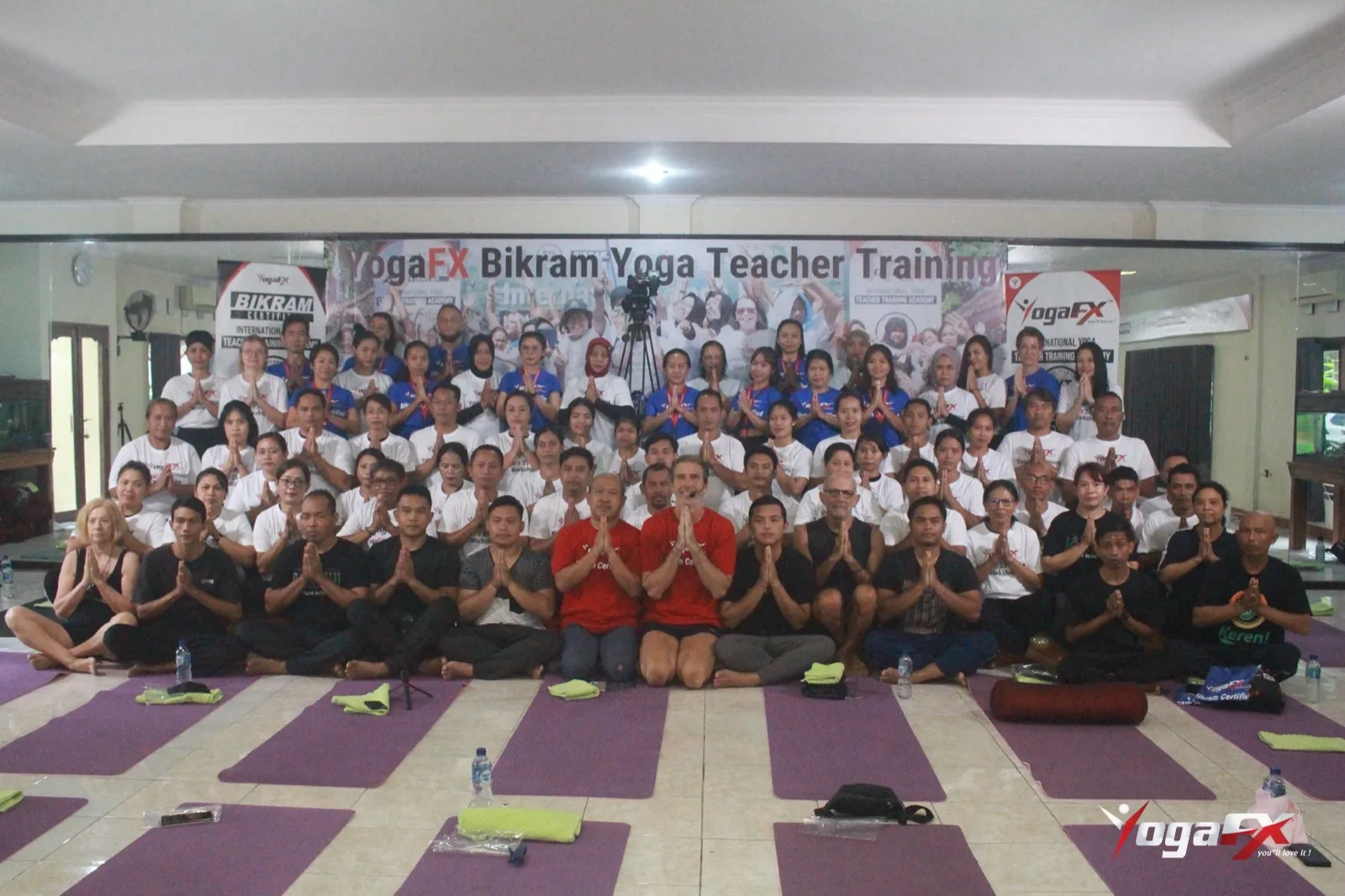
Because the course is built around the original format, it answers the question what is hot yoga in a hands-on way. If you're thinking about the full course, the Bikram hot yoga online page shows how the pre-course study and the Bali intensive fit together. Our certification is Yoga Alliance RYT 200-Hour plus the Bikram Hot 26&2 200-Hour International Yoga Certification.
Want to hear it from a graduate? Watch Jennifer's graduation review from the January 2024 batch.
What Do Students Say About the Online Route?
Numbers only tell you so much. If you wonder what is hot yoga like for real people, here is what some YogaFX students said in their own words.
Jennifer, a trainee who graduated in January 2024, said in her YouTube review that she's the type of person who does research first. In her words, "I do a lot of research first." She checked the teacher's credibility, and also the accommodation and the safety of the training, before she committed.
Mario left a Google review in 2022. He wrote that "the great professionalism and human skills of our instructor Mr Ian made everything so simple and fun." He also valued learning alongside people from many different parts of the world.
Katy, in her 2019 YouTube review, described feeling less alone because of the inspiring people around her. She said that remembering this moment would help her move on and stay focused.
Is Hot Yoga Right for You?
Hot yoga suits most healthy adults who like working at their own pace. So when people ask what is hot yoga good for, the practical answer is routine, effort and structure. Beginners, older students and stiff-but-willing people all take classes, and the 26&2 postures are low impact, with easier versions on offer.
A few people need medical advice before the first class. That list includes anyone with a heart condition or blood pressure trouble, anyone who is pregnant, and anyone who has had heat illness. Medication that changes heart rate or fluid balance belongs on the list too.
A few worries put people off before they try a class. These are the three we hear most:
- "I'm too stiff for this." Nobody expects a split. Flexibility builds with practice, and every posture has a gentler version.
- "The heat will knock me out." Healthy people rarely collapse, particularly when they hydrate first and rest freely. If you feel off, lie down and let the teacher know.
- "It's for athletes only." Classes mix ages, body types and experience levels.
So what is hot yoga best for? It suits people who like clear structure, a good sweat and an hour that belongs only to them. If that sounds like you, the next step is simple: learn the basics at home, then try a real class.
FAQ
What is hot yoga called?
Hot yoga goes by several names. Studios call it heated yoga, warm yoga or hot vinyasa, depending on the style. The original fixed format is called Bikram yoga, Hot 26&2, 26 and 2, or Original Hot Yoga. All of them mean yoga practised in a deliberately warmed room.
Is hot yoga the same as Bikram yoga?
Not quite. Bikram yoga is one particular type of hot yoga, with a set order of 26 postures and 2 breathing exercises over 90 minutes at about 40°C. Hot yoga is the broader label, and it also takes in flowing, pilates-based and slower formats.
What temperature is hot yoga?
Most hot yoga rooms sit between about 30 and 40°C. The Original Hot 26&2 uses about 40°C with around 40% humidity. Vinyasa and pilates rooms are often cooler, and yin classes are only gently warm. Humidity changes how hot any room feels, so treat the numbers as a guide.
What is hot yoga like for a first-timer?
Expect a hot, sweaty and tiring first 20 minutes, and expect to rest at some point. That's normal. Drink water through the day, eat light beforehand and bring a towel. Many first-timers describe a calm, heavy, relaxed feeling at the final rest.
Can you learn hot yoga online before your first class?
Yes, you can learn the theory, the sequence and the spoken dialogue online at home. That makes your first hot class feel less confusing. It can't replace the hot room itself, which is why our online course finishes with a 6-day intensive in Bali.
Still have questions? Message Mr. Ian and the YogaFX team on WhatsApp and we will answer them personally.