Hot Yoga vs Regular Yoga: 4 Honest Trade-offs at Home

Hot yoga vs regular yoga comes down to one variable: heat. A hot class in a Bikram-style room runs at about 40°C with around 40% humidity. Regular practice at home happens in whatever temperature the room is that day. That difference changes how hard a session feels and how your body responds.
This guide explains the hot yoga vs regular yoga difference in plain terms. It covers what the heat actually changes, what the research shows and does not show, and how to switch safely. Mr. Ian Terry, E-RYT 500, has taught more than 12,000 hours in both settings, so the advice comes from watching students make this exact move.
Hot Yoga vs Regular Yoga: The Real Difference Is the Room
The easiest way to see the difference is to picture one posture done twice. Once in a heated studio. Once on your living room floor. The shape is the same, but the body responds differently because the air is doing part of the work.
Sweat, breathing, heart rate and recovery all shift when the room warms up. That is why the difference between hot yoga and normal yoga is more than a thermostat setting.
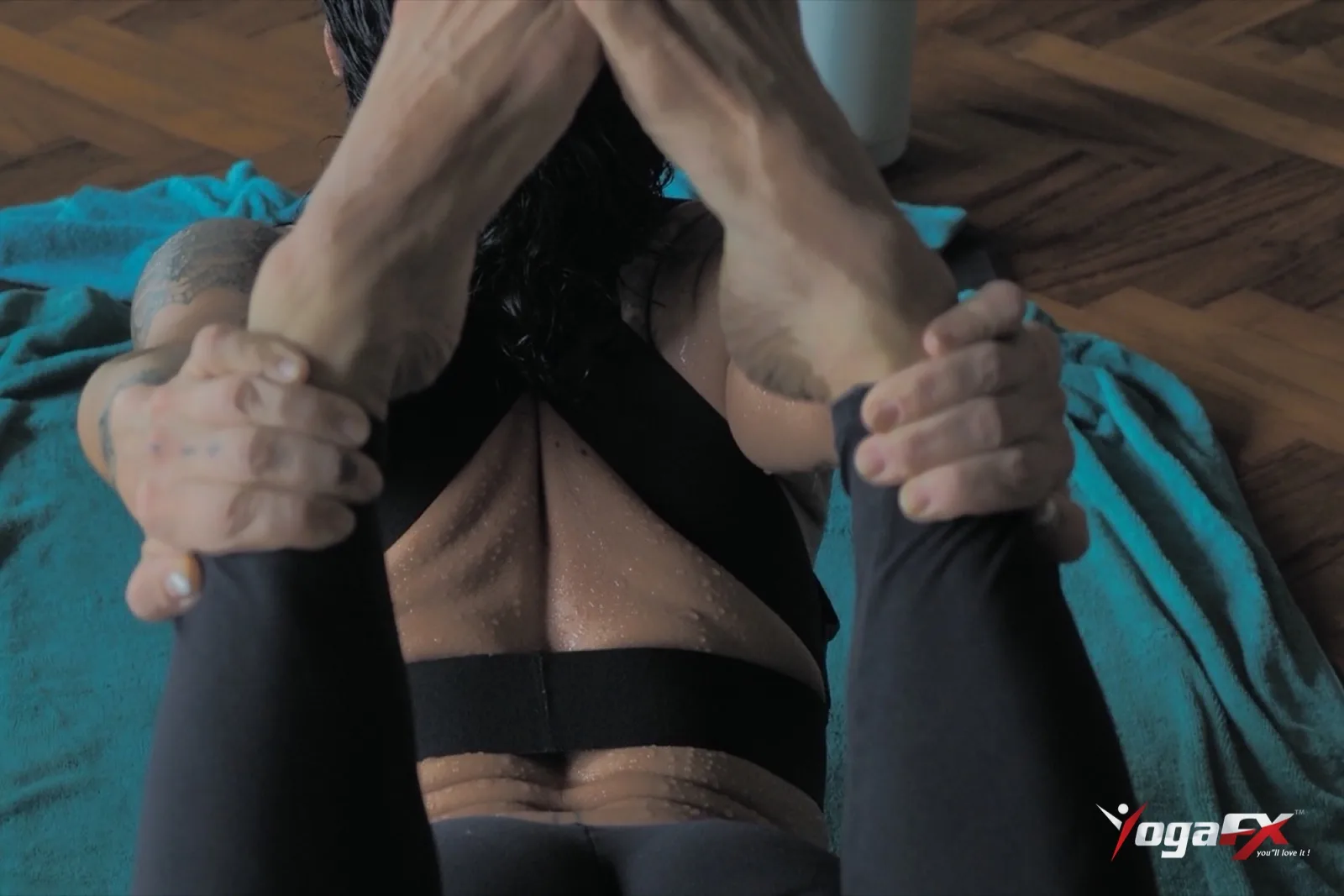
In a YogaFX Bikram-style class, the room is kept at about 40°C with roughly 40% humidity. The heat comes from the building and the tropical climate, not electric heaters. It holds steady for the full 90 minutes.
Students hear a scripted dialogue with no music and no demonstration. Attention stays on the body and the breath, not on the teacher's example.
Regular yoga has no such setting, so your practice takes the temperature of wherever you are. That variability is not a flaw. For many people it is what makes home practice sustainable, because you can start a sequence the moment you have ten minutes.
Hot Yoga vs Regular Yoga Side by Side
The table compares hot yoga vs regular yoga on the factors students ask about most. The studio column describes the YogaFX class format. The home column describes typical conditions, which vary from person to person.
| Factor | Heated studio class | Regular yoga at home |
|---|---|---|
| Room temperature | About 40°C, held by the building and the climate | Whatever the room is that day |
| Humidity | About 40% | Usually uncontrolled |
| Session length | 90 minutes in the Bikram-style format | Any length you choose |
| Teaching style | Scripted dialogue, no music, no demonstration | Videos, apps or a self-guided sequence |
| Feedback on alignment | Teacher walks the room and adjusts students | Self-check or a mirror |
| Effort and sweat | Heavier sweating and more cardiovascular load | Lower sweat rate, easier to control effort |
The table makes one thing clear. A heated room is not regular yoga with the thermostat turned up. It changes the session length, the feedback you receive, and the amount of work your body does before the first posture is finished.
Four Numbers That Explain the Heat
Sources: YogaFX class format; Nyer et al., 2023, Journal of Clinical Psychiatry (PubMed 37883245).
What the Research Says About Hot Yoga vs Regular Yoga
Heated yoga has been studied more than most people realize. The designs matter, though. The strongest recent trial came from Massachusetts General Hospital.
Nyer and colleagues ran an 8-week randomized trial of community heated hatha yoga in adults with moderate-to-severe depression. It was published in the Journal of Clinical Psychiatry in 2023.
Of the yoga group, 59.3% had a drop of at least half in their depression scores. In the waitlist group, 6.3% did.
A second trial, by Hui and colleagues in Psychosocial Intervention (2022, PMC10268545), followed 290 healthy adults who had never practiced yoga for six weeks. The hot yoga group reported better life satisfaction, general health, mindfulness and peace of mind than the waitlist group.
Neither trial compared heated classes with room-temperature classes. Both compared heated yoga with doing nothing. So the evidence supports heated yoga as a worthwhile practice.
So it does not prove that the heat itself is the reason for the gains. Treat heat as one tool, not a requirement.
Heat Is a Real Load on the Body
Because heat changes what safe practice looks like, the guidance matters. The National Library of Medicine's MedlinePlus guide to heat illness is a useful reference. It describes muscle cramps as the first stage, followed by heat exhaustion and then heat stroke.
The same guide advises plenty of fluids when you are active in warm conditions. It also notes that some medicines change how the body handles heat.
Those include water pills, beta-blockers, and some medicines used to treat depression or ADHD. Heart disease matters too. If you take any of these or have a heart condition, talk to your doctor before starting heated classes.
Consult a healthcare professional before starting any new exercise program, and listen to your body if something feels wrong.
Who Should Choose Regular Yoga, and Who Should Choose Heat
Your answer to hot yoga vs regular yoga depends on your goal, your health and your schedule more than on the style itself. A few patterns come up again and again with students.
- Choose regular yoga at home if you are new to exercise, you have a heart condition you have not discussed with a doctor, or you need a practice that fits small gaps in your day.
- Choose heated yoga if you want a demanding 90-minute session, you are comfortable with sweat, and you can commit to a few classes each week.
- Consider both if you are training to teach. Good teachers need the feel of heat so they understand what students experience, and the calm of a quiet room so they can hear themselves speak.
Some students also ask whether home practitioners can enter competitions. Our guide to the International Yoga Sports Federation answers that question.
If teaching from home is part of your plan, our article on whether you need a license to teach yoga online explains the basics. It is worth reading before you commit to any format.
In practice, many students do not pick one side permanently. They use the heated room for focused, longer work and keep a short home routine for mobility on the days in between.
That combination turns hot yoga vs regular yoga from a contest into a schedule. It is less about winning and more about what your week can sustain.
So is hot yoga better than normal yoga? For some people, yes. For others, a steady home routine beats an occasional hot class, because consistency does most of the work. The honest answer depends on which of those two students you are.
How to Move From Home Practice to a Heated Room, Step by Step
If you are weighing hot yoga vs regular yoga for the first time, change one variable at a time. The sequence below is the one we give students in their first two weeks. It is slow on purpose.
- Week 1: keep your home practice. Do 20 to 30 minutes of regular yoga three times this week. Familiar shapes make the first heated class feel less like a new language.
- Week 2: take one heated class. Arrive hydrated and eat a light meal a couple of hours before. Stand near the door so you can step out if you feel dizzy or unwell. Leaving early is a sensible choice.
- Week 3: add a second class. Notice how much you sweat, how quickly your heart rate settles, and whether your breathing stays steady in the standing postures.
- After that: compare, do not compete. Keep home practice for mobility days and the heated room for deeper work. Or pick one format and stay with it.
Many students find the feedback in the room clearer than anything on a screen. A teacher can see your alignment, correct a knee or hip in real time, and show what a posture should feel like.

That feedback is a strong argument for a studio, even if heat is not your reason for coming.
Most of the time, the people who struggle with hot yoga vs regular yoga are not weak. They are rushing. Slowing the first two weeks gives the body time to learn the heat, and that is why the plan above is built the way it is.
Common Mistakes When Switching From Mat to Heat
- Drinking only when thirsty. Fluid needs rise in heat, and thirst lags behind. Sip water across the day, not only during class.
- Treating rest as weakness. Resting in Balasana (child's pose) or taking water breaks is part of the practice.
- Comparing your heat tolerance with the person next to you. Body size, fitness, medication and sleep all change how the room feels.
- Dropping the home practice completely. A few minutes of mobility work between heated classes keeps progress steady.

Hot Yoga vs Regular Yoga in the Words of Our Students
Our reviews come from Google, Yoga Alliance and YouTube. These three come from trainees who moved from a regular practice into training with us. Quotes are word for word from the review or video transcript.
"it has been life-changing and this will be frame in the entrance of our yoga studio" (Fabiola, YouTube review, 2024, watch the video)
"it's one of the most amazing things I've ever done" (Jason, YouTube review, 2023, watch the video)
"you change our life for the better" (a trainee in our YouTube review, 2023, watch the video)
None of these students promised that heat would fix anything. They describe a focused, demanding practice with a teacher who knows their name. A home practice can offer that too, once it has structure and feedback.
Where Mr. Ian Terry and YogaFX Fit In

Mr. Ian Terry, E-RYT 500, has taught more than 12,000 hours. Since YogaFX began in 2017, he has trained more than 1,500 teachers from over 80 countries.
He trained for five years, from 2014 to 2019, alongside the founder of the Bikram Hot 26&2 method. That lineage is why our classes follow the original Hot 26&2 Yoga sequence, with the scripted dialogue delivered in full.
Our studios in Seminyak and Canggu, Bali, are open from 06:00 to 22:00 every day. If you want to feel the heat before committing, the Bikram hot yoga online course lets you study the postures and dialogue at home first.
For students who want to teach, the next MasterClass runs from Sunday 24 January to Friday 29 January 2027 at the Soham Wellness Center in Seminyak. It is hybrid: pre-course online study, then an intensive in Bali.
Graduates receive the Yoga Alliance RYT 200 and the Bikram Hot 26&2 200-Hour International Yoga Certification. The Early Bird price is US$1,899, against a standard US$1,999. Payment plans start at US$250 a month.
Still deciding between heated and room-temperature practice? Read our full comparison of heated and room-temperature classes from the teacher-training side. It answers the same question for someone preparing to lead a class.
What to Expect From Hot Yoga vs Regular Yoga in the First Month
The first month is where the difference between hot yoga and normal yoga shows up most clearly. Expect more sweat in the early classes, and expect it to settle as your body adapts. Adaptation takes time, so judge the trend across several sessions rather than one hard day.
Most students notice three things. The first is thirst, which tends to arrive earlier in a heated room than at home. The second is fatigue after class, which often lasts a few hours. The third is steadier breathing, which usually comes once the heat starts to feel familiar.
Keep a simple log for four weeks. Write down the room temperature if you know it, how you felt in the standing postures, how much water you drank and how you slept. Patterns show up quickly, and they help you decide whether to add a class or hold steady.
A log also helps when you talk to your doctor. Bring it along if you have a heart condition, take water pills or beta-blockers, or have questions about your heat tolerance. Good information makes that conversation shorter and more useful.
Questions to Ask Before You Book a Heated Class
Booking the right class matters as much as choosing the right format. Ask these questions before you pay, so you know what you are walking into.
- Is the room heated to a stated temperature, and how is the air moved and kept fresh?
- How long is the class, and is there a clear point where you can rest if you need to?
- Will the teacher give alignment feedback during class, or only lead the sequence?
- What happens if you feel unwell? Ask whether students may leave the room and where drinking water is kept.
Asking these questions lets you compare hot yoga vs regular yoga options on the same terms. That way you are choosing a class you can trust, not a slogan on a poster.
FAQ: Hot Yoga vs Regular Yoga
Is hot yoga better than regular yoga?
When you compare hot yoga vs regular yoga, neither is better for everyone. Hot yoga adds heat and humidity, which makes sessions feel harder and asks more of your heart and sweat response. Regular yoga adapts more easily to any schedule or budget. Many students combine them, using a heated room for focused work and home practice in between.
Is hot yoga harder than regular yoga?
For most people, yes, at least at first. The room at about 40°C and 40% humidity makes the same postures feel heavier, and a 90-minute session adds endurance demands. Regular yoga can be as hard as you choose. Start with one heated class a week, and add more only when your breathing stays steady.
Does hot yoga burn more calories than regular yoga?
Heated classes raise your heart rate and sweat rate, but calorie burn depends on body weight, effort and session length. No single number applies to everyone. Treat calorie burn as a side effect rather than the goal. If heart health is a concern, check with a doctor first.
What is the difference between regular yoga and hot yoga?
Hot yoga is practiced in a heated room, at YogaFX around 40°C with about 40% humidity. Regular yoga takes place at room temperature. The postures can match, but the heat changes how you feel, how much you sweat and how long recovery takes. Hot yoga offers a more demanding 90-minute session.
Still have questions? Message Mr. Ian Terry and the YogaFX team on WhatsApp and we will answer them personally.