What Is Bikram Yoga? The 26 Postures Learned From Home
By Mr. Ian Terry, E-RYT 500, founder of YogaFX · Published
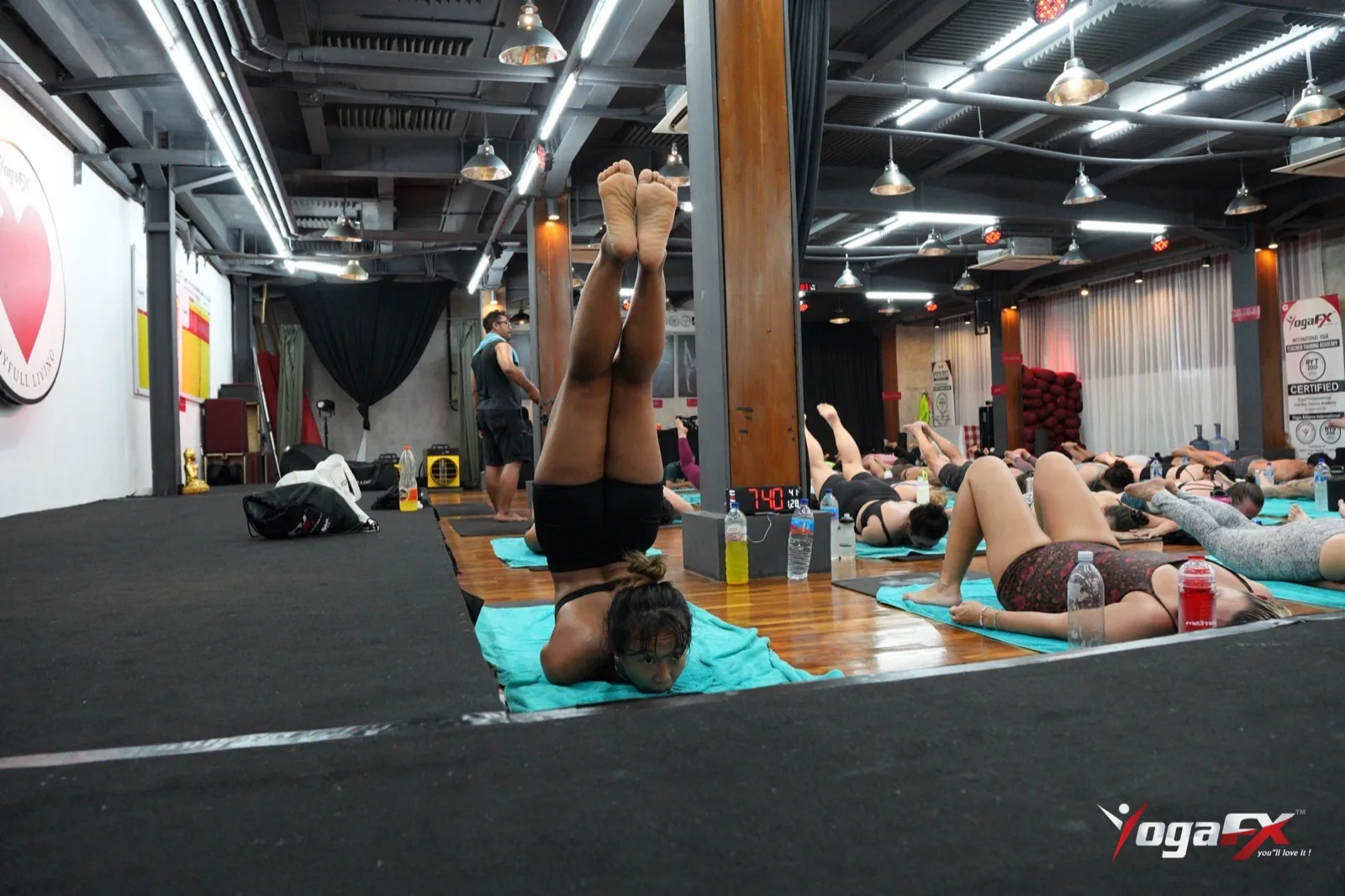
What is Bikram yoga? It is one fixed 90-minute class of 26 postures and 2 breathing exercises, taught in a room heated to about 40°C with 40% humidity. A teacher guides every move with the same spoken script. The good news for busy adults: you can study the order at home before you ever step into the heat.
This article is part of our Bikram yoga teacher training guides.
What Is Bikram Yoga? A Home Learner's Answer
Let's start with the short version of what is Bikram yoga. It is a sequence, not a mood or a vague style. Every class has the same postures, in the same order, with the same words from the teacher. Studios today often call it Hot 26&2 or the Original Hot 26&2, and the format is the same one.
That fixed shape is what makes it different from most hot classes. A flow class changes from teacher to teacher. A Bikram class doesn't. So when you ask what is Bikram yoga, the honest answer is that it is a repeatable routine you can learn, one posture at a time.
This is the method Mr. Ian Terry teaches at YogaFX. He is the Founder and Lead Instructor, an E-RYT 500 with more than 12,000 teaching hours, and he trained for five years, from 2014 to 2019, with the founder of the method. Because the order never changes, you can study it long before you meet the heat.
Three things define the class:
- The room. About 40°C and 40% humidity, which feels like a warm tropical day.
- The script. A spoken dialogue guides every posture, with no music and no demonstration.
- The length. 90 minutes, from the opening breath to the closing one.
For adults with a full-time job, this matters a lot. You can rehearse one small piece after dinner and return to it tomorrow without learning anything new. That's why our online route works.
The 26 Postures and 2 Breathing Exercises, Seen From Home
Most guides that explain what is Bikram yoga list every posture in a long column and leave you more confused. A better way to see the class is as a path. First you learn the words, then the order, then you meet the heat, and finally you can teach it back. The cards below show that path.
The class itself has four parts, and each one asks for something different:
- Opening breathing. A slow, counted breath while standing, before any posture.
- Standing series. Balance, forward folds and backbends such as half moon, awkward, eagle, triangle and tree.
- Floor series. Cobra, locust, bow, camel, rabbit and a spinal twist, done on the mat.
- Closing breathing. A fast, sharp breath at the very end of the class.
To answer what is Bikram yoga in practice, the table below turns those four parts into a home study plan. It shows what to practise in each stage, how long each session should last, and what "done" looks like.
| Study stage | Focus | Session length | Checkpoint | Heat needed? |
|---|---|---|---|---|
| Stage 1 | The opening breathing and the first cues, spoken aloud | 10 to 15 minutes | You can say the cues without reading them | No |
| Stage 2 | Standing postures in low versions, beside a wall | 15 to 20 minutes | You know the order of the standing series | No |
| Stage 3 | Floor postures after a warm-up, small and gentle | 15 to 20 minutes | You know the order of the floor series | No, and go slowly |
| Stage 4 | A half-speed run-through of the full order | Up to 45 minutes | You can name every posture in sequence | Not at home |
Notice what the table does not ask. It doesn't ask you to master every posture. It asks you to learn the order and the words first. Depth and flexibility come later, and they come faster in a heated room with a teacher watching.
How the Spoken Script Shapes Every Class
The script is the part most newcomers miss. In a Bikram class, the teacher doesn't demonstrate, and there's no playlist. Instead, the teacher speaks a set dialogue, cue by cue, and the room moves together. That's why two classes in two countries can feel almost identical.
For students, the script does three jobs. It tells you where to put your body, it sets the pace so you can breathe, and it gives you something to follow when the heat makes your mind wander. For trainee teachers, it is the whole craft. Our guide to the Bikram yoga dialogue explains how it is built and how to start learning it online.
As a result, learning at home feels different from following a normal yoga video. You aren't copying a teacher's shape on a screen. You're reading and saying the cues, then matching your body to the words.
A simple way to start learning the words
- Read one posture's cues aloud, slowly, twice.
- Stand or lie in the starting position without moving yet.
- Say the cues again while you move, at half speed.
- Rest for three breaths, then repeat once.
- Stop. Do one posture per session in your first week.
That last step surprises people. However, short sessions work better than long ones, because the words stick when you aren't tired.
Walking Into Your First Hot Class Already Prepared
Here is why the home study matters. The first hot class is where most people feel nervous, and much of that nervousness comes from not knowing what happens next. When you already know the order, the 90 minutes feel smaller. You hear a cue and recognise it.
Expect a few things, even with good preparation:
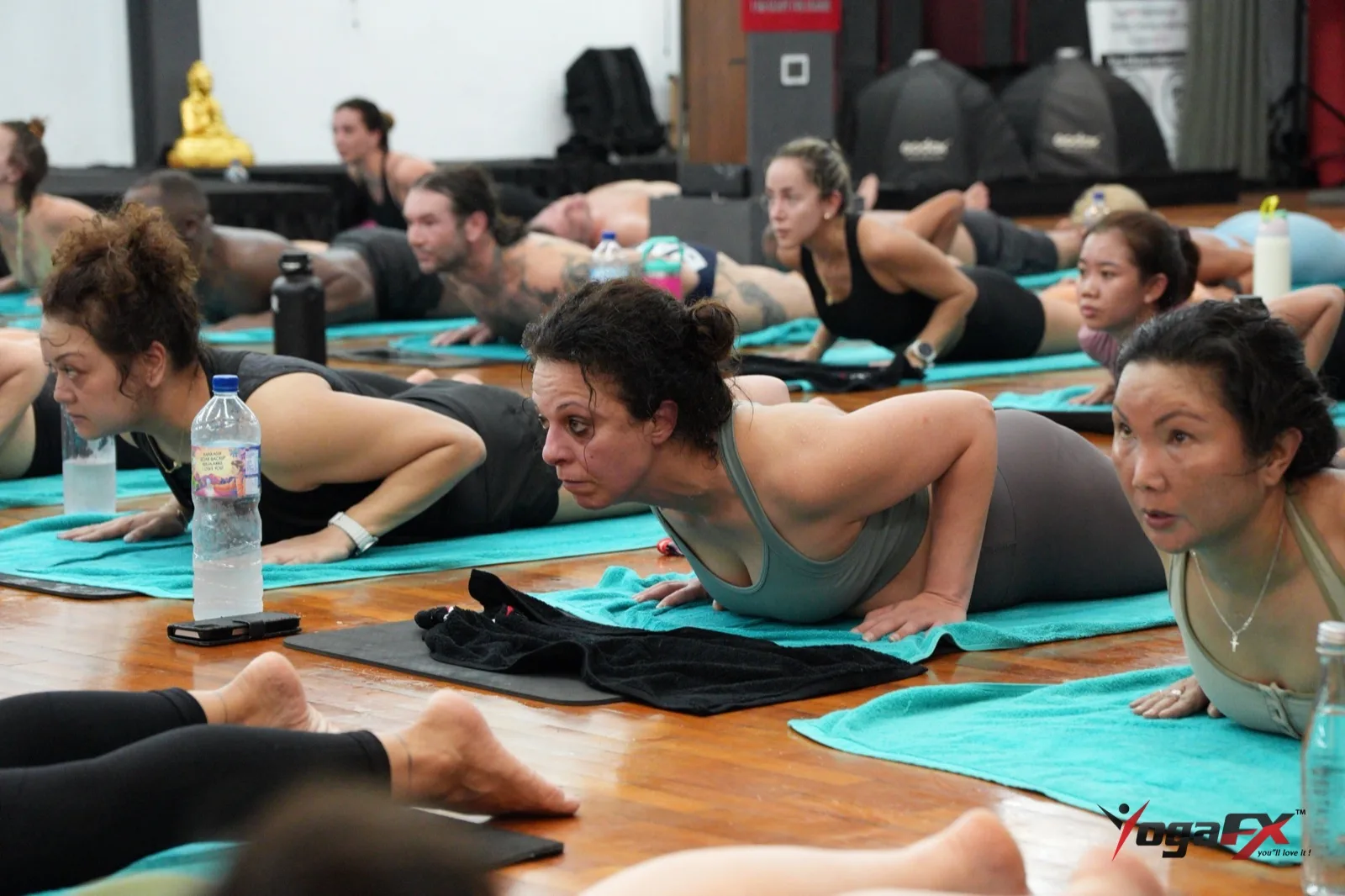
- Sweat, fast. You'll be wet within minutes, so bring a large towel and a full water bottle.
- Rest is allowed. Sit or lie down whenever you need to, and rejoin at the next posture.
- A tired, quiet finish. Most people lie still at the end and feel calm rather than wired.
So, if you're wondering what is Bikram yoga like once the heat arrives, the answer is simple. It is a long, steady, warm class where your only job is to follow the words. You don't need to be flexible. You need to be willing to stay in the room.
How to Learn What Is Bikram Yoga From Home, Safely
You can study the sequence in a living room, and many YogaFX trainees do exactly that before the Bali intensive. Our article on original hot yoga at home goes deeper on the set-up. Here are the rules that matter most.
- Warm up first. A cool floor means cold muscles. Walk, march in place or do a few easy arm circles for five minutes.
- Keep every posture small. Stop at the first pinch, and never force a backbend.
- Use a wall or a counter. Balance postures need support while you learn.
- Skip the heat at home. Don't crank up a room heater or practise in a sauna to copy the studio.
- Drink water. Sip before and after, as you would for any exercise.
One more point on safety. Heat adds real strain, so please talk to a doctor first if you have heart disease, high blood pressure, are pregnant or take medication. This article is education, not medical advice. If you're unsure, ask a healthcare professional before your first hot class.
What Research Says About the Bikram Yoga Sequence
Claims about hot yoga often run ahead of the evidence, so let's stay careful when people ask what is Bikram yoga good for. The best recent overview is a 2025 systematic review in Sports Medicine - Open by Willmott and colleagues. It pooled 43 studies with 942 participants, and Bikram was the most common method, used in 74%. The abstract is at PubMed Central.
What the review found
The review found that chronic hot yoga appeared to bring cardiometabolic and functional adaptations, for example in body composition, balance and flexibility. It also described psychological findings as promising but inconclusive. Its conclusion, however, is the line worth remembering: claims that hot yoga gives greater health benefits than other yoga or traditional exercise are, for now, unsubstantiated.
A trial on mood
A second source looks at mood. In a 2023 trial from Massachusetts General Hospital (Nyer and colleagues), 65 adults with moderate-to-severe depression were analysed after eight weeks. In the heated yoga group, 59.3% had their symptoms fall by half or more, compared with 6.3% on the waitlist. The authors call for more research with active comparison groups, and you can read the trial abstract on PubMed Central.
A weekly benchmark
Finally, a simple benchmark helps. The CDC recommends adults aim for 150 minutes of moderate activity a week, plus muscle-strengthening on at least 2 days. One 90-minute class is a real contribution to that target, and two classes add up to 180 minutes. It is still one tool, not a treatment.
So what does this mean for you? When you ask what is Bikram yoga, treat it as a structured, demanding exercise that may help your fitness and mood, not as a medical treatment. If you have a health condition, check with your doctor first.
What YogaFX Students Say About Learning It
Numbers only tell part of the story, so let's hear how students describe it. Three short voices stood out when we read our reviews, from three places where YogaFX collects feedback.
"The school and learning platform was phenomenal - it was user friendly and honestly very engaging." That is Malini, in a Yoga Alliance review from 2026, speaking about the online part before the in-person week.
"Loved the journey we went on together. Ian helped us internally grow and look at ourselves. He built a beautiful community." That is Siobhan, in a Google review from 2025.
Lidya, a trainee in our YouTube graduation video from 2023, said she could change her posture in one week, and that she would now teach the staff in her office a free class. Her short video is below.
Notice the pattern in all three. People talk about the learning and the community, not only the postures. That fits how the sequence works: because it is fixed, everyone in the room is learning the same thing together.
Hot Vinyasa or Bikram: Which Is Easier to Study Online?
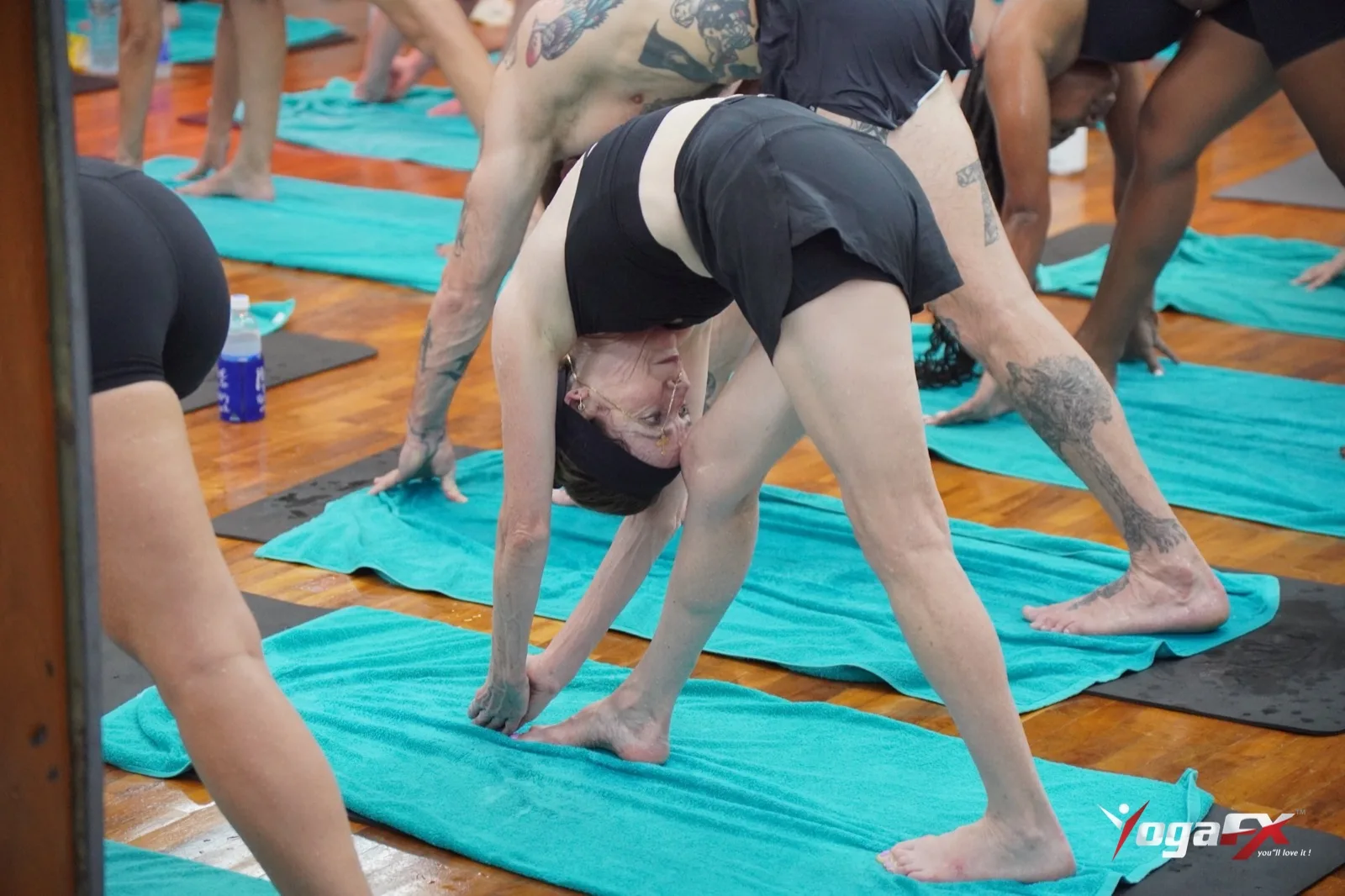
People often mix up the original class with other heated styles. A hot vinyasa class moves quickly from shape to shape and changes with the teacher. Bikram yoga holds still and repeats. If you want the full comparison, read our guide to Bikram vs hot yoga.
For a home learner, the difference is practical. A fixed sequence is easier to memorise, so it is easier to study online. A changing class gives you novelty, but nothing to rehearse. That's why we say what is Bikram yoga is a question you can answer by learning, not only by sweating.
From Your Living Room to the Bali Studio
Here is how the hybrid route works at YogaFX. You study online, at home, around your job. Then you come to Bali for a six-day intensive where you finally meet the heat and the teacher. The next MasterClass runs with check-in on Sunday 24 January 2027 and check-out on Friday 29 January 2027, at Soham Wellness Center in Seminyak.
That arrangement fits adults who can't take months away, and it turns the question of what is Bikram yoga into a skill you can use. Most people need only five working days off. Students graduate with Yoga Alliance RYT 200 and a Bikram Hot 26&2 200-hour international certification. Our article on how to become a Bikram yoga teacher lays out the steps of the hybrid route.
There is also a plain-language overview of the basics written by our training hub team, and it's a good second read: a short explainer on how the Bikram class is built. Together with this guide, it should answer most first questions.
If you want the full method in one place, including the heat science, start with our complete Hot 26&2 yoga guide. Then, when you feel ready, talk to Mr. Ian before you decide. YogaFX has trained more than 1,500 graduates from over 80 countries, and Mr. Ian speaks to every student personally before enrolment.
If you still ask what is Bikram yoga after reading this, that is fine. The fastest way to answer it for yourself is to try one posture and the words that go with it. Your next step can be small: pick one cue, say it aloud and try the half-speed version tomorrow evening.
FAQ
How many postures are in Bikram yoga?
A full class has 26 postures and 2 breathing exercises, 28 items in all, done in the same order every time. The standing postures come first and the floor postures follow. Because the sequence is fixed, you can learn the order at home and recognise each posture when you reach the studio.
Is Bikram yoga safe?
It is safe for many healthy adults when you go gradually, but the heat adds real strain. Drink water, rest whenever you need to, and stop if you feel dizzy or unwell. Talk to a doctor first if you have heart disease, high blood pressure, are pregnant or take regular medication.
What is Bikram yoga based on?
The sequence arranges classical hatha yoga postures and breathing in a fixed order, developed by Bikram Choudhury, and today many studios call it Hot 26&2. YogaFX offers independent training in this method. It is not an official Bikram Choudhury teacher training.
How often should you do Bikram yoga?
Most beginners start with one or two classes a week and add more as the heat feels easier. Listen to your body and leave a rest day when you are tired. Home study of the order and the words can be done in short sessions on the days between classes.
Can you learn the Bikram yoga sequence at home?
Yes, you can study it at home. Learn the order of the postures, the breathing and the spoken words on a cool floor, using short sessions and a wall for balance. Home study is a rehearsal, not a replacement, because the hot room changes how every posture feels. Finish with a live class.
Still have questions? Message Mr. Ian and the YogaFX team on WhatsApp and we will answer them personally.