Bikram Yoga History in Ten Minutes: A Short Timeline for Busy Beginners
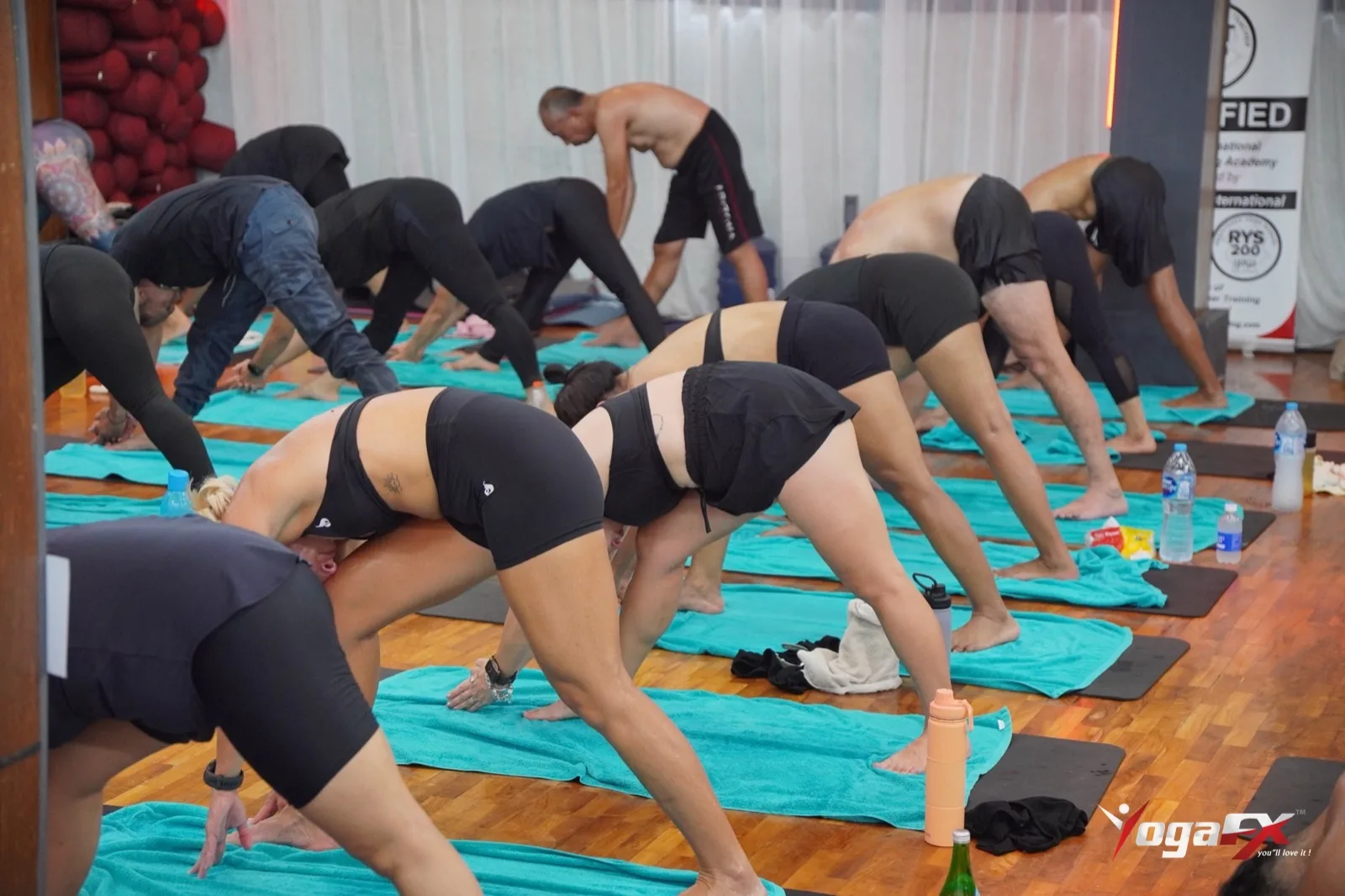
The history of Bikram yoga runs from a Calcutta physical-culture school in 1923, to Los Angeles in 1971, to a US appeals court in 2015. The postures are old, the brand is newer, and the legal fight is over. Here is the short version, plus what it changes for you at home.
Mr. Ian Terry, E-RYT 500 and founder of YogaFX, spent five years, 2014 to 2019, training alongside the founder of the Bikram Hot 26&2 method. He has taught for 12,000+ hours since. This guide keeps his view in the background and puts the dates up front, because a busy person needs the outline first.
Bikram Yoga History in Ten Minutes: Five Stops
You don't need a biography to understand where this class came from. Five stops cover it. Read the cards below, then keep going for the detail behind each one. If you only have ten minutes today, the cards are your Bikram yoga history in short form.
Calcutta
Bishnu Ghosh opens a college of physical education. The postures start here.
Los Angeles
Bikram Choudhury begins teaching. The fixed order, heat and script take shape.
The courtroom
A US appeals court treats the sequence as a system, not a copyrightable work.
The renaming
A documentary lands and many studios drop the name. The class stays the same.
Your living room
Ten unheated minutes at home is a fair way to meet the sequence.
Notice the shape of the Bikram yoga history timeline. The lineage is old, the brand is from the 2000s, and the legal protection around both fell away within a few years of each other. That sequence of events is why studios could change the name and keep every posture.
From Calcutta to Los Angeles: Where the Postures Came From
The first stop is 1923. Bishnu Charan Ghosh opened the College of Physical Education in Calcutta that year. He cared about measurable change: strength, mobility and recovery from injury. His students used Hatha postures as training and therapy, not as ritual.
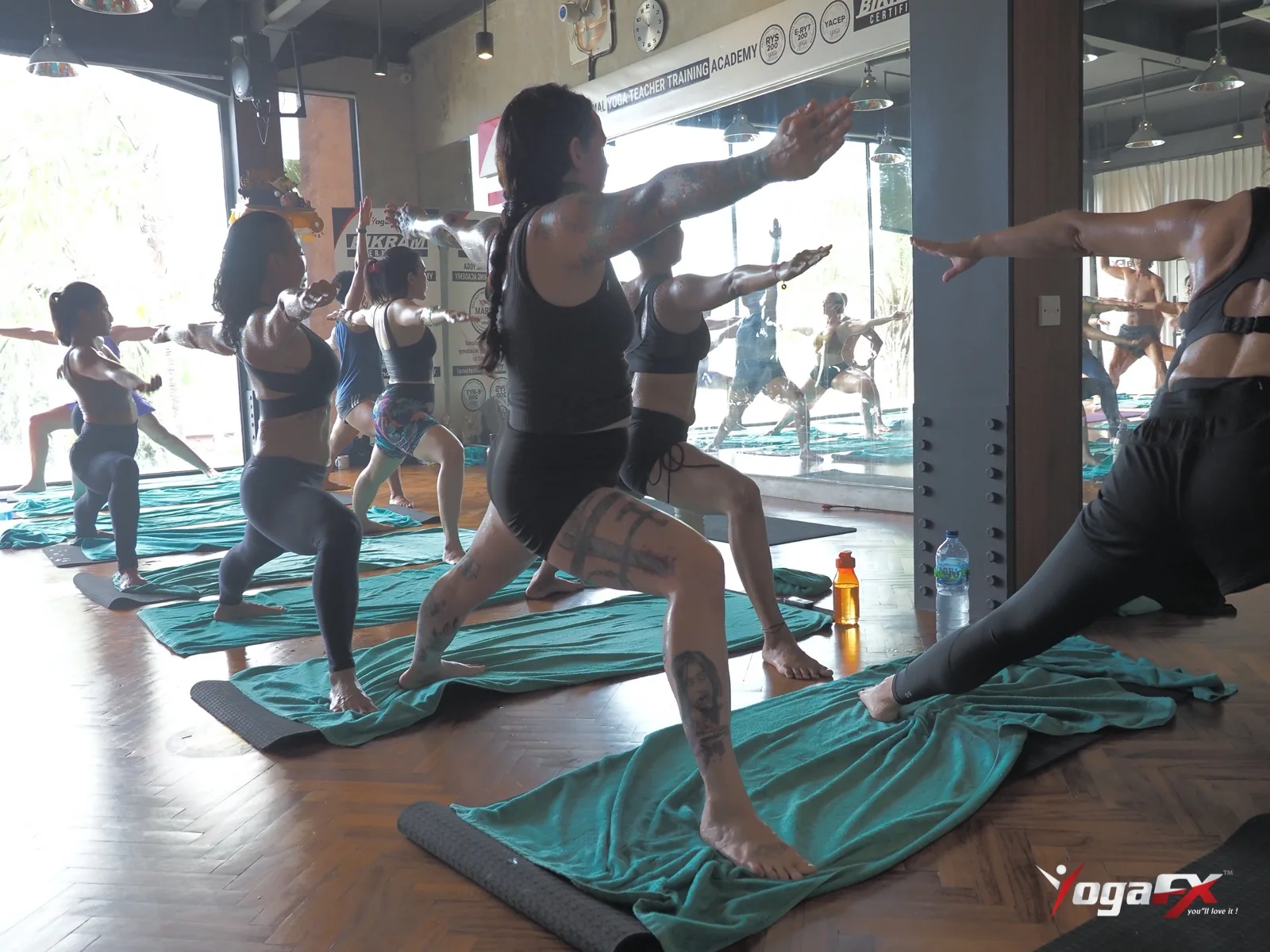
Bikram Choudhury, born in Calcutta in 1944, said he trained under Ghosh from childhood. He left for the United States in 1971 and began teaching in Los Angeles. That is where the class took the form people know today:
- Two breathing exercises and 26 postures, repeated in one fixed order.
- Ninety minutes in a room kept near 40°C.
- A spoken script in place of demonstration or music, so every trained teacher says the same words.
The script does a lot of work. With the words fixed, a brand-new teacher can lead a whole class in week one. So the format spread fast, and graduates carried it to dozens of countries. That spread is the engine of Bikram yoga history, and it is why the same class turns up in so many cities.
Is Bikram Yoga Copyrighted? What the 2015 Ruling Means
No, not in the United States. In 2015 the Ninth Circuit decided Bikram's Yoga College of India v. Evolation Yoga (803 F.3d 1032). The court treated the sequence as a system for improving health, and copyright law excludes systems and processes. We could not open the opinion from our publishing tool this week, so we name it here rather than link it. Search the case name and read it yourself.
Here's what that means in plain terms:
- Free to use: the postures, the breathing exercises, the order they come in, the heat and the 90-minute timing.
- Protected on paper: the actual wording of a published book, since copyright covers expression and not the idea behind it.
- Stays with its author: original writing, including your own class notes.
For a teacher, that means the sequence is free to teach. What you can't do is photocopy someone else's book and sell it. For a student, it means the class you do at home is not a pirated product.
Is Bikram Yoga Trademarked? What Happened to the Name
Copyright protects creative work, while a trademark protects a name. So the next question is who owns the word. Public US trademark records show the registered BIKRAM YOGA mark was cancelled in 2014. Later filings for BIKRAM and for the numbers 26 and 2 were abandoned. The dead marks give no live registered rights on the US register.
That is why you still see the word on studio signs. It's also why many studios dropped it by choice. Trademark law is national, so a US record says nothing about another country. This is general information, not legal advice, and a trademark lawyer should check before you put a name on a lease or a logo.
Alongside the court cases, civil lawsuits from former students became public from 2013 onward, and the founder denied the allegations. A 2019 Netflix documentary then brought the story to a wide audience. Many studios renamed themselves after that. The class stayed the same, and so did the postures. For the full court and trademark record, see the detailed legal timeline on our sister site.
What the History of Bikram Yoga Changes for Your Home Practice
A timeline is only useful if it changes a decision. For someone practising in a spare room, Bikram yoga history changes less than you'd expect, and the table shows each moment and what it means on your mat, so you can see where Bikram yoga history touches your practice.
| Moment | What changed | What it means at home |
|---|---|---|
| 1923, Calcutta | Postures taught for strength and recovery | You can treat them as training, not ritual. Short sessions count. |
| 1971, Los Angeles | Fixed order, heat and spoken script | A script means you can learn the order from audio and video, one posture at a time. |
| 1979, the book | The class is written down | The written word is protected text. Learn from a teacher, not from a photocopy. |
| 2015, the court | Sequence ruled a system, not a copyrighted work | Nobody needs a licence to practise or teach the postures in the US. |
| 2019, the renaming | Many studios drop the Bikram name | Search for 26&2 or Original Hot Yoga as well, or you'll miss classes near you. |
| Today | Same class under new names | Start unheated at home, then add heat in steps once the order feels familiar. |
Notice the last row. The class is the constant. Everything that moved was the label, the law and the culture around the founder, and none of that is on your mat.
What the History Does Not Change: The Research
The research story comes late in Bikram yoga history, after the founder's reputation had already fallen. Scientists looked at the practice itself, not at the person who made it famous.
In an 8-week randomised trial, Nyer and colleagues in the Journal of Clinical Psychiatry (2023), 59.3% of the heated-yoga group had their depression symptoms fall by half or more, against 6.3% of the waitlist group. The trial used heated Hatha yoga in general, not only the Bikram sequence, and it was small, with 80 people randomised.
A wider systematic review by Willmott and colleagues (2025) pooled 43 studies and 942 participants on hot yoga. It found interesting health and functional effects. It also warned that claims of hot yoga beating other yoga or ordinary exercise are not yet supported, and that many studies were weakly designed.
So the fair reading is modest. Research suggests heated classes may help mood and well-being. It doesn't show that they treat any condition, and heat adds real strain. If you have a heart condition, are pregnant or take medication, consult a healthcare professional before you start.
That is also why the Bikram yoga history matters less for your health than for your choices. The dates tell you who owns what. The research tells you what a class might do for you. Keep the two apart and you'll avoid most of the hype on both sides.
Three Myths About Bikram Yoga History
Bikram yoga history attracts a lot of half-truths, and a beginner meets them all in the first week. Three come up again and again.
- "The class is banned or illegal now." It isn't. The 2015 ruling went the other way, so the sequence is free to practise and teach in the US.
- "You have to call it Bikram." You don't. Hot 26&2 and Original Hot Yoga describe the same class, and the postures are what count.
- "The postures were invented in Los Angeles." They weren't. The fixed order, the heat and the script took shape there, but the postures trace back to the Calcutta school.
Each myth falls apart once you set it against the dates. That is the real use of a timeline: it lets you check a claim in ten seconds instead of ten minutes.
One last point on Bikram yoga history for busy readers. You can learn it in the gaps of a week: a five-minute read on the train, a short video at lunch, a few minutes of breathing at night. The story rewards small, regular doses, much like the practice itself.
A Ten-Minute Home Plan for Busy Beginners
If the story has you curious, you don't need a hot room to meet the method. A short, unheated session at home is a gentle first step. Treat it as a taster of the 26&2 order, not a full class, and stop at the first sign of dizziness or pain.
- Minutes 1 to 2: stand tall and practise slow, full breathing. Breathing opens the full sequence, so it is a fair place to start.
- Minutes 3 to 5: try two or three simple standing shapes, such as a gentle forward fold, with your knees soft.
- Minutes 6 to 8: move to the floor for an easy twist and a short rest on your back.
- Minutes 9 to 10: lie still and breathe. Let your heart rate settle before you get up.
Do this three or four times a week for a few weeks. Then, if you like it, add length before you add heat. That order protects your body and builds the habit that makes every later class feel familiar. If you have a medical condition, check with a healthcare professional first.
Mr. Ian Terry's View: Method and Culture Are Separate
Mr. Ian spent those five years beside the founder, so he saw the teaching and the culture around it up close. His view, which shapes how we teach, is that the two can be separated. The posture clinics were precise, and the dialogue standard produced teachers who could hold a room in their first class. The deference and personality culture were things he chose not to carry forward.
In practice, that means three things in our training:
- The method stays whole: the same sequence, the same heat and the same spoken structure.
- The culture changes: trainees can ask questions, set limits and hear plain feedback.
- The record stays honest: the lineage gets taught in full, awkward parts included.
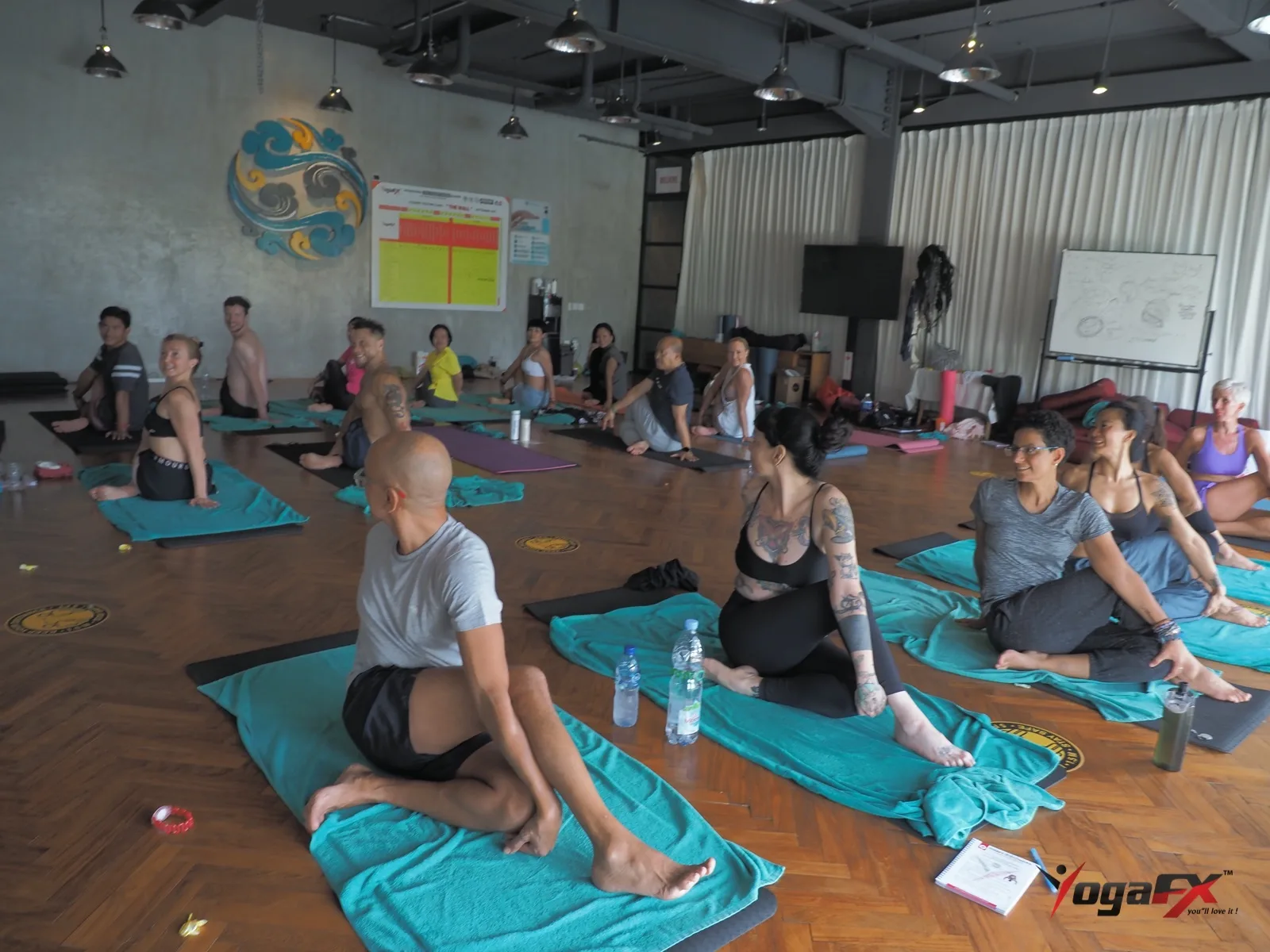
What Graduates Say About Learning the Lineage
Three recent graduates spoke on camera at their graduation ceremonies. Their words are short and unpolished, and that's exactly why we kept them.
"I'm so grateful for you. It takes me a while for me to open up and I feel like I did that yesterday."
Clara, YouTube graduation video, 2024
"I feel so happy, so blessed, powerful. Thank you so much everybody." (translated)
Eni, YouTube graduation video, 2024
"Your team is fantastic, I'm thankful to all of you for the support."
Ajay, YouTube graduation video, 2024
From Your Living Room to Bali: The Next Step
If the history has made you curious about the method itself, the order matters. Bikram yoga history is a good start, and practice is the next step. Start with short, unheated sessions at home. Then study the teaching material online around your work week. Our guide to hot yoga poses you can practise at home between classes is a gentle place to begin.
Wondering how 26&2 differs from other heated styles? Our comparison of hot vinyasa vs Bikram online shows why a fixed script is easier to learn from a screen. If teaching is the goal, read how online yoga teacher certification works and what RYT 200 means.
The Bikram Hot 26&2 Yoga Teacher Training MasterClass is a 6-day hybrid course: an online pre-course first, then an intensive in Bali. The next batch checks in on Sunday 24 January 2027 and checks out on Friday 29 January 2027, at Soham Wellness Center in Seminyak.
Graduates receive Yoga Alliance RYT 200 plus the Bikram Hot 26&2 200-Hour International Yoga Certification. The Early Bird price is US$1,899, against US$1,999 normally, with instalments from US$250 a month.
FAQ: Bikram Yoga History Questions
Is Bikram yoga and hot yoga the same?
Not quite. Bikram yoga is one fixed hot class: 26 postures, 2 breathing exercises, 90 minutes, about 40°C. Hot yoga is the wider family, and many classes in it use other sequences. So every Bikram class is hot yoga, but most hot yoga is not Bikram.
Is Bikram yoga still a thing?
Yes, under newer names. Studios now often say Hot 26&2 or Original Hot Yoga, and some still use Bikram. The postures, heat and scripted dialogue did not change. Search interest for the old name stays steady, at roughly 110 searches a month worldwide in our keyword data.
Can you practise the 26&2 sequence at home without heat?
You can practise some of the shapes at home with no heat, in short, gentle sessions. The heat is a separate load on your body, so build up slowly. If you have a heart condition, are pregnant or take medication, consult a healthcare professional first.
Can a yoga sequence be copyrighted?
In the United States, a 2015 appeals court said this sequence is a system for health, and copyright law excludes systems. The exact words of a published book are still protected. Other countries have their own rules, so this is general information, not legal advice.
Does the history matter if I want to teach?
It helps. You will meet student questions about the founder, the lawsuits and the name. YogaFX runs an independent training, not official Bikram Choudhury Teacher Training, and we teach the lineage and the court record openly, so you can answer calmly.
Still have questions? Message Mr. Ian and the YogaFX team on WhatsApp and we will answer them personally.