Hot Yoga vs Steam Room: Humidity Lessons Before Your Bali Intensive
By Mr. Ian Terry, E-RYT 500, founder of YogaFX · Published
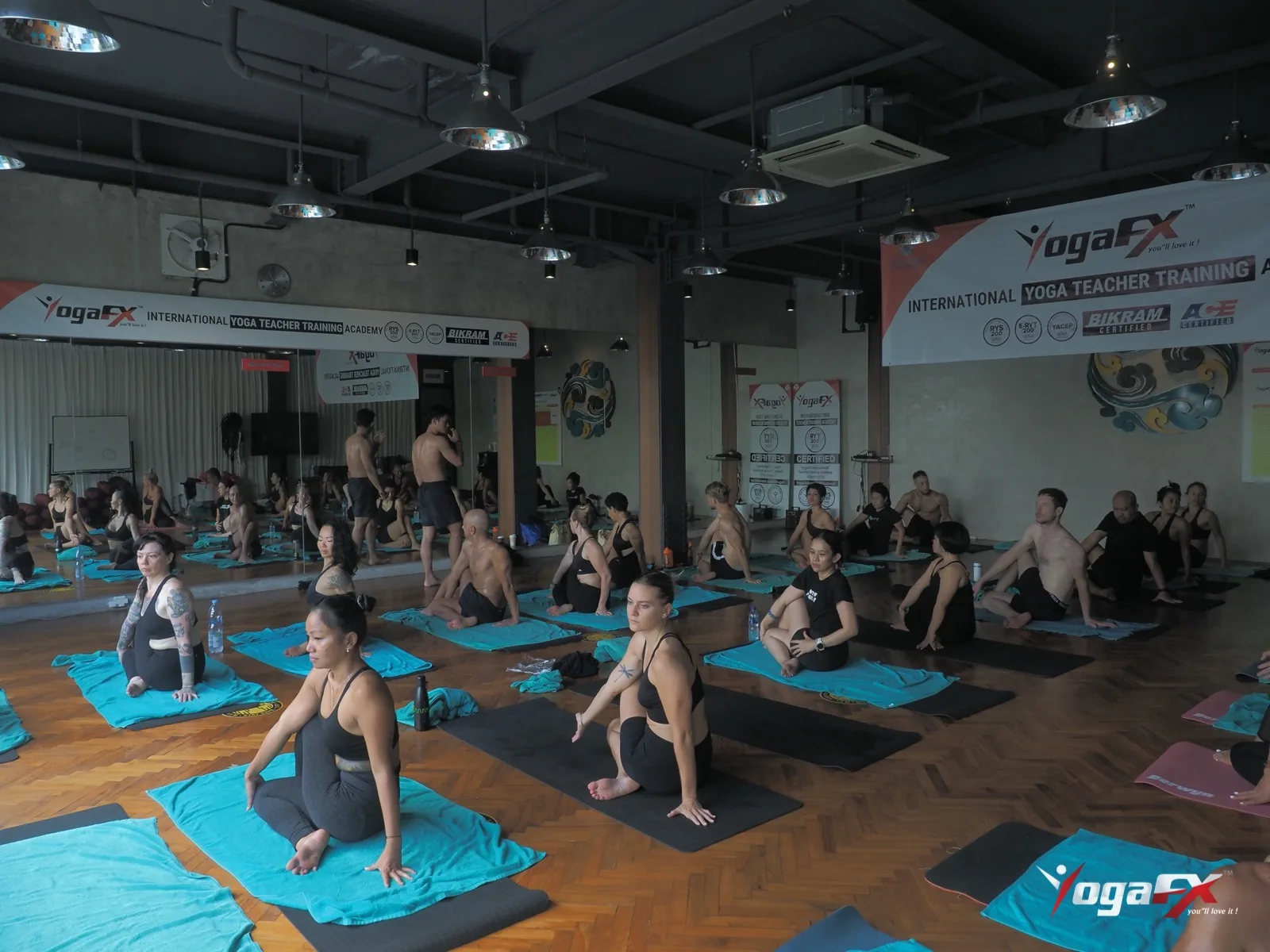
Hot yoga vs steam room comes down to what you do inside the heat. In a hot yoga class you move for 90 minutes in a 40°C room at 40% humidity. In a steam room you sit still in air close to saturation. Humidity decides how well your sweat cools you, and that matters before a Bali intensive.
I'm writing this for students who study online first and fly to Bali later. Most of you have never practised in tropical air. So it helps to understand what the room does to your body, not only how hot it feels. Mr. Ian Terry, E-RYT 500, has more than 12,000 teaching hours in hot rooms. Everything below follows how he coaches new students at YogaFX.
This is general information, not medical advice. Please consult a healthcare professional before you start any heat practice, especially with a heart condition, low blood pressure or pregnancy.
This article is part of our Hot Yoga for Men guides.
Hot Yoga vs Steam Room: The Short Answer
Choose hot yoga when you want a workout that trains balance, strength and flexibility. Choose a steam room when you want a short, passive rest. They are not rivals, because they answer different needs. The real gap is humidity, and that gap changes how safe and how useful each room feels.
- Hot yoga: you move, you breathe, and a teacher paces you for 90 minutes.
- Steam room: you sit, the air is almost fully saturated, and you decide when to leave.
- The shared risk: both can leave you dehydrated if you stay too long or skip water.
Why Humidity Matters More Than the Thermometer
Your body cools itself by sweating, and sweat only cools you when it evaporates. Mayo Clinic explains that when humidity is high, sweat can't evaporate as easily, so your body has more trouble cooling itself. MedlinePlus, from the US National Library of Medicine says much the same: in very humid weather, sweating alone is not enough to cool you off.
That is the whole story of humidity in hot yoga. A thermometer reading of 40°C tells you little. The same temperature feels gentle in dry air and heavy in wet air. A steam room sits at the wet end, so sweat mostly drips off your skin instead of cooling you.
Our studio class sits in the middle. The room is held at 40°C and 40% humidity, with natural tropical heat rather than electric heaters. At 40%, there is still room in the air for sweat to evaporate. That is one reason a 90-minute class stays workable for a healthy, hydrated student.
5 Humidity Lessons Hot Yoga Teaches Before Bali
Students sometimes ask what the hot yoga vs steam room question can teach them. Here are five lessons that carry straight into your first week in Bali.
Lesson 1: Sweat is a signal, not a score
Heavy sweating does not mean a better session. It tells you the room is warm and your body is working to cool itself. Some students sweat a lot and feel fine, while others sweat less and still overheat. Teachers call the skill of reading this self-pacing. Judge the class by how you feel, how steady your breath is and how well you follow the dialogue.
Lesson 2: Wet air slows your cooling
In a steam room the air is already full of water, and that is the heart of the hot yoga vs steam room difference. Your sweat has nowhere to go, so you warm up faster and cool down slower.
In a Bali afternoon the air can feel similar before you even step into a room. That is why we ask online students to practise at home in the warmest part of the day, not only in an air-conditioned lounge.
Lesson 3: Movement changes the load
When you move, your muscles make heat on top of the heat in the room. When you sit, the room supplies all of the heat. A steam room asks nothing of your legs or heart, so staying calm is the whole job. A hot class asks for both, which is why pacing matters more in class than in a steam room.
Lesson 4: Water has a rhythm
Cleveland Clinic calls dehydration one of the biggest risks with sauna use. The same sensible habit applies to any hot room. Drink before you go in, sip when your teacher allows it and rehydrate afterwards. Do not wait until you feel thirsty, because thirst arrives late.
Lesson 5: Rest is part of the practice
Beginners often think resting means falling behind, but it does not. Standing still on your mat, breathing through your nose, and rejoining the class is a skill. Teachers cue it for a reason. In a steam room you leave when you feel off. In class you rest on the mat, and that discipline is worth learning early.
Steam Room vs Hot Yoga: Who Each One Suits
Steam room vs hot yoga is easier to decide when you start with your goal. Think about what you want from the next 30 to 90 minutes, and what your body can handle today. The hot yoga vs steam room decision is personal, and it changes from week to week.
Hot yoga suits you if you want to learn a skill
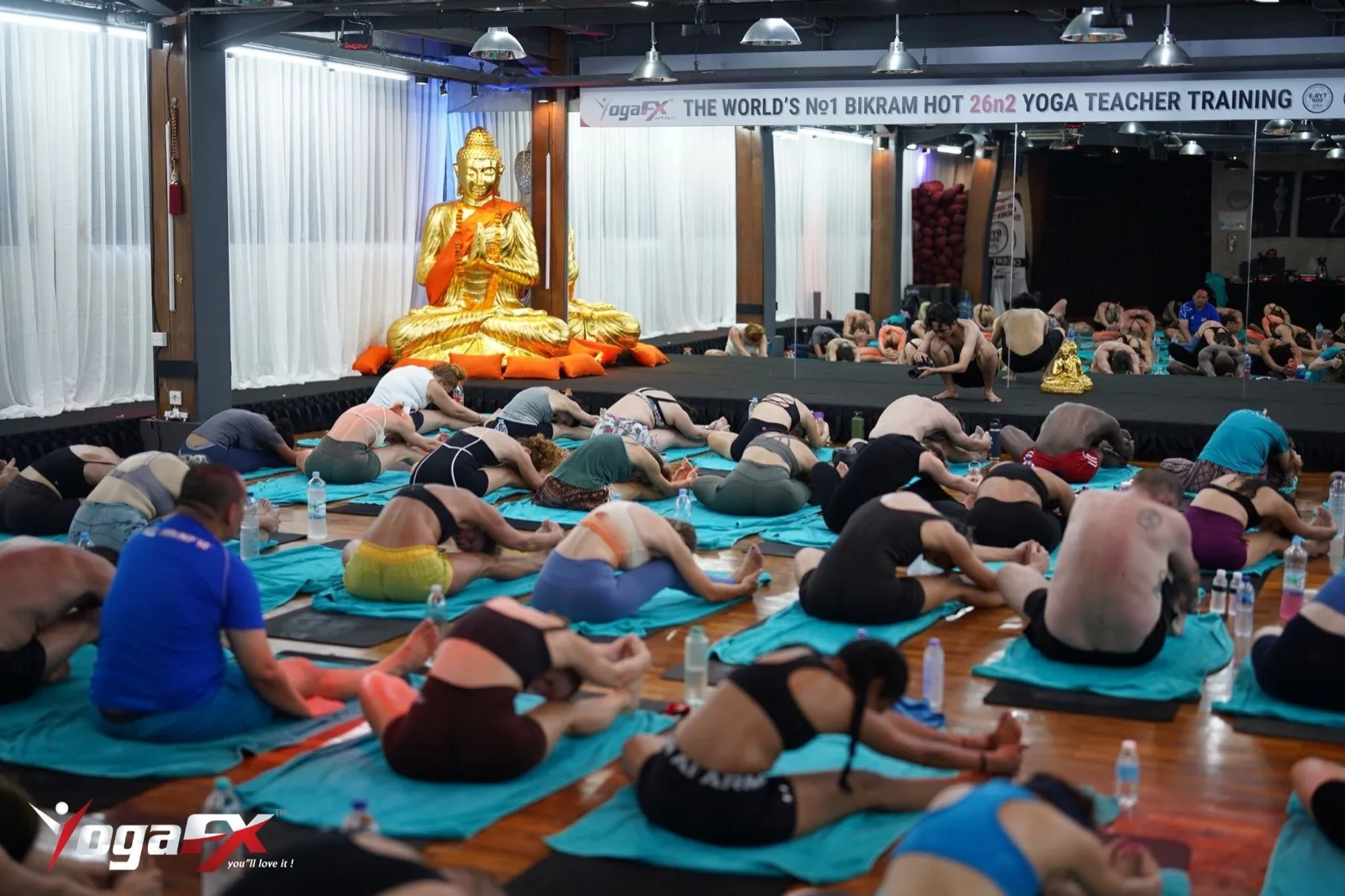
A hot class gives you a sequence, a teacher and a clear structure. You practise balance, breath and focus while your body adapts to heat. For future teachers, this is also where the dialogue becomes real, because you hear it, follow it and feel its pace.
A steam room suits you if you want quiet recovery
A steam room asks for no skill at all. You sit, breathe slowly and leave when you have had enough. That makes it a calm, simple choice after a long day, because it needs no effort, as long as you keep the visit short and your water close.
Neither suits you on an off day
If you are ill, very tired, dehydrated or have not eaten, skip both. The hot yoga vs steam room choice only matters when your body is ready for heat. Rest is a perfectly good third option, and it will not cost you progress.
Hot Yoga vs Steam Room for Recovery and Training
Athletes and busy professionals often ask which room helps them recover. The honest answer is that hot yoga vs steam room is not a contest about recovery. A steam room is passive, so it adds no training load. A class is active, so it counts as training.
That difference affects how you plan your week. If you train hard in the gym on Monday, a steam room on Tuesday is a gentle choice. If you want a class that builds control and flexibility, book it on a day when you have energy to spare, and plan your water around it.
- Treat a hot class as a workout, not as a spa visit.
- Treat a steam room as rest, not as a replacement for training.
- Never stack both on the same day unless you feel well and have rehydrated.
- Give yourself at least one full rest day each week.
Hot Room, Steam Room and Bali Air Side by Side
This table keeps to what each space does, in general terms. It avoids exact steam room temperatures, because they vary from gym to gym.
| Setting | Air feel | What you do | Sweat evaporation | Main lesson |
|---|---|---|---|---|
| Studio hot room | 40°C, 40% humidity | Move through the sequence for 90 minutes | Some, so cooling continues | Pace yourself and hydrate |
| Steam room | Close to saturated air | Sit or lie still for a short time | Very little, so sweat drips | Leave early and rehydrate |
| Bali afternoon outdoors | Warm, humid and heavy | Walk, travel, settle in | Slower than in dry climates | Acclimatise before day one |
| Home practice room | Whatever you can safely warm | Follow the online dialogue | Depends on your room | Build tolerance gradually |
The Hot Room in Four Numbers
If you only remember a few facts about the class you will join in Bali, make it these.
40°C
Room temperature in a Bikram class
40%
Humidity, so sweat can still evaporate
90 minutes
One class, led by a teacher with a set dialogue
6 days
The hybrid format: online study first, then the Bali intensive
Safe Rules for Any Hot Room
These rules apply to the hot yoga vs steam room choice alike. They match the cautions from Cleveland Clinic, Mayo Clinic and MedlinePlus, from the US National Library of Medicine.
- Hydrate first. Arrive with water in your body, not only in your bottle.
- Keep sessions short at first. Cleveland Clinic suggests 15 to 20 minutes for a sauna, and a similar caution is sensible for a steam room.
- Know the warning signs. Mayo Clinic lists dizziness, nausea, faintness and a weak, rapid pulse as signs of heat exhaustion.
- Leave early if you feel off. Step out, cool down and drink water.
- Check first if you are at risk. Cleveland Clinic advises talking to a provider if you are pregnant or have certain heart conditions, and avoiding heat after alcohol.
If you feel dizzy or faint in either room, stop and cool down. Teachers at our studio would rather you rest than push through.
Preparing for Bali's Tropical Climate
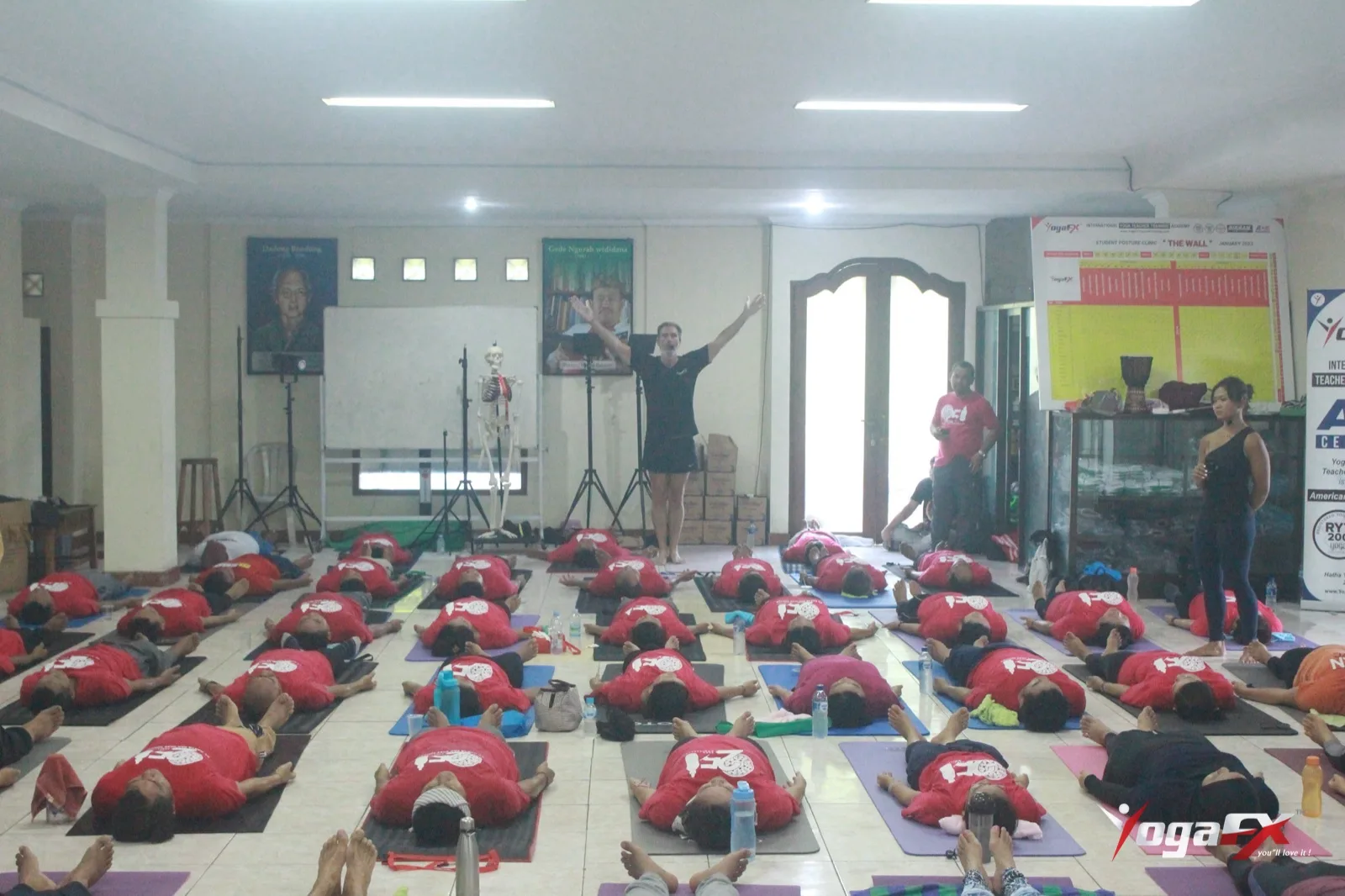
Our online students study the dialogue and postures at home, then finish with a hands-on week in Bali. The Bikram Hot 26&2 Yoga Teacher Training MasterClass is a 6-day hybrid format. The next intensive runs from check-in on Sunday 24 January 2027 to check-out on Friday 29 January 2027. It leads to the Yoga Alliance RYT 200-Hour credential and the Bikram Hot 26&2 200-Hour International Yoga Certification.
Heat is the part most online students worry about, so here is a simple plan for the weeks before you fly.
- Practise at the same time of day you expect to practise in Bali.
- Warm your room gradually, and never push past what feels safe.
- Drink steadily across the day, not only before practice.
- Sleep well the night before each session.
- Pack light, breathable clothes and a large towel for your mat.
For a wider view of how to train when no studio is nearby, read our guide to hot yoga teacher training when there is no studio nearby. If you often feel flat after class, our piece on feeling tired after hot yoga explains the common causes.
Steam Room After Class: Does It Add Anything?
Some students ask whether they should finish a class with a steam room visit. For most people the answer is: only if you feel well, have rehydrated and cooled down first. A class already loads your body with heat, so another hot room stacks the demand.
We cover a safe same-day order in our sauna after hot yoga routine. If a home sauna is on your mind, see hot yoga vs infrared sauna. For a full side-by-side of the three rooms from the studio side, the team has written a detailed hot room, steam room and sauna breakdown.
What Students Say
Here is what a few students told us about the training experience in their own words.
It was sweat, tears, laughter… it was training, life coaching, therapy.
Mariana, Google review, 2022
Gorgeous and very challenging teacher training experience. The team is highly qualified, kind and disciplined.
Annabel, Google review, 2026
Novi, a graduate, said in her YouTube graduation review (2024, translated): "Thank you for the lessons. Wishing you health and spirit, a healthy life."
Hot Yoga vs Steam Room: The Takeaway
Hot yoga vs steam room is really a question about humidity, effort and purpose. A class gives you structure, a skill and a steady challenge. A steam room gives you a short, passive rest. Both ask you to respect your limits.
If you are preparing for a Bali intensive, treat every hot session as practice for tropical air. Learn how your body responds, how fast you tire and how well you recover. As a result, that awareness is more useful on day one than any number on a thermometer, and it is the habit our teachers look for in new trainees.
Your Next Step
Start by deciding what you want from heat. If it is recovery, a short steam room visit may suit you. If it is a skill you can teach, the YogaFX hot room is where you learn it. Message Mr. Ian Terry on WhatsApp and ask how the online course and the Bali intensive fit around your schedule.
FAQ
Is hot yoga the same as a steam room?
No. Hot yoga is a guided class where you move for 90 minutes in a 40°C room at 40% humidity. A steam room is a short, passive sit in air close to saturation. Both make you sweat, but they load your body and cooling in very different ways.
Does humidity make hot yoga harder?
Yes, it can. Mayo Clinic notes that high humidity stops sweat evaporating easily, so your body cools less well. A room at 40% humidity leaves more space for evaporation than a wet steam room, but you should still pace yourself and drink water steadily.
Can I use a steam room after hot yoga?
Only if you feel well, have rehydrated and have cooled down first. A class already adds a heavy heat load, so a second hot room can stack the demand. If you feel dizzy, nauseous or faint, skip it and rest instead.
How should I prepare for Bali's tropical climate?
Practise at home at the time of day you expect to train, warm your room gradually and drink steadily through the day. Sleep well before sessions. Build tolerance over several weeks rather than days, and stop if you feel dizzy or unwell.
Who should check with a doctor before using hot rooms?
Anyone with a heart condition, low blood pressure or pregnancy, and anyone unsure about heat. Cleveland Clinic advises people with certain heart conditions or pregnancy to talk to a provider first. This is general information, so consult a healthcare professional.
Questions about the online course or the Bali intensive? Message Mr. Ian Terry on WhatsApp and the YogaFX team will help you plan.