Competitive Yoga: Judging, Yogasana Sport and Learning Postures Online
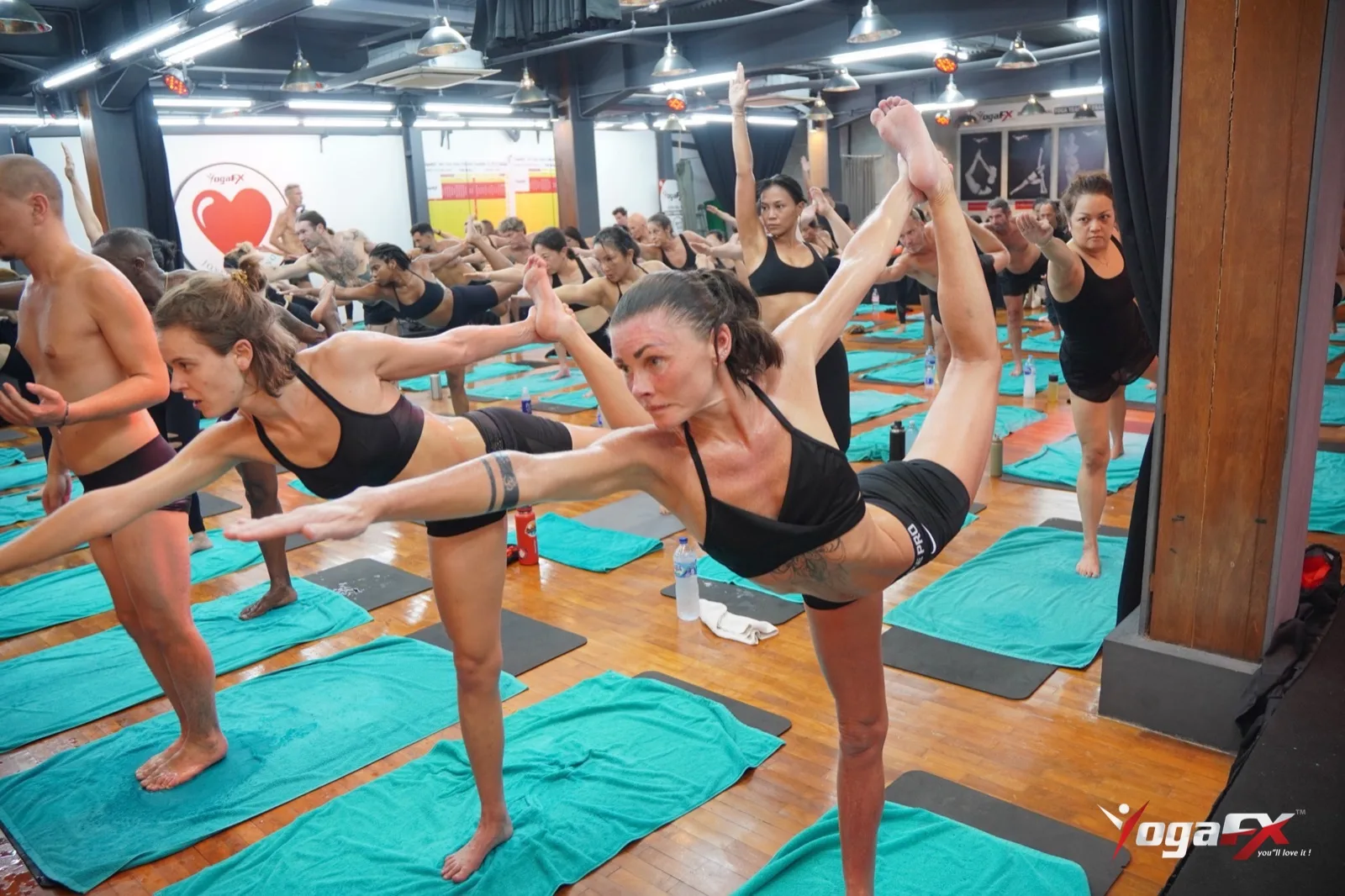
Competitive yoga is a judged sport in which athletes perform set yoga postures while a panel scores balance, flexibility, strength and control. You can start learning those postures online, at home, long before you enter any event. One YogaFX graduate, Miss Ivara, went from teacher training to world-level medals. Our yoga championship plan shows how to prepare for a first event.
This guide is for the person who watched a competitive yoga clip and wondered two things. How does anyone decide who wins, and could I get ready from my living room? It uses the story of Miss Ivara, a YogaFX graduate who became a medallist, to show what competitive yoga rewards and how structured online study fits in.
Mr. Ian Terry, E-RYT 500, adds the teacher's view. He has taught more than 12,000 hours and is a Master Trainer of the Republic of Indonesia Yogasana Sports Federation.
Miss Ivara: A Graduate on the Medal Podium
Ivara Candra Kartika graduated from YogaFX in 2023. She did not arrive as a champion. She arrived as a student who wanted to learn the Original Hot 26&2 sequence properly, in order, with the spoken dialogue that guides every posture. Two years later she was standing on national and continental podiums.
Her results, in the order they happened, are a useful map of how the sport works, so we have set them out below. A national games gold, then an Asian silver, then a world-level gold and bronze. Each step raised the standard of the panel in front of her.
Notice what the timeline does not say. It does not say she was a natural contortionist. It says she kept learning, kept repeating the basics and kept entering events. That is the part of her story our training can honestly take some credit for: the habit of precision.
Her team did well too. At the 2026 Ahmedabad championships, held 4 to 8 June, Indonesia won 7 medals: 1 gold, 2 silver and 4 bronze. Across all events, YogaFX graduates have collected 12 medals, made up of 5 gold, 3 silver and 4 bronze.
How Competitive Yoga Judging Works
Every federation writes its own rulebook for competitive yoga, so details differ. The core idea is the same everywhere. An athlete performs a posture, holds it, leaves it, and a panel gives a score. Nobody scores your mood, your lineage or your spiritual progress, because a panel cannot measure those things. The Indian name for the sport, yogasana, points at the physical limb of yoga, the posture itself.
In most competitive yoga rulebooks, judges look at the same handful of qualities:
- Balance. Does the athlete stay still, or does the standing foot shuffle?
- Flexibility. Does the shape reach its intended depth without forcing?
- Strength. Can the athlete hold the line of the body without shaking?
- Control of entry and exit. Is the posture built and released smoothly, or does it collapse?
- Composure. Does the face and breathing stay calm under pressure?
If you want the wider picture of who organises these events and how a home practitioner can enter one, our guide to the international yoga sports federation walks through it step by step. For a plain-language overview from our Bali team, see this explainer on how yogasana sport is organised.
A common follow-up question is whether a hot yoga class counts as a sport. On its own, it does not. A YogaFX class runs 90 minutes at about 40°C and 40% humidity, and nobody scores or ranks you. Competitive yoga adds a scoreboard, a time limit and an audience. Many of the same postures appear in both, which is why some athletes use a hot class for conditioning. Even so, they are different activities, and it helps to keep them apart. For the basics of the heated class itself, see what hot yoga is.
Why Scoring Competitive Yoga Is Harder Than It Looks
Two humans can watch the same triangle pose and score it differently. Researchers have looked at this problem in other judged sports, and competitive yoga faces the same issue. A study of men's artistic gymnastics at the 2011 European Championship, published in Biology of Sport, measured how far individual judges over- or under-scored compared with the panel. The authors, led by Leskošek, found that bias was mostly small, within about 0.1 point, but statistically significant, and in some cases it passed 0.2 points. They added that bias seems to shrink at more important competitions.
That is a gymnastics study, not a yoga one, so treat it as an analogy. Even so, the lesson carries over. Clean, repeatable, obvious technique leaves the least room for argument. Athletes who rehearse the same shape the same way every time give judges less to disagree about.
What a Judge Notices and How to Rehearse It at Home
Most points in competitive yoga are lost to habits, not to missing talent. The table below turns the common judging qualities into drills you can practise without a coach in the room. It is our teaching team's own guide, not an official federation list, so always check your national rulebook before you compete.
| What the judge notices | Why it costs points | Home drill (no heat needed) |
|---|---|---|
| A wobbling standing leg | The shape looks unstable and unplanned | Hold a one-leg stand beside a wall and breathe slowly until the leg stops shaking |
| A rushed entry | The posture is thrown into place, not built | Say each step of the posture aloud as you enter it, slowly |
| Forcing depth | A clenched face and strain look like loss of control | Stop one breath before the end of your range and stay calm there |
| A messy exit | The athlete collapses out of the shape | Practise leaving each posture as carefully as you entered it |
| Wrong order | The routine looks unprepared | Write the sequence down and recite it, then walk through it |
Every drill in that table is a learning habit, not a fitness test. For example, none of them needs a hot room. That means most of the work can be done at a desk and a mat.
Learning the Postures Online Before You Compete
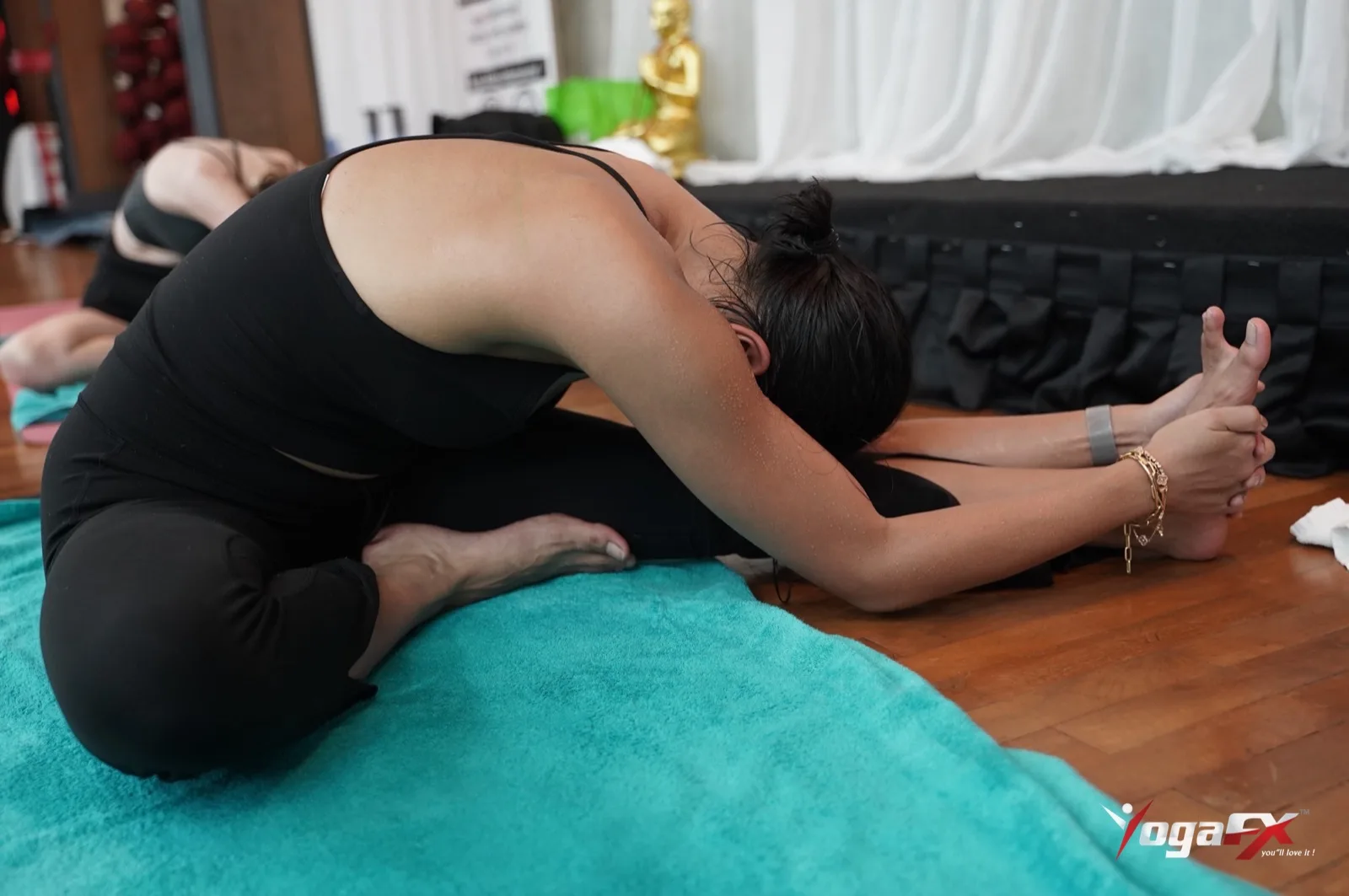
Why would a competitive yoga athlete study online at all? Because the first job is knowing the postures cold: their names, their order, their entries and their exits. That is memory and rehearsal work, and it travels well.
In the YogaFX online route, you learn the Original Hot 26&2 series posture by posture, along with the dialogue that guides each entry, hold and release. Our guide to starting the dialogue from home shows what to learn first, and our look at the Bikram yoga dialogue explains why a fixed script helps you repeat a shape the same way every time.
- Names and order. You learn the sequence so well you could recite it half asleep.
- Entry and exit. Each posture is taught step by step, so you can retrace it exactly.
- Hold discipline. You practise staying still while you breathe normally.
- Self-knowledge. The series mixes balance, flexibility and strength, so you quickly see which one you lack.
If you cannot get to a hot room every day, our guide to original hot yoga at home explains what a cool floor can and cannot teach you.
The limits of learning online
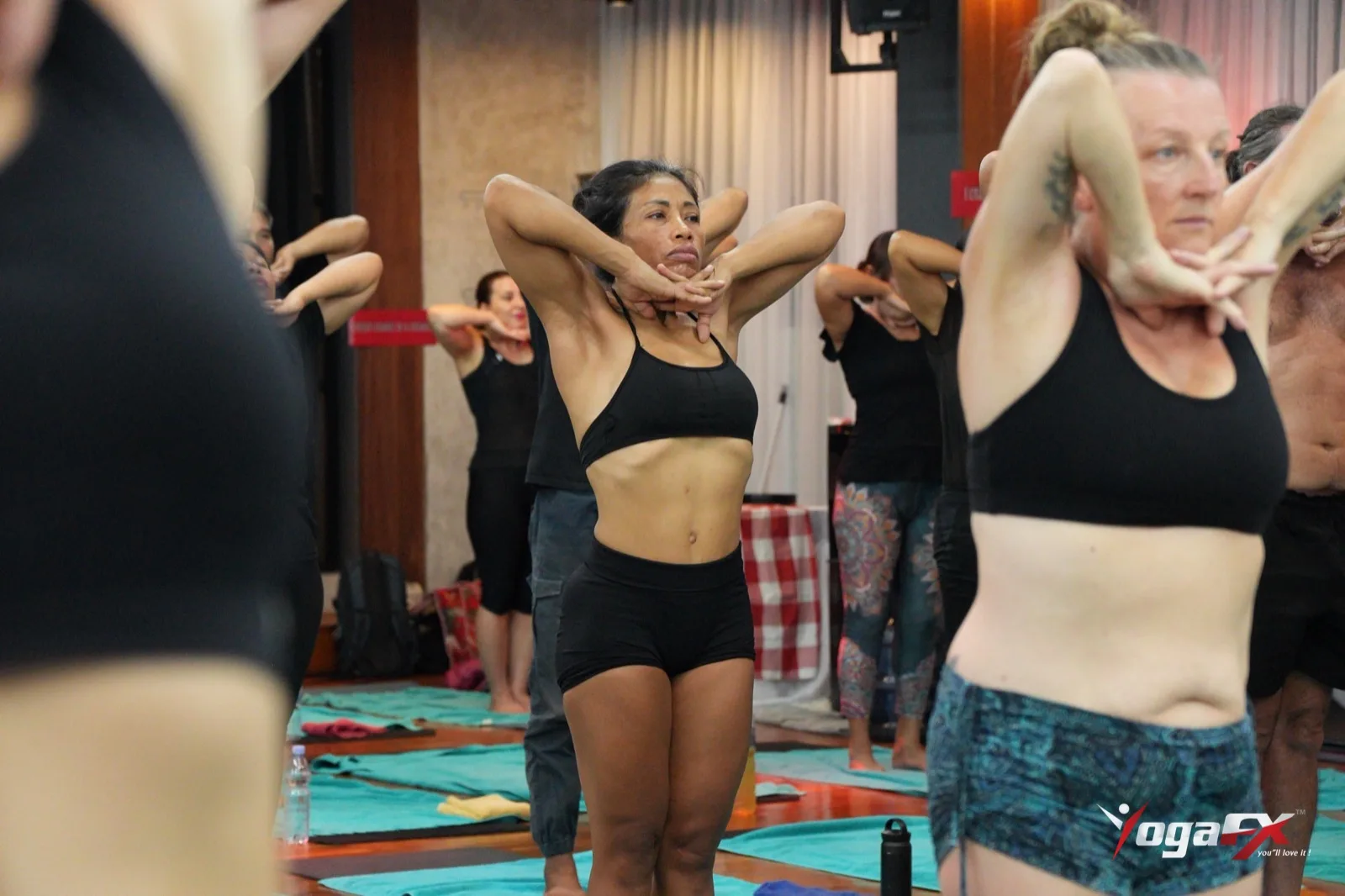
Be realistic, because video lessons do not replace a person who watches your shapes and tells you what they see. That matters for safety as well as scoring. In a 2019 survey of 1,702 German yoga practitioners, Cramer and colleagues reported that 21.4% had experienced at least one acute adverse effect, and 10.2% reported a chronic one. Hand, shoulder and head stands were the most commonly reported practices linked to acute problems, at 29.4%. Practising only by self-study without supervision was associated with a higher risk.
The same paper found that most people recovered fully from acute problems (76.9%). It also put the average rate at 0.60 injuries per 1,000 hours of practice.
So yoga is not especially dangerous, but unsupervised ambition is where trouble tends to start. That is exactly why the hybrid route ends with a six-day intensive in Bali, with a teacher in the room. It is also why we suggest a coach for anyone who wants to try competitive yoga.
From Online Study to the Bali MasterClass
The YogaFX MasterClass, the Bikram Hot 26&2 Yoga Teacher Training MasterClass, is a hybrid. You study online first, then finish with a six-day intensive in Bali. The next intake checks in on Sunday 24 January 2027 and checks out on Friday 29 January 2027, at Soham Wellness Center in Seminyak. You graduate with Yoga Alliance RYT 200-Hour and the Bikram Hot 26&2 200-Hour International Yoga Certification.
Not every student wants to compete, and that is fine. Many come to teach. Our guide to what you can learn at home and what needs the hot room explains where the online part stops and the live part starts. If competitive yoga is your goal, think of the course as the strongest possible foundation: the same postures, learned precisely, then tested in front of a real teacher.
Mr. Ian Terry has trained for five years, from 2014 to 2019, with the founder of the Bikram Hot 26&2 method. As a Master Trainer with the Republic of Indonesia Yogasana Sports Federation, he sees the studio and the competition floor side by side. The habit that carries over most is precision under stress.
What graduates say
Here is what some graduates say about the training. Each quote comes word for word from a public video review, with first name, source and year.
I learned so much in here.
Arkan, YouTube review, 2023
You're never too old to learn that you're never too old to do anything.
Shiela, YouTube review, 2023
I'm just glad, just grateful to have met all of you. Each and every one of you I've learned something from.
Amanda, YouTube review, 2023
Arkan, who is quoted above, went on to compete himself. He is a YogaFX graduate and a multiple medallist in Indonesian yogasana. You can hear him in his own words below.
What the Evidence Does and Does Not Say
No study we found has followed competitive yoga athletes through a year of online preparation. So we cannot claim research proves anything about competitive yoga itself. What research can tell us is how judged sports behave and what the injury picture looks like, and both points appear above. Here is a short summary of the two sources we opened and read:
- Judging bias. The Biology of Sport study of gymnastics judges found small but real scoring bias, which is why clean, repeatable technique helps.
- Injury risk. The 2019 BMC Complementary and Alternative Medicine survey linked unsupervised self-study to a higher risk of adverse effects, which is why supervision matters.
Any strenuous practice carries some risk. Please consult a healthcare professional before starting a heated practice or training for competition, especially if you have a heart condition, low blood pressure, are pregnant or take regular medication. Stop at the first sign of pain.
A Realistic Path Into Competitive Yoga
You do not need to be a gymnast to try competitive yoga. You need patience, because the first year is mostly about building a safe range of motion. This is the path we suggest to students who ask:
- Build a base. Practise regularly for several months before you think about a scoreboard.
- Find your national body. Search for the yogasana or yoga sport federation in your country, because rules and age groups differ.
- Learn the posture list. Federations publish compulsory and optional postures. Learn each one with a teacher watching.
- Train with a coach or judge. They notice small errors you cannot see in a mirror.
- Start local. Enter a regional event before aiming for a national one.
- Protect your body. Warm up properly, stop at pain and rest between sessions.
If you are a teacher, learning the competition rules also makes you a better coach for students who want to try. That is one reason we encourage graduates to attend federation events.
FAQ
Is competitive yoga a real sport?
Yes, in many places. Yogasana is organised as a competitive sport in India and other countries, with national and world championships where judges score athletes on posture performance. Some teachers disagree with the idea, because yoga is more than postures. In a normal class nobody ranks you, so you can practise without any scoreboard.
How do you compete in yoga?
Start by contacting your national yogasana or yoga sports federation, because each has its own rulebook, age groups and events. Learn the compulsory postures, practise the order and your timing, and ask a coach to mark you in a mock routine. Then enter a local event before a national one.
How does competitive yoga work?
Athletes perform set or chosen postures while a panel of judges scores them for qualities such as balance, flexibility, strength and control. Faults like falls, wobbles and messy exits lose points. Rules vary between federations, so the exact scale, time limit and posture list depend on which event you enter.
Can I prepare for competitive yoga online?
You can prepare the knowledge part online: the names, the order, the entries and the exits of each posture. You cannot replace a coach who watches your shapes and corrects them. A sensible plan is to learn the sequence at home, then get hands-on feedback from a teacher before any event.
Is competitive yoga safe?
It can be, if you train with care. In a 2019 survey, unsupervised self-study was linked to a higher risk of adverse effects. Warm up well, build range of motion slowly, stop at pain and train with a coach. See a healthcare professional first if you have a heart condition or take regular medication.
Still have questions? Message Mr. Ian and the YogaFX team on WhatsApp and we will answer them personally, whether the question is about competitive yoga, online teacher training, the dates of the next intake or the six-day MasterClass in Bali.