Savasana Benefits for Busy Adults: Why Final Rest Matters
By Mr. Ian Terry, E-RYT 500, founder of YogaFX · Published
The main savasana benefits for busy adults are a slower heart rate, a quieter mind and a body that recovers before the next task. One small trial found lower heart rate and blood pressure after six weeks of daily practice. This guide shows what the research says and how to fit rest into a study week.
Mr. Ian Terry, E-RYT 500 and Founder and Lead Instructor of YogaFX, has taught more than 12,000 hours. In the YogaFX programme he teaches the final rest as part of the class, not a gap at the end of it. That idea matters even more if you study at night after a full day of work.
Most people who study with us online hold a job, a family or both. They fit lessons into the gaps. So the question here is practical: what does a few minutes of lying still actually give you, and where does it fit in a crowded week?
This article is part of our Hot Yoga for Men guides.
Savasana Benefits at a Glance for a Busy Week
Here are the savasana benefits that research and exercise guidance can support. Each one is stated carefully, because the evidence is modest and often comes from small groups. You'll see where the limits are.
- Heart rate and blood pressure settle. A cool-down brings both back toward resting levels gradually, which helps you avoid feeling dizzy when you stop.
- Muscles let go. Slowing down after effort may reduce cramping and tightness.
- Attention narrows. Following the breath gives a busy mind one quiet job.
- Stress may feel lower. Yoga as a whole is linked with stress relief, although final rest is only one part of it.
- Recovery gets a place in your day. A planned pause turns rest into a habit instead of an afterthought.
None of these is a medical treatment. They're reasons to protect a few minutes, not promises. For the longer view of how the method works, start with our guide to Hot 26 and 2 yoga for adults studying online first.
Savasana Meaning: What Corpse Pose Really Asks of You
Savasana (also spelled shavasana) comes from the Sanskrit words for corpse and posture, which is why people call it corpse pose. The name sounds grim. The pose is simple. You lie still, let the body be heavy and keep your attention on the breath.
Stillness sounds easy until you try it. Many busy adults find lying still harder than the postures, because the mind keeps running through the to-do list. That's normal.
The pose appears at the end of practice for a reason. After effort, the body needs a way to come down. Without it, you step straight from exertion into your inbox, and the nervous system gets no handover.
Corpse pose benefits and what they depend on
Corpse pose benefits depend on what came before. Rest after effort feels different from rest on a day you have not moved at all. That is why the savasana benefits are strongest when the final rest is the last step of a sequence, not a stand-alone trick.
Why Savasana Benefits Matter More When Your Week Is Full
A full week gives you plenty of stress and very little recovery. You study after work, answer messages at lunch and carry the day into bed. In that pattern, a deliberate pause does real work.
Think about your own evening. You finish a lesson on the postures, close the laptop and head straight to the kitchen. Your body has not heard the message that work is over. Two or three minutes of lying still tells it so.
- It marks the end of work. A fixed rest at the end of study gives your day a clear edge.
- It protects your learning. You stop pushing when your attention has already gone.
- It teaches you to feel your own limits. Trainees who notice fatigue early adjust their plan before they burn out.
If you often feel flat after practice, read our notes on why you can feel tired after hot yoga. Rest, water and food usually explain most of it.
A Study Week With Rest Built In
A table makes the savasana benefits concrete. Below is a sample week for someone studying the dialogue and postures for about 45 minutes a day. Treat it as a pattern to adapt, not a rule.
| Day | Study slot | Rest block | Why it sits there |
|---|---|---|---|
| Monday | Dialogue, 45 min after dinner | 3 min rest on your back | Finishes the first study night of the week calmly |
| Tuesday | Posture notes, 30 min | 3 min rest | Keeps a short session short |
| Wednesday | Dialogue out loud, 45 min | 5 min rest | Speaking aloud tires the voice and the mind |
| Thursday | Rest from study | 10 min rest after a walk | A longer rest on a lighter day |
| Friday | Review, 30 min | 3 min rest | Closes the work week |
| Saturday | Practice a posture series, 60 min | 10 min rest | Longest effort, longest rest |
| Sunday | Light reading, 20 min | 3 min rest | Eases you into the next week |
- If you work shifts, anchor the rest to the end of study, not to a clock time.
- If an evening collapses, keep the three minute rest and drop the lesson instead.
- If you share a home, tell the others you will be quiet for a few minutes, so nobody interrupts.
Notice that the longest rests follow the longest efforts. That mirrors how a class works. The more you ask of the body, the more time it needs to settle.
If you want to see how a study plan like this stretches across a whole course, our page on how long it takes to become a yoga teacher alongside a day job lays it out week by week.
What the Research Says About Savasana Benefits
Good evidence on savasana benefits is thin, so it helps to look at each source closely. We read the original pages for each study below and describe only what they report.
A six-week trial of daily shavasana
A 2014 paper in the American Journal of Health Promotion studied 67 first-year medical students. Thirty-five of them practised shavasana with soothing background music for one hour a day over six weeks. A control group of 32 did no relaxation practice.
After six weeks, the practising group had a lower heart rate and lower systolic and diastolic blood pressure. Their heart rate variability measures also improved. The authors reported no significant change in the control group.
Now the limits. The students were young and healthy, they rested for a full hour every day, and they listened to music. The paper describes a small interventional study, so the result is an early signal. Treat it as a sign that regular, deliberate rest can influence the body, not as a promise for your own numbers.
A reminder that savasana is not magic
A second 2014 paper in the International Journal of Yoga compared the immediate effects of different postures on 22 healthy young volunteers. Each person rested lying down for 10 minutes after the posture, while the researchers tracked heart rate and blood pressure.
The authors concluded that cardiovascular recovery was greater after performing certain postures than after shavasana. In plain words, lying still is one route to recovery among several, and some active postures may do more. That's a useful correction to any claim that final rest is the key to everything.
What exercise and health guidance adds
Cleveland Clinic explains that a cool-down brings heart rate, blood pressure and breathing back toward resting levels gradually. Exercise physiologist Karen Feakes says it can reduce cramping and dizziness. She suggests a cool-down of three to ten minutes, with three as the absolute minimum.
The US National Center for Complementary and Integrative Health notes that research suggests yoga may help with general wellness, including stress relief and sleep. Its page on yoga effectiveness and safety covers yoga as a whole. It does not single out final rest, so we keep that distinction in mind.
The honest summary on savasana benefits is short. Rest after effort is sensible and has some support. Big claims about a single pose are not supported. Ask any teacher who promises more to show you the study.
Where the Rest Falls in a Hot Class
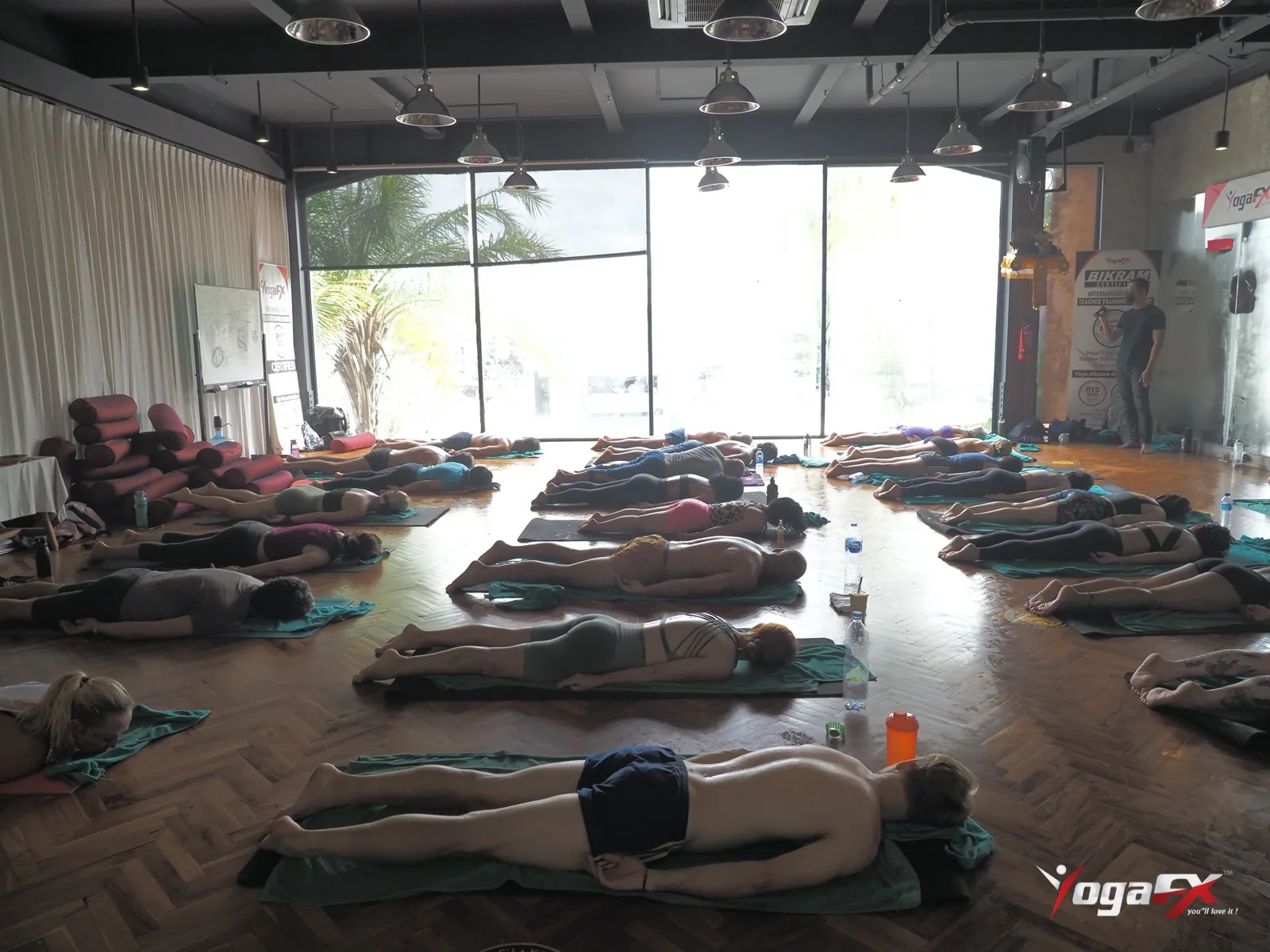
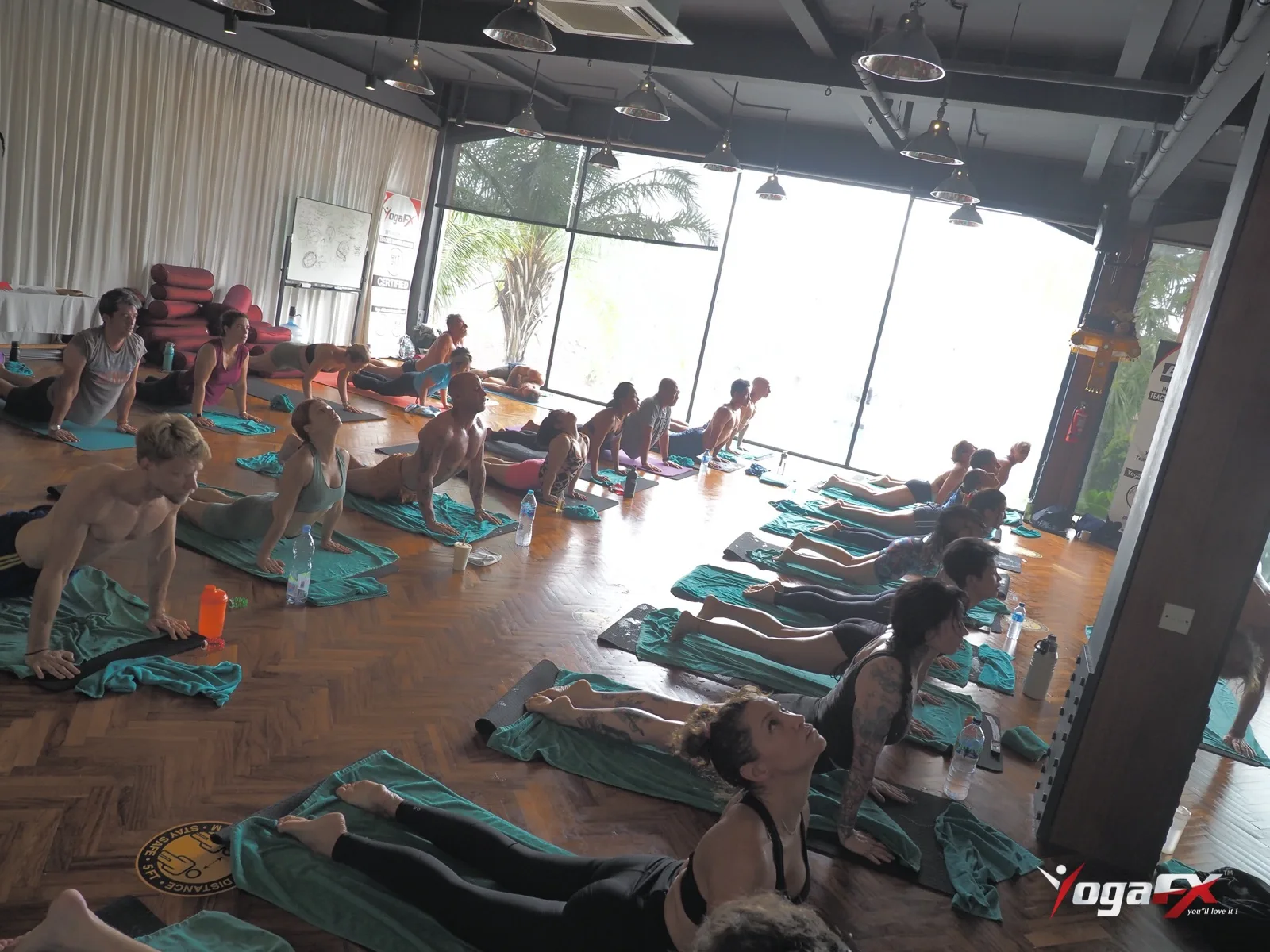
In our class, which runs 90 minutes at about 40 degrees Celsius and 40% humidity, rest is part of the design. Students lie down between postures and again at the end. In the heat, the body works harder, so these pauses matter for comfort and safety.
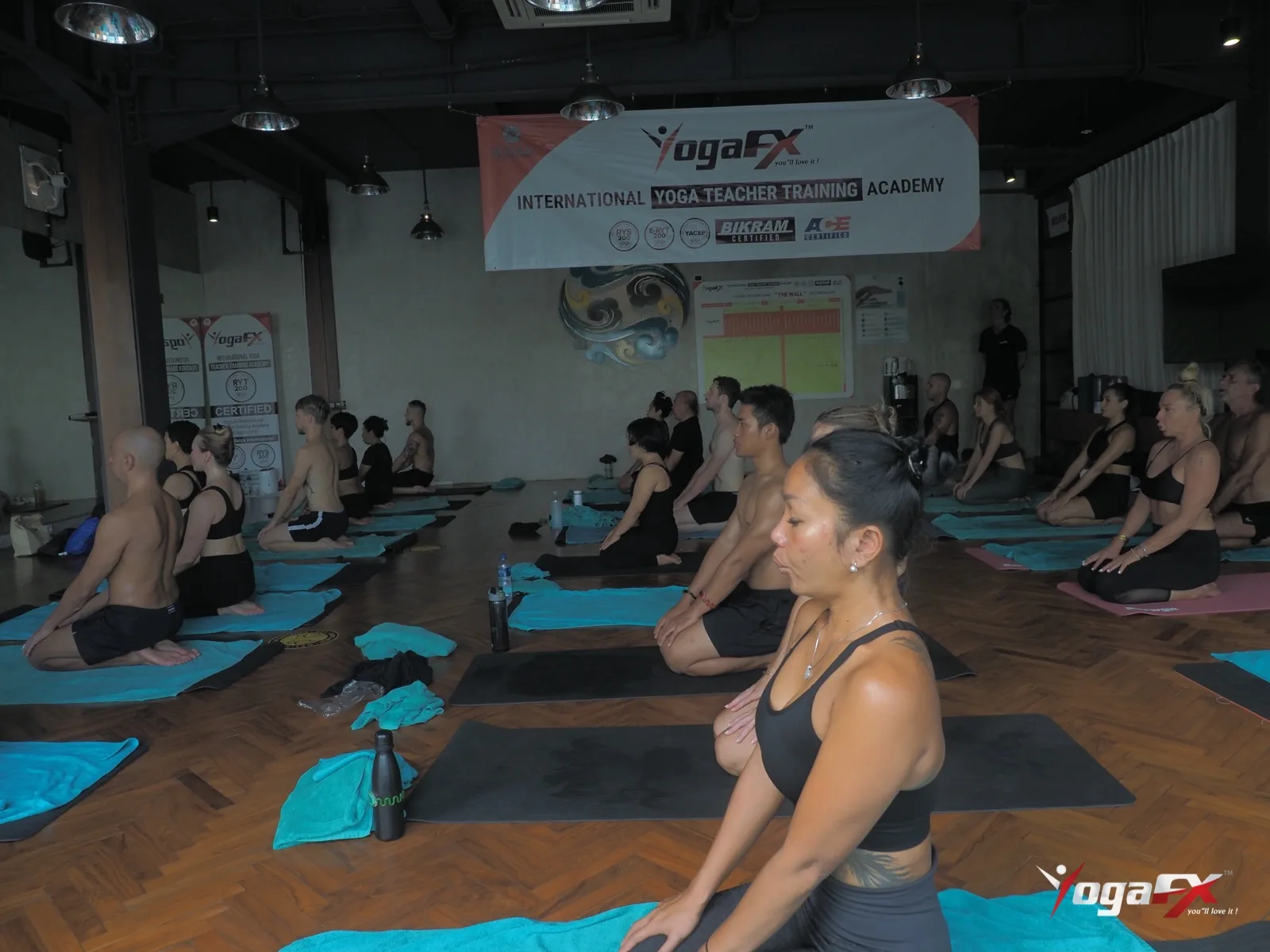
If you want to see exactly where the rests fall across a full class, this guide to where savasana sits inside a 26 and 2 class walks through it step by step. It's the main article on this topic in our network.
Heat adds to the load on the body, which is why recovery gets so much attention. Our notes on hot yoga heart rate zones explain what to watch.
How to Practise Savasana Between Study Sessions
You don't need a heated room to learn the pose or to feel the first savasana benefits. A mat, a rug or a carpeted floor will do. Follow these steps after a study session, a walk or a workout, because the savasana benefits show up best after effort.
- Stop and put the screen away. Close the laptop and switch your phone to silent.
- Lie on your back. Let your feet fall open and rest your arms a little way from your sides, palms up. A folded towel under the head is fine.
- Breathe slowly through the nose. Let each breath be a little longer than the last, without forcing it.
- Soften from the top down. Release the forehead, jaw, shoulders and hands in turn.
- Stay for at least three minutes. Then roll to one side, rest there for a moment and sit up slowly.
Common mistakes that waste the rest
- Checking your phone. Even a quick look pulls the mind straight back to work.
- Skipping it when you are busy. The busiest days are the ones that need it most.
- Standing up too fast. Sudden changes in position can leave you dizzy.
Some people drift off during final rest. That is common and usually harmless. If you want to stay aware, keep your attention on the breath and let thoughts pass without following them.
Who Should Take Care With Final Rest
Most healthy adults can enjoy savasana benefits from a few minutes of lying still. Some people need to check first. Speak to a healthcare professional before you start if you have a heart condition, high blood pressure, are pregnant or have any doubt.
In a hot room, safety comes first. If you feel faint, nauseous or confused, stop, move to a cooler place, drink water and ask for medical help if the feeling does not pass. Resting on your back is not always the right position in that moment, so tell the teacher how you feel.
This guide is general information, not medical advice. If you have a health condition, consult a healthcare professional before you start hot yoga or change how you train.
What Our Students Say About the Final Rest
Reviews of YogaFX rarely mention savasana benefits by name. They talk about intensity and recovery. These are real trainees, quoted word for word from their reviews.
The programme was intense but completely worth it
Samantha, Yoga Alliance review, 2025
The experience was unraveling, beautiful and transformational.
Malini, Google review, 2025
Anne, a trainee in our YouTube review from 2025, says in her own words that the experience was quite life-changing for her. You can watch her short video below.
Intense training needs real recovery. That is why we teach trainees to protect their rest, in class and at home.
Learn to Teach the Final Rest With Mr. Ian Terry
If savasana benefits interest you as a future teacher, the home half of our course is a good place to begin. The YogaFX Online Course costs USD 329, or 4 payments of USD 82. You learn the postures and the dialogue at your own pace, then finish with a short in-person intensive in Bali.
Our guide to hybrid yoga teacher training for busy adults explains how the two halves fit together. When you are ready, message Mr. Ian on WhatsApp and ask what suits your diary.
FAQ
Is savasana good for stress?
Savasana may help you feel calmer, but research on the pose alone is limited. The National Center for Complementary and Integrative Health says yoga overall may help with stress relief. A few quiet minutes after effort is a sensible habit, though it is not a treatment for anxiety or any health condition.
How long should savasana last after a busy day?
Aim for at least three minutes. Cleveland Clinic's exercise physiologist suggests a cool-down of three to ten minutes, with longer rests after harder effort. After a normal study night, three to five minutes is enough. After a full practice or class, give yourself closer to ten.
Can savasana help me sleep?
It might help some people wind down, but the evidence for the pose itself is thin. The National Center for Complementary and Integrative Health says yoga overall has been linked with better sleep in several groups. Try a short rest before bed and see whether your own evenings feel calmer.
Do I need a hot room to get savasana benefits?
No. You can practise savasana on a mat or carpet at home. Heat changes how hard the body works during class, so the rest matters in a hot room. At home, rest after a walk, a stretch or a study session works well.
Is savasana the same as taking a nap?
Not quite. Savasana is rest with attention. You lie still and follow the breath, while a nap lets you fall fully asleep. Many people do drift off, which is common and usually harmless. If you want to stay aware, return gently to the breath each time you notice your mind wander.
Still have questions? Message Mr. Ian and the YogaFX team on WhatsApp and we will answer them personally.