Hot Yoga vs Sauna: Which Fits Better Into a Packed Working Week?

By Mr. Ian Terry, E-RYT 500, founder of YogaFX · Published
Hot yoga vs sauna comes down to time and effort. A sauna asks you to sit still for about 15 to 20 minutes. A hot yoga class asks for 90 minutes and a lot more work from your body. For a packed working week, the right pick depends on what you want the heat to do for you.
This hot yoga vs sauna guide is written for busy adults, especially men who fit training around a job and family. It compares the two on time, effort, safety and results. It also shows where an online route, home practice and a Bali intensive fit in. Mr. Ian Terry, Founder and Lead Instructor of YogaFX (E-RYT 500, 12,000+ teaching hours), teaches the method we refer to throughout.
This article is part of our Hot Yoga for Men guides.
Hot Yoga vs Sauna: The Short Answer for a Packed Week
The two are not really rivals. They are different tools that happen to share a warm room. A sauna is passive heat (sitting): you sit, the room does the work. A hot yoga class is active heat: you move through postures while your body handles the temperature.
- Pick the sauna when you have 20 minutes, want to wind down, and have no medical reason to avoid heat.
- Pick hot yoga when you can protect a 90-minute slot and want exercise, balance work and focus in the same hour.
- Mix them when your week allows both, but keep each one short and planned.
That is the hot yoga vs sauna verdict in three lines. The rest of this article explains why, with numbers you can check.
Hot Yoga vs Sauna: What Each One Asks of Your Week
Most hot yoga vs sauna comparisons talk about benefits first. For a busy person, the first question is simpler: where does it fit in my diary? So let us start with time, effort and risk.
| Factor | Hot yoga class | Sauna session | What it means for a packed week |
|---|---|---|---|
| Time in the heat | About 90 minutes in a standard class | About 15 to 20 minutes (start with 5 if you are new) | Sauna is easy to squeeze in; a class needs a protected slot |
| Type of heat | Active: you move through postures | Passive: you sit or lie down | Only the class counts as exercise |
| Typical temperature | Bali studio class: 40 degrees C | Traditional: 65 to 90 degrees C; infrared: 43 to 57 degrees C | The sauna is hotter, but you stay in far less time |
| Energy use (study) | Average 286 kcal in a 90-minute class (179 to 478) | Not a workout; sweat loss is mostly water | Do not count sauna sweat as fitness |
| Main risk | Overheating if you push too hard or skip water | Dehydration, especially after alcohol | Hydrate before and after either one |
| Skills you build | Balance, flexibility, breath control, focus | Relaxation | Only the class builds a repeatable skill |
Here is a simple example. Suppose you do three classes a week. That is 3 x 90 = 270 minutes, or 4.5 hours. Four sauna sessions of 20 minutes add up to 80 minutes. So the sauna costs about a third of the time, while only the class gives you a workout.
Time is only one side. Your recovery matters too, and you can read how that plays out in our guide to whether hot yoga is a good workout for men short on time.
Hot Yoga vs Sauna: What the Research Says About Effort and Heat
Hot yoga is light-to-moderate exercise
The most useful lab data on a hot class comes from Pate and Buono (2014). The team studied 24 people, from novices to experienced practitioners, in a standardised 90-minute Bikram class. Average energy use was 286 kcal, with a range from 179 to 478. Heart rate averaged 72.3% of predicted maximum in novices and 86.4% in experienced practitioners.
The authors classed the postures as light-to-moderate intensity. They also measured sweat: about 0.6 kg an hour in novices and 1.1 kg an hour in experienced students. That is a lot of fluid, which is why water matters before and after class. It also means a hot class is real exercise, but not a hard gym session.
Sauna evidence is broader, but still being debated
For saunas, the key source is a review in Mayo Clinic Proceedings by Laukkanen, Laukkanen and Kunutsor (2018). It summarises epidemiological, experimental and interventional evidence on Finnish sauna bathing. The outcomes covered include high blood pressure, cardiovascular disease, lung disease and mortality. The authors also discuss mechanisms and areas of uncertainty.
Careful reading matters in any hot yoga vs sauna debate. The Cleveland Clinic says heart and blood pressure benefits are an area where more research is needed. So treat sauna claims as promising, not settled. That is a fair summary of the evidence today.
Heated yoga and mood
One trial links heated yoga to mood. Nyer and colleagues (2023) ran an 8-week randomised trial of heated hatha yoga in adults with moderate-to-severe depression. Of 65 people analysed, 59.3% of the yoga group had a response of 50% or more, against 6.3% of the waitlist group. Participants attended about 10 classes on average, roughly one a week.
This trial did not compare yoga with a sauna, and it studied a clinical group. It does not show that hot yoga treats depression. It does suggest that a regular, structured class can be worth the time. If low mood is a concern for you, speak to a doctor first.

Where the Sauna Fits, and Where It Does Not
A sauna is a good short break for many people. The Cleveland Clinic advice is practical: keep a session to about 15 to 20 minutes, and start with five if you are new. It also says one of the biggest risks is dehydration, with thirst, headaches, muscle cramps and confusion as warning signs.
Some people should be careful or avoid saunas altogether. According to Cleveland Clinic, these include:
- anyone who has had a recent heart attack or stroke;
- anyone who has been drinking alcohol;
- people with certain heart conditions or blood pressure problems, who should check with a provider first;
- people who are pregnant, over 65 or under 16, who should also check first.
One more point matters for busy men chasing leanness. The same Cleveland Clinic page says sweat loss in a sauna is water weight, not weight loss. So a sauna is a relaxation tool, not a fat-loss plan. This article is general information, so consult a healthcare professional before changing your routine.
Where Hot Yoga Fits for Busy Men
Hot yoga costs more time, but it gives you more for that time. In one 90-minute class you work balance, flexibility, breathing and focus. The 26&2 method uses the same 26 postures and 2 breathing exercises in the same order every time. That repeatable structure is what makes it easy to plan around a job.
That structure also helps if you cannot reach a hot studio. Many of our online students first learn the postures and the dialogue (the scripted class text) at home. They then add a Bali intensive when their calendar allows. If this is your situation, our guide to hot yoga vs regular yoga at home sets out the trade-offs honestly.
- Plan the slot. Block 90 minutes plus changing time, the way you would a meeting.
- Drink water before and after. The sweat-rate data above shows why.
- Build up slowly. Beginners do not need to match experienced students.
- Keep it repeatable. The same sequence each time makes progress easy to see.
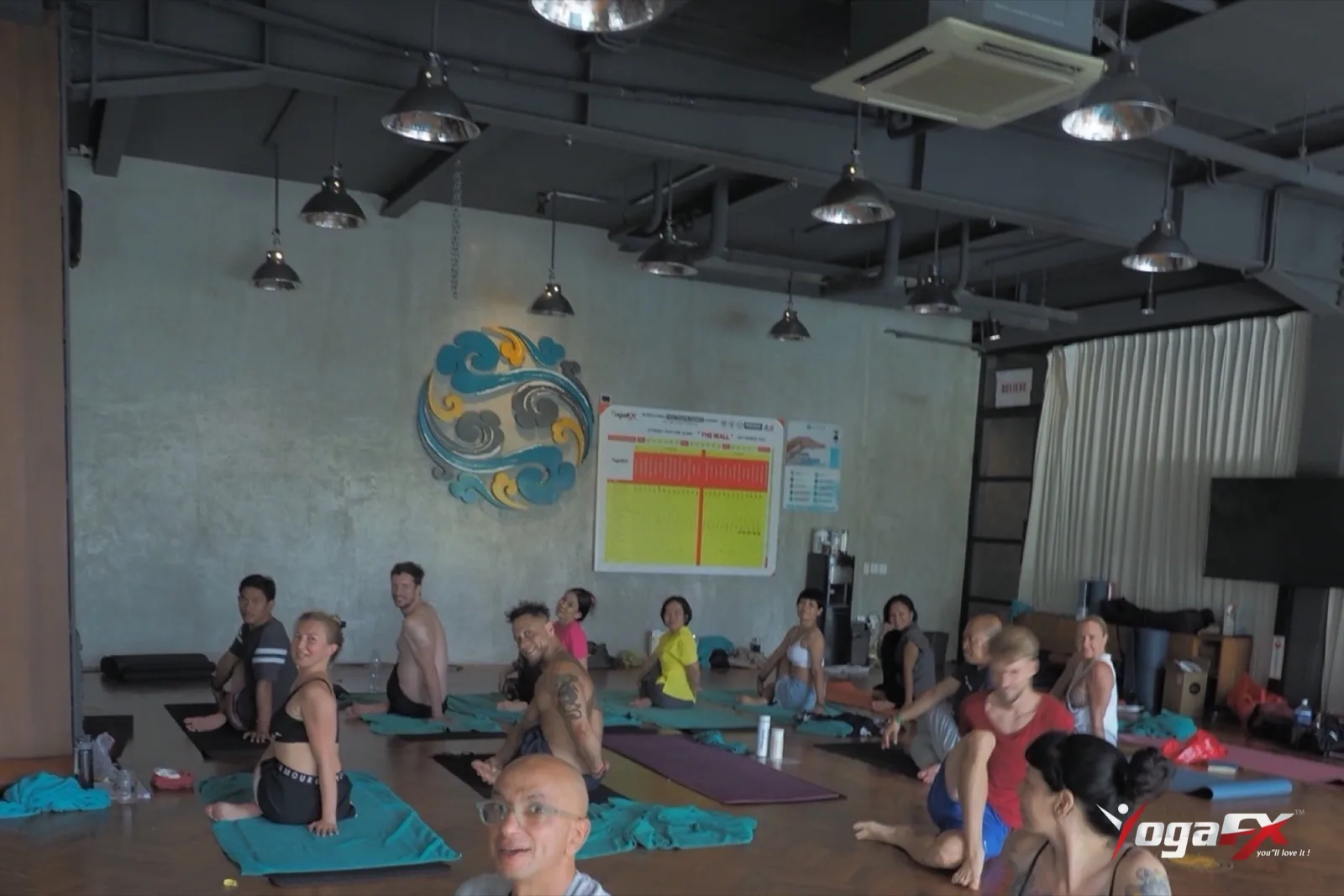
Three Sample Weeks: Mixing Hot Yoga and Sauna
Every week is different, so use these hot yoga vs sauna mixes as starting points rather than rules. Each one uses simple arithmetic you can adjust.
Week A: very tight diary
Two sauna sessions of 20 minutes, plus one short home practice. Total heat time is about 40 minutes of sauna. It is low effort and good for winding down, but it will not build skill.
Week B: one protected slot
One 90-minute class, plus one 20-minute sauna session. That is 110 minutes of heat in total. It is the most realistic mix for many working men, because the class gives you the effort and the sauna gives you the unwind.
Week C: training-focused
Three 90-minute classes, which is 270 minutes, and no sauna. This suits someone preparing for teacher training or building a steady habit. If your goal is a teaching certificate, this is the pattern that serves it best.
If you want to try both on the same day, keep the sauna short and well after class, and drink plenty of water. Our related guide on hot yoga vs infrared sauna covers home saunas in more detail. A broader comparison written from our Bali studio is also available in this body-focused comparison.
What Students Say About the Practice Room
These are graduates of our teacher training talking about the class experience, not about saunas. They are short quotes from the video reviews, word for word, so you can judge the tone for yourself.
- "It's been a fabulous experience, I've loved every second of it." Shiela, YouTube review, 2023. Watch the video.
- "This has been a brilliant experience." Marion, YouTube review, 2024, who also describes "that lovely family feeling". Watch the video.
- "I'm really proud of all of us." Laura, YouTube review, 2024. Watch the video.
The video above is Shiela's graduation review from our September 2022 Bali training. A sauna is a quiet, private break. A class is shared, which is a very different kind of reset. Neither is wrong, but only one gives you a group of people who "had my back", as Marion put it.
Five Mistakes When Adding Heat to a Busy Week
Most problems come from rushing, not from the heat itself. These five are worth avoiding, whichever option you pick.
- Skipping water. Cleveland Clinic names dehydration as one of the biggest sauna risks, and class sweat rates reach about 1.1 kg an hour in experienced students.
- Treating sweat as fat loss. Sweat is mostly water, so the scale drops and then comes back after you drink.
- Going from zero to 90 minutes. Beginners should build up, and the 2014 lab study shows experienced students work at a higher share of maximum heart rate.
- Stacking both in one rushed hour. Two heat sessions back to back raise the risk of dehydration, so leave a real gap.
- Ignoring your doctor. Heart, blood pressure and pregnancy questions come first, before any heat habit.
Notice that none of these needs special equipment. They need a little planning, which is exactly what a packed week lacks. So plan the heat the way you plan a meeting, and you will rarely get caught out.
In the end, the hot yoga vs sauna choice is a scheduling choice as much as a health one. The sauna fits the small gaps. The class fits the protected slot. Most men do best by deciding which slot they can honestly keep, then building from there.
Hot Yoga vs Sauna: A Simple Checklist for Choosing
Use this list the next time you are weighing hot yoga vs sauna for your heat time:
- If you have 20 minutes and want to relax: choose the sauna, and drink water.
- If you have 90 minutes and want a workout: choose a hot yoga class.
- If you have a heart, blood pressure or pregnancy question: speak to your doctor before either.
- If you want a skill, not just a sweat: choose hot yoga, because it teaches balance, breath and focus.
- If you cannot get to a hot room: start with home study and plan a Bali intensive later.
Our online course is USD 329, or 4 x USD 82, and teaches the postures and dialogue at home. You can see the full route on our Bikram hot yoga online page. Mr. Ian Terry built the programme for adults with full diaries, so you can start small and grow into it.
FAQ
Is hot yoga or sauna better?
In the hot yoga vs sauna question, neither wins for everyone. A sauna is a short, passive way to relax, usually 15 to 20 minutes. Hot yoga is a 90-minute active class that builds balance, flexibility and focus. Choose the sauna for a quick unwind and hot yoga when you want exercise and a skill.
Does hot yoga burn more calories than a sauna?
Yes, in the research we reviewed. A 2014 lab study found a 90-minute hot class averaged 286 kcal. A sauna is not exercise, and Cleveland Clinic notes that sauna sweat loss is water weight, not weight loss. Calories vary by person, so treat these as averages.
Can I do hot yoga and a sauna on the same day?
Some people do, but keep it careful. Drink water before and after, keep the sauna to about 15 to 20 minutes, and skip it after alcohol. Anyone with heart, blood pressure or pregnancy concerns should check with a doctor first, because two heat sessions raise the risk of dehydration.
Is Bikram yoga the same as a sauna?
No. Both use heat, but Bikram yoga is an active class of 26 postures and 2 breathing exercises. A sauna is passive sitting in a hot room. The class also trains balance and breathing, while a sauna mainly offers a short rest. They can complement each other.
Who should avoid saunas?
Cleveland Clinic says to avoid saunas after a recent heart attack or stroke, or after drinking alcohol. People with certain heart conditions, blood pressure problems, epilepsy or pregnancy, and those over 65 or under 16, should ask a provider first. When in doubt, speak to your doctor.
Ready to Start Where You Are?
Message Mr. Ian Terry on WhatsApp (chat on WhatsApp) and ask which route fits your week. The YogaFX team will help you choose between home study and a Bali intensive. Check with a healthcare professional before starting any new heat routine.