Hot Yoga for Beginners: Prepare at Home Before Your First Class
By Mr. Ian Terry, E-RYT 500, founder of YogaFX · Published
Hot yoga for beginners is easier when you have rehearsed the moves before you walk into the heat. You can learn the order of the 26&2 sequence, the breathing and your pacing on a cool floor at home, then save your energy in class for the room itself. Here is how to do it in a busy week.
This guide follows the teaching of Mr. Ian Terry, Founder and Lead Instructor at YogaFX, an E-RYT 500 teacher with 12,000+ teaching hours. He tells new students the same thing every time: the heat is the hard part, so do not make the postures a surprise as well.
If you have a full diary, a laptop and a nervous feeling about your first class, you are the reader we had in mind. Maybe a friend came home soaked and smiling. Maybe you want to teach one day and need to know what you would be teaching. Either way, a little preparation pays off quickly.
This article is part of our Hot Yoga for Men guides.
Hot Yoga for Beginners: What Happens in a First Class
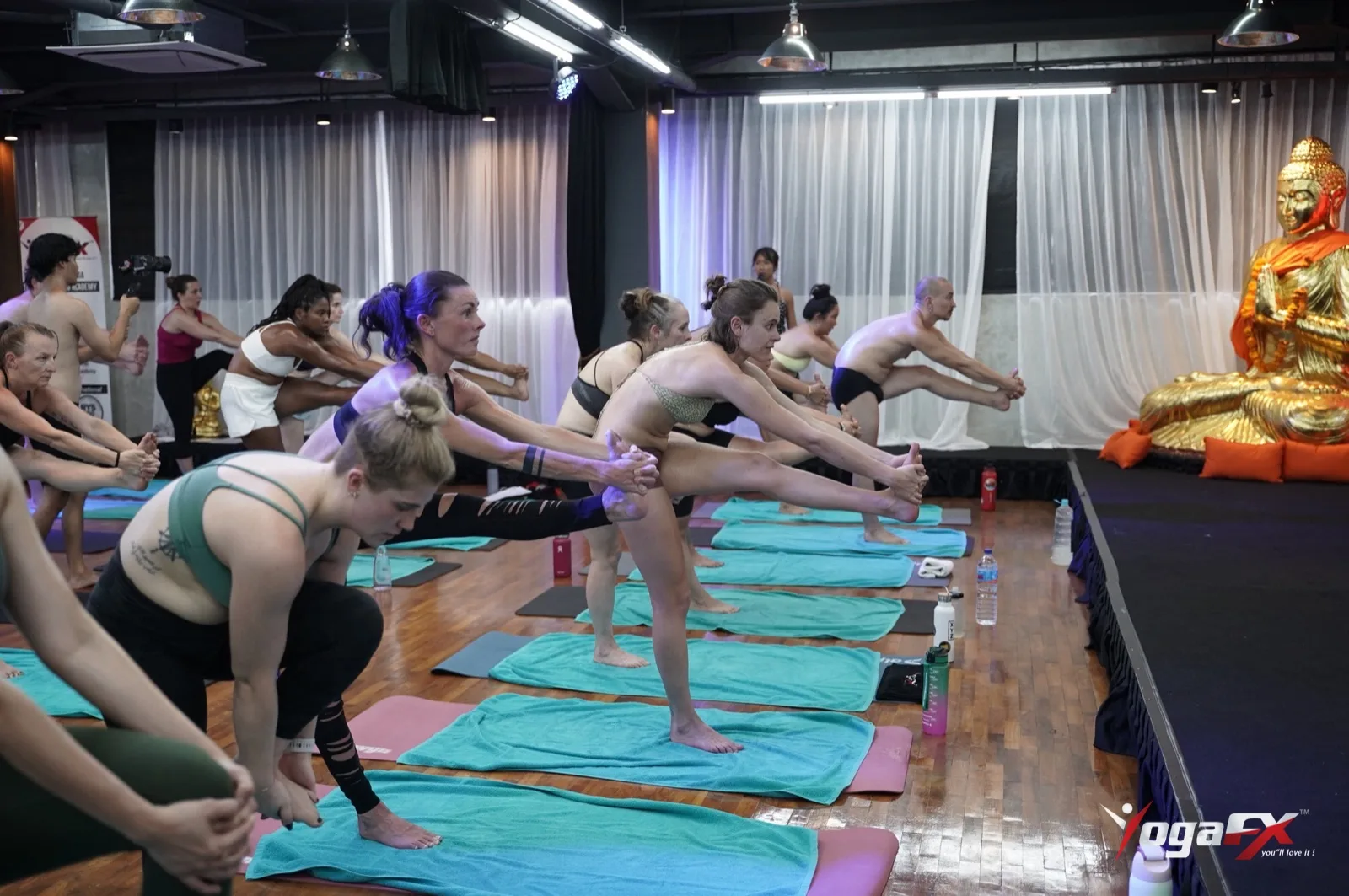
A first class can feel like a mystery, so let us remove the mystery. The class we teach at YogaFX is a fixed 90-minute session in a room around 40°C with about 40% humidity. A teacher speaks a scripted dialogue from start to finish. There is no music, and nobody demonstrates from the front.
That might sound strict. In practice it is the opposite, because it takes the guessing out. You always know what comes next, and so does everyone around you. If you want the wider picture of the styles, our plain guide to what hot yoga is covers the definitions.
Here is the shape of the class, in plain terms:
- Standing postures first. You work your legs, hips and balance while the heat builds.
- Floor postures next. You lie on your front, back and sit, which gives your heart rate a chance to settle.
- Two breathing exercises. They bookend the class and teach you to breathe slowly when you feel rushed.
- Rest between sections. Resting is part of the class, not a failure.
Because the order is fixed, you can learn it. That one fact is why a home rehearsal works so well for hot yoga for beginners, and it is why we teach it this way.
What You Can Rehearse at Home for Hot Yoga for Beginners
Be honest about the limits first. Hot yoga for beginners at home is a rehearsal, and a cool living room is not a hot room. You cannot copy the heat, and you should not try to. Heating a small space with heaters is a bad idea, and it moves the risk from the studio to your flat.
What you can rehearse is everything else. You can learn the names, the order, the breathing and how long a hold feels. If you want a deeper look at the trade-offs, read our guide to original hot yoga at home. The table below sets the two side by side.
| Part of the class | At home on a cool floor | In the hot room |
|---|---|---|
| Order of postures | You can learn it fully, one block at a time | You follow the teacher and the script |
| Breathing | You can practise the two exercises daily | You breathe through the heat |
| Balance and holds | You can test holds at your own speed | Sweat and heat make holds feel longer |
| Heart rate | Stays lower, so sessions feel easy | Rises faster, so pacing matters |
| Heat tolerance | Cannot be rehearsed safely | Built up gradually over several classes |
| Teacher feedback | Limited to what you notice yourself | Real-time cues from a trained instructor |
Notice the pattern. The things you rehearse at home are the things that cause stress on day one: not knowing what is next, and not knowing how to breathe. Fix those, and the heat is the one new thing left.
A Two-Week Hot Yoga for Beginners Plan You Can Do at Home
You do not need an hour a day. For hot yoga for beginners, short, regular sessions beat one long effort. This plan suits a person with a job, a commute and not much spare energy. Adjust it to your week, and skip a session if you feel unwell.
| When | Session length | What to do |
|---|---|---|
| Days 1 to 3 | 10 to 15 minutes | Learn the breathing exercises and the first few standing postures slowly |
| Days 4 to 7 | 15 to 20 minutes | Add the next block of postures and note what feels tight |
| Days 8 to 10 | 20 minutes | Link the blocks in order and practise resting calmly between them |
| Days 11 to 13 | 20 minutes | Run the whole sequence you know, then stop when you feel tired |
| Day 14 | Book your class | Pack your bag, hydrate and go early |
Two small habits make the plan stick. First, pick a fixed time, such as after you make coffee. Second, write down one thing you noticed each day. After a fortnight you will have a short list of questions for your teacher, which is exactly what a good first class needs.
Keep each session honest
- Stop when you feel dizzy, lightheaded or short of breath.
- Move slowly into each posture instead of forcing depth.
- Practise on a non-slip mat with a clear patch of floor.
- Do not use extra heat to feel like you are doing more.
What to Bring to Your First Hot Yoga Class: A Beginner Kit List
Good hot yoga for beginners starts with a small bag. Packing sounds trivial until you are in a hot room with nothing to wipe your face. The kit is small. Most of it is already in your home.
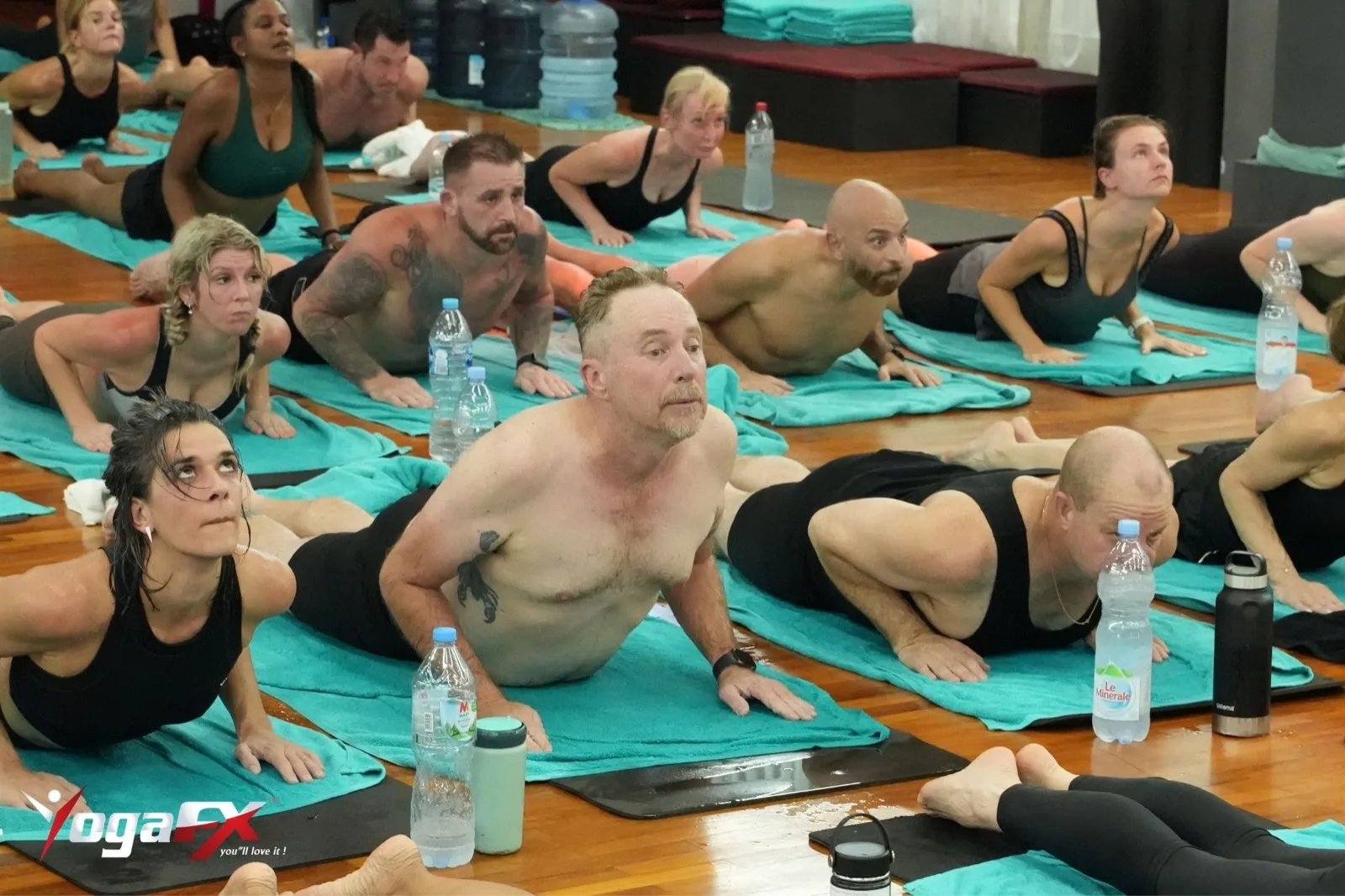
- A large towel for your mat, because the floor gets slippery. Our hot yoga towel buyer's guide explains what to look for.
- A full water bottle you can reach without standing up.
- Light clothing that stays put when you bend and sweat.
- A second towel and dry clothes for afterwards.
- A light meal a few hours earlier. See our three honest rules for eating before class.
Arrive early. Ten minutes in the room before class starts lets your body adjust, and it gives you time to ask the teacher any last questions. Tell the teacher that you are new. A good teacher watches new students closely.
Hot Yoga Tips for Beginners: How to Pace Yourself in the Room
Pacing is the skill that separates a good first class from a miserable one, and it sits at the heart of hot yoga for beginners. The heat hides effort. You can feel fine, then suddenly not. Cleveland Clinic says hot yoga is something you should ease into, and it warns that it is easy to overdo it because the heat masks how hard you are working.
So treat the first class as a listening exercise. You are learning what your body does in the heat. You are not trying to match the person on the next towel.
- Rest early, not late. Sitting out one posture costs you nothing.
- Sip, do not gulp. Small drinks between sections are easier on your stomach.
- Keep breathing slowly. If your breath gets fast and shallow, slow down and reset.
- Stay near the back or the door in your first class, if the layout allows.
- Lie down if you feel dizzy, then tell the teacher.
That list is not a sign of weakness. Experienced students do the same thing on hard days. Mr. Ian often reminds trainees that sitting out a posture is a decision, not a defeat.
Who Should Check With a Doctor First
Hot yoga for beginners is not for everyone, and a responsible guide says so. Mayo Clinic Sports Medicine states that hot yoga is not for everyone, that the heat and intensity could cause heat-related illness, and that you should check with your doctor first if you have health concerns or are pregnant.
It also tells people to stop if they feel dizzy, lightheaded or sick.
Cleveland Clinic adds that hot yoga is not suggested for people who are pregnant or have a heart condition, and that the heat can aggravate asthma. Both sources agree on the basics: drink plenty of water, listen to your body and leave the room if something feels wrong.
Our own view matches theirs. If you have a heart condition, low or high blood pressure, a history of heatstroke, or take medication that affects hydration, speak to a healthcare professional before booking.
There is upside too. A review by Willmott and colleagues in 2025, which pooled 43 studies and 942 participants, reported benefits such as flexibility and well-being, with the usual caveat that study quality varies. Benefits are not a reason to ignore your own limits.
What to Expect in Hot Yoga: Common First-Class Worries
Most beginners worry about the same few things. Naming them helps, because each one has a plain answer. Here is what to expect in hot yoga when those worries show up.
"I'm not flexible enough"
Flexibility is a result of practice, not an entry ticket. The class asks you to try each posture, not to finish it perfectly. Nobody in the room is grading you, and most people are watching their own towel.
"I'll sweat too much"
You will, and so will everyone else. Sweat is how your body cools itself, and it says little about how hard you worked. Bring a towel, accept the mess and move on.
"I can't keep up with the script"
That is exactly what the home rehearsal fixes. When the order is familiar, the spoken cues become a rhythm instead of a test. You can follow along without thinking about what comes next.
Our first-class advice boils down to three short hot yoga tips for beginners: arrive early, rest often and judge the class after a few visits, not after one.
What Real Students Say About Their First Weeks
Reading about hot yoga for beginners is useful. Hearing from people who did it is better. These are short quotes from our review store, with first names only.
"I will never think myself able to do what I can do today because their amazing classes." Tridy, Google review, 2020.
"The teacher is very friendly and i always feel welcome, definitely will come again." Sue, Google review, 2020.
Joanne, a trainee, thanked Mr. Ian and the crew in her video review for an "amazing" and "eye opening" experience (YouTube review, 2025). You can watch it below.
Notice the theme in all three. Nobody mentions being fit on day one. They talk about welcome, progress and a sense of being looked after, and that is what a good first class should feel like.
After Class: Recover Before You Judge the Experience
Many beginners decide whether they liked hot yoga while they are still depleted. Don't do that. Give your body an hour to settle first.
- Drink water steadily, not all at once.
- Eat something simple and light.
- Cool down slowly instead of stepping straight into cold water.
- Expect to feel tired, then notice how calm you feel later.
If you feel unusually drained, our guide on why you feel tired after hot yoga lists five common causes and fixes. Most of them come down to sleep, food and water.
From Home Practice to the Studio or the Course
Once the rehearsal feels comfortable, you have two natural next steps. If you are in Bali, the Seminyak studio offers a Free 1-Day Guest Pass, so your first class costs nothing. You will arrive knowing the order, and the teacher can spend the time on your alignment rather than on what comes next.
If you live far from a hot room, or you are curious about teaching, the online route lets you keep learning from home. The online course is USD 329, or 4 x USD 82, and the Starter Kit is USD 98, or 2 x USD 49. You can read how the home-first approach works on our Bikram hot yoga online page.
If you are curious how a hot class adds up as exercise across a full week, our sister site wrote about it in what a hot yoga workout asks of your body. It is a different question from this guide, but a useful follow-up once you have a few classes behind you.
Nobody needs to be flexible, fit or fearless to start hot yoga for beginners. You need a plan, a towel and a willingness to rest. The rest follows.
FAQ
How do I prepare for hot yoga for beginners?
Drink water through the day, eat a light meal a few hours before, and arrive early so the room feels less new. Rehearse the postures at home on a cool floor first. Pack a towel and a water bottle, and plan to rest whenever you need to.
What should I bring to a first hot yoga class?
Bring a large towel, a mat if the studio does not lend one, a full water bottle and light clothes you can move in. Pack a second towel for afterwards and a change of clothes. Leave jewellery and phones in your bag so nothing slips while you sweat.
Is hot yoga for beginners too hard?
It can feel hard at first because the heat raises your heart rate quickly. The class is easier to follow when the order is familiar and you pace yourself. Resting in any posture is normal, and most beginners find the second and third class much calmer than the first.
Is hot yoga safe for beginners?
For many healthy adults it is fine with sensible pacing, but it is not for everyone. Mayo Clinic advises checking with your doctor first if you have health concerns or are pregnant. Stop if you feel dizzy, lightheaded or unwell, and drink water before, during and after class.
Can I do hot yoga at home as a beginner?
You can rehearse the postures and breathing at home, but you cannot copy the heat safely. Practise on a cool floor for short sessions, and never overheat a small room with heaters. Treat home practice as preparation for the studio, not a replacement for a teacher.
Still have questions? Message Mr. Ian and the YogaFX team on WhatsApp and we will answer them personally.
Disclaimer: this article is general information and not medical advice. Consult a healthcare professional before starting any heated exercise, especially if you have a medical condition.