
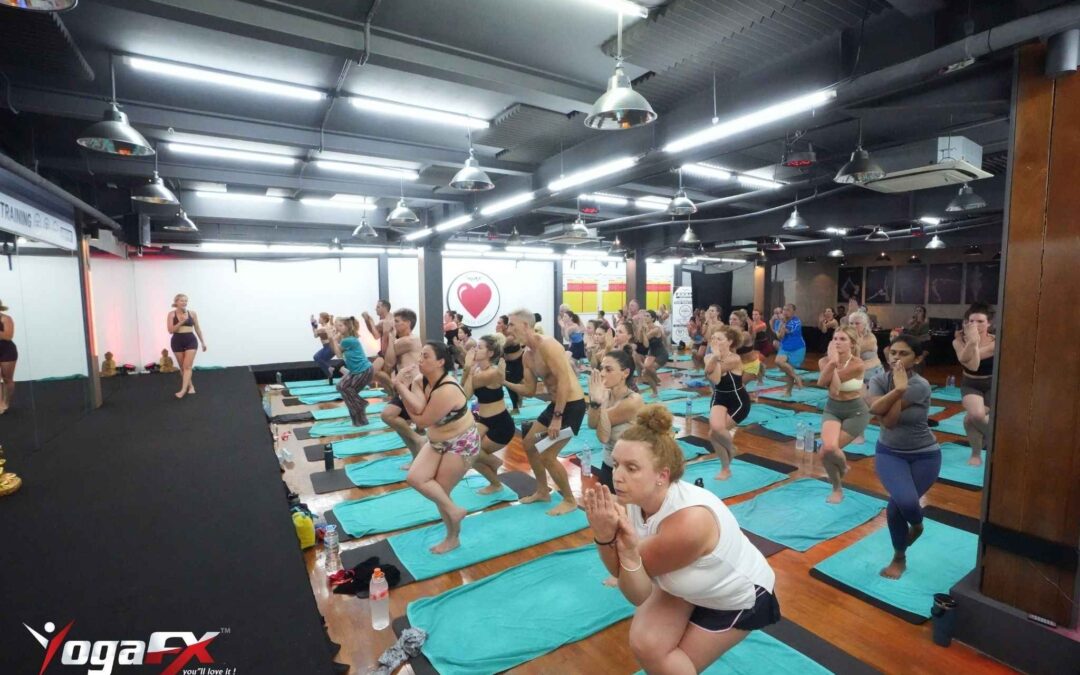
Can’t find hot yoga teacher training near you? You still have good options. Most people choose one of four routes: a local studio programme, a travel intensive, a fully online course, or a hybrid of online study plus a short in-person intensive. For working adults, hybrid usually costs the least time off work.
This guide explains why your search keeps showing studios instead of trainings, how to compare each route, and how to check a programme before you pay. You’ll also see how Mr. Ian Terry, E-RYT 500 and founder of YogaFX, trains hot yoga teachers who live nowhere near a training centre.
Why “Hot Yoga Teacher Training Near Me” Searches Come Up Empty
Type “hot yoga teacher training near me” into Google and you’ll usually see a map first. That map shows studios where you can take a class, not schools that train teachers. It’s an easy mix-up, because both use the words “hot yoga”.
Only a small share of hot yoga studios run their own teacher training. Those that do often hold it once or twice a year, so the next intake may be months away. As a result, many people search, find nothing that fits, and give up on the idea.
That’s a shame, because your location matters far less than it did ten years ago. Here’s what usually gets in the way:
- No local programme. Your nearest hot studio doesn’t train teachers at all.
- Wrong timing. The local course runs on dates you can’t make.
- Long schedules. Weekend formats can stretch over many months.
- Unclear style. The training covers general yoga, not the 26&2 sequence you actually practise.
The good news is that each of these problems has a workaround. So instead of asking “what’s near me?”, it helps to ask “which hot yoga teacher training fits my life?”
What You Actually Learn in a Hot Yoga Teacher Training
Before you compare locations, it helps to know what a good hot yoga teacher training should cover. Whatever route you take, the content should be the same. Here’s what to expect from a 26&2-focused programme:
- The sequence. All 26 postures and 2 breathing exercises, from Pranayama breathing to the final Kapalbhati.
- The dialogue. The scripted words you use to guide a 90-minute class without demonstrating or playing music.
- Anatomy and physiology. How each posture affects muscles, joints and the nervous system.
- Heat safety. How to read students in the heat and when to suggest a break.
- Posture correction. How to fix alignment with clear verbal cues.
- Teaching practice. Time spent leading real students while a trainer gives feedback.
Notice that only the last item truly needs a hot room and a trainer beside you. Everything else is knowledge, and knowledge travels well. You can study it on a train, at lunch or late at night once the kids are asleep. That’s why location matters less than most people think.
This also explains why so many trainees feel nervous before they start. The dialogue looks long on paper. However, students who study it one posture at a time, over several weeks, usually arrive at their intensive already able to say most of it from memory.
Your 4 Options When There’s No Hot Yoga Teacher Training Nearby
Every route has trade-offs. This table compares them on the things students tell us matter most:
| Route | Time off work | Teaching in real heat | Live feedback | Travel cost |
|---|---|---|---|---|
| Local studio programme | Low, but spread over months | Yes | Yes | Low |
| Travel intensive (several weeks) | High | Yes | Yes | High |
| Fully online course | None | Limited | Depends on the course | None |
| Hybrid (online + short intensive) | About one week | Yes | Yes | Moderate |
If a good local programme exists and its dates suit you, it’s a solid choice. However, most people reading this don’t have one. For them, the real decision is between fully online and hybrid.
A fully online course is the most flexible option. For example, the YogaFX Bikram Hot Yoga Teacher Training Online lets you study the sequence, the dialogue and the anatomy at home, with lifetime access. Hybrid adds a short block of teaching in the heat on top of that.
Hybrid Hot Yoga Teacher Training: Study at Home, Finish in the Heat
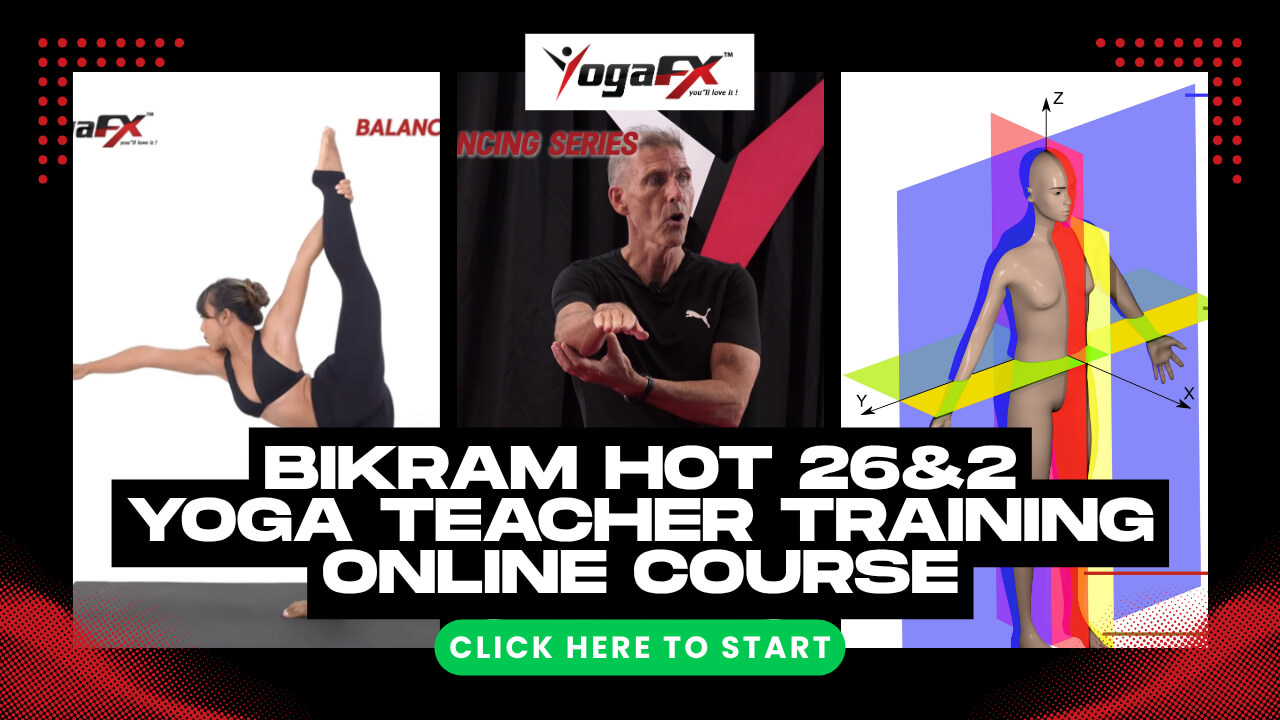
Hybrid hot yoga teacher training solves the “near me” problem in two steps. First, you do the study part near home, because it’s online. Then you travel once, for about a week, to practise teaching in a real hot room. That way, a hot yoga teacher training no longer depends on your postcode. It depends on your schedule, which is far easier to plan around.
Step 1: Study online, wherever you live
The Bikram Hot Yoga Teacher Training Online is the first step for most YogaFX students. It’s a 200-hour package built around these modules:
- Standing Series. Videos, a workbook and the full dialogue for the standing postures.
- Floor Series. The same format for the floor postures, from spine strengthening to the final stretch.
- Anatomy and Physiology. How the skeletal, muscular and nervous systems respond to each posture.
- Yoga Philosophy and Meditation. Lectures and quizzes that connect the physical practice to the mind.
- Live Event Recordings. Real student teaching and Q&A videos from training events.
Interactive quizzes give you instant feedback, and progress tracking shows how close you are to finishing. Because access never expires, you can revisit a posture’s dialogue years later, right before you teach it.
Step 2: Teach in the heat with Mr. Ian
Students who want the full experience then join the Bikram Hot 26&2 Yoga Teacher Training MasterClass in Bali. It’s a 6-day hybrid programme, so you arrive with the theory already done. The week focuses on teaching real students, refining your dialogue and reading a hot room.
Graduates of the MasterClass earn two certifications: the Yoga Alliance RYT 200-Hour and the Bikram Hot 26&2 200-Hour International Yoga Certification. In short, you get the in-person polish without moving to another city for a month.
What Yoga Alliance says about online hours
Live contact still matters. Under the Yoga Alliance standards for Registered Yoga Schools, an RYS 200 delivering training online must include at least 30 synchronous (live) hours. That’s one reason hybrid works so well: the intensive gives you live teaching time with a trainer in the room. Learn more about how online yoga teacher certification works.
How to Vet a Local Studio’s Hot Yoga Teacher Training
Maybe you did find a hot yoga teacher training nearby. Before you sign up, run it through this short checklist. The same questions work for an online or hybrid programme, too:
- Is the school registered? Look it up in the Yoga Alliance directory yourself.
- Who leads it? Ask for the lead trainer’s name and whether they hold an E-RYT 500 credential.
- Does it teach your style? If you practise the 26&2 sequence, make sure the course teaches its dialogue.
- How long does it really run? Count the weekends, not just the hours.
- What’s the full cost? Add books, missed shifts and travel to each session.
- Who takes your payment? Pay the school directly where possible, and read the refund policy.
For a deeper look at each check, read our guide on how to choose a yoga teacher training with confidence. If you’ve already paid a deposit through a booking platform, see what to do after the Tripaneer bankruptcy.
The Real Cost of “Near Me” vs Travelling
It’s easy to assume a hot yoga teacher training close to home is always cheaper. Sometimes it is. But the price tag leaves out the cost of your time, and that’s often the bigger number.
Here’s what the YogaFX routes cost today:
| YogaFX route | Price | Payment options | Time away from home |
|---|---|---|---|
| Bikram Hot Yoga Teacher Training Online | US$329 Early Bird (normal US$399) | Interest-free instalments available | None |
| Bikram Hot 26&2 MasterClass (hybrid, Bali) | US$1,899 Early Bird (normal US$1,999) | Interest-free from US$250 per month | 6 days |
Now compare that with a weekend-based local course. You might give up many weekends across several months, plus fuel, childcare or missed shifts. In contrast, the online course costs no time away at all, and the MasterClass needs only about five days off work.
That said, the right answer depends on you. If a weekend format near home fits your life and passes the checklist above, it may still be the best pick, especially if you like learning alongside the same group every week.
A Realistic Timeline: From Search to Certified
People often ask how long the whole journey takes when no hot yoga teacher training is close by. Here’s a typical path for a working adult who chooses the hybrid route:
| Stage | What happens | Typical time |
|---|---|---|
| Explore | Watch the free complementary preview and keep practising | 1 to 2 weeks |
| Study online | Work through the Standing Series, Floor Series and lectures | Several weeks, at your own pace |
| Rehearse | Say the dialogue out loud daily and record yourself | Ongoing |
| Intensive | Teach real students in the heat during the 6-day MasterClass | 6 days |
| Teach | Start with community or studio classes and build confidence | From the following week |
The online stage is the flexible part. Some students finish in a month because they have free evenings, while others spread it over a season around work and family. Either way, you arrive in Bali ready to teach rather than to read.
Compare this with a weekend course that runs for many months. Both routes lead to a certificate, but the hybrid path asks for far fewer weekends away from home. For anyone searching “hot yoga teacher training near me” without results, that difference often decides it.
How to Keep Practising When There’s No Hot Studio Nearby
Teacher trainees learn faster when the postures already live in their body. So even without a hot yoga studio down the road, it pays to keep practising. Try these habits:
- Practise the sequence at room temperature. Focus on alignment and breathing rather than sweat.
- Say the dialogue out loud. Record one posture a day and play it back on your commute.
- Take classes when you travel. A drop-in class in another city keeps your feel for the heat fresh.
- Watch posture clinics. The online modules let you study corrections even on rest days.
Please don’t try to recreate a hot room at home with heaters. Heated practice needs ventilation, hydration and supervision, so save the heat for a proper studio. If you have a health condition, consult a healthcare professional before starting hot yoga.
Regular practice is worth the effort. A 2025 systematic review by Willmott and colleagues looked at 43 studies with 942 participants. It found that Bikram-style hot yoga may help flexibility, bone density and general well-being, although more research is still needed.
Common Worries About Training Far From Home
Choosing a hot yoga teacher training you can’t drive to raises fair questions. These are the three we hear most often on WhatsApp.
“Will studios at home accept my certificate?”
Studios care about what you can do and how you were trained, not where. A Yoga Alliance RYT 200 listing is recognised internationally, and a strong audition class matters even more. Still, every employer sets its own rules, so check with the studios you hope to teach at. Here’s why most studios won’t hire uncertified hot yoga teachers.
“How do I get teaching practice after I go home?”
Start small. Offer free classes to friends, a workplace group or a community centre, and keep saying the dialogue every day. Many graduates also return to the online Live Event Recordings to sharpen their delivery before an audition.
“Is a week in Bali really enough?”
On its own, no week would be. That’s why the online study comes first. By the time you arrive, the theory and most of the dialogue are done, so the intensive can focus entirely on teaching. Mr. Ian often reminds trainees that confidence comes from repetition after the course, not just during it.
How Students From 80+ Countries Train With YogaFX
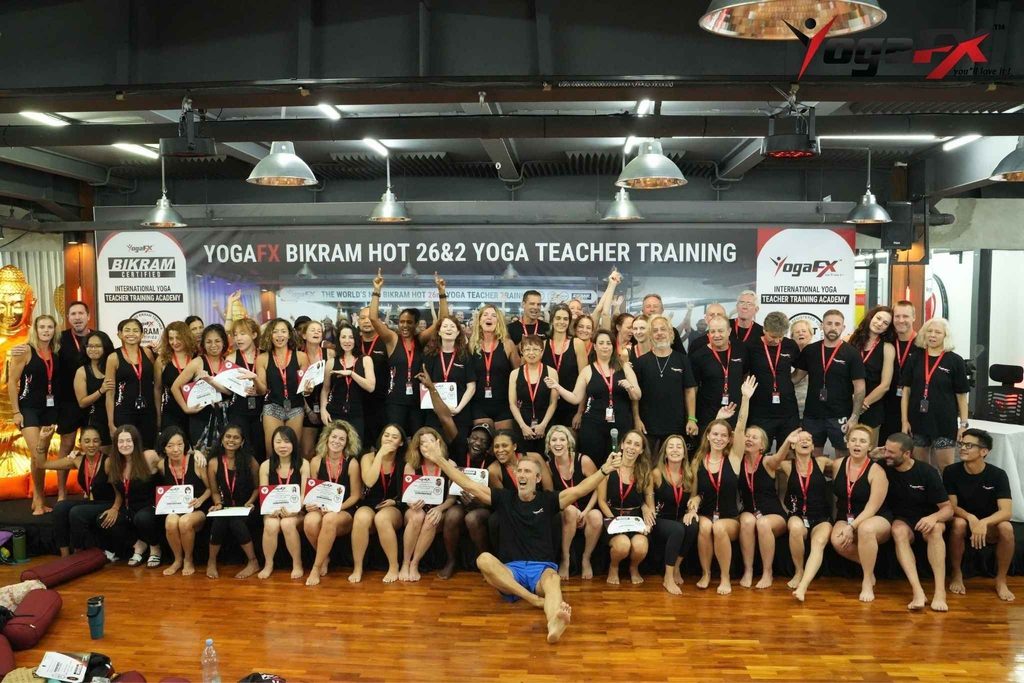
Most YogaFX graduates didn’t have a hot yoga teacher training near them either. Over 1,500 graduates from more than 80 countries have trained with us since 2017, many of them starting online from home.
Every route is led by Mr. Ian Terry, E-RYT 500, who has more than 12,000 hours of teaching experience. He trained for five years, from 2014 to 2019, alongside the founder of the Bikram Hot 26&2 method. He also serves as Master Trainer for the Republic of Indonesia Yogasana Sports Federation.
Mr. Ian’s advice to students far from any studio is simple: start with what you can do at home, and come to the heat when you’re ready. That’s exactly how the two YogaFX routes fit together:
- Start online. The Bikram Hot Yoga Teacher Training Online, from US$329 at the Early Bird price.
- Finish in Bali. The next MasterClass runs from Sunday 24 January to Friday 29 January 2027 at Soham Wellness Center in Seminyak.
Not ready to commit? Try a free lesson first with our complementary preview. Then hear from graduates in their own words:
Their experiences are reflected in 150 Google reviews, 50 Yoga Alliance reviews and 357 YouTube video testimonials. Some have gone on to compete, too, winning 12 medals in Yogasana championships, including 5 golds.
FAQ
Where can I get yoga certified near me?
Start with the Yoga Alliance directory, which lets you search registered schools by location and by online format. If nothing nearby teaches the style you practise, consider an online or hybrid hot yoga teacher training. You can study from home and travel once for the in-person teaching practice.
Can you do yoga teacher training online?
Yes. Many Registered Yoga Schools now teach online, and Yoga Alliance requires at least 30 live hours in an online RYS 200. For hot yoga, online study works well for the dialogue and anatomy, while a short in-person intensive helps you practise teaching in real heat.
How long does 200 hour yoga teacher training take?
It depends on the format. Weekend programmes can run for several months, while full-time intensives take a few weeks. Online study goes at your own pace. With the YogaFX hybrid route, you finish the theory online first, then complete a 6-day MasterClass in Bali.
Can you do yoga teacher training as a beginner?
Yes, although a few months of regular practice first will make training much easier. Beginners often use an online course to learn the postures and dialogue at their own pace. You don’t need advanced flexibility, but you do need commitment, curiosity and a willingness to practise speaking the dialogue out loud.
Is yoga teacher training worth it?
For most graduates, yes, whether they teach full time, part time or simply deepen their own practice. The value depends on choosing a registered school with live feedback. Many graduates find that teaching just a handful of classes helps recover their course investment, though results depend on your local market.
Still have questions? Message Mr. Ian and the YogaFX team on WhatsApp, or start the online course today.