
How do you choose a yoga teacher training when two offers look equally good on screen? Imagine them side by side. Offer A has gorgeous photographs, a countdown timer and a button asking you to pay the full price today. Offer B shows named teachers, a current venue address and a written refund policy, and tells you to take a few days to read it. Neither presentation proves which training is better. But only one of them is giving you anything you can actually test.
That’s the heart of this guide. After the Tripaneer bankruptcy in October 2026, plenty of aspiring teachers are wondering how to tell a solid provider from a risky one. We’ll use this hypothetical pair to show how to compare yoga teacher trainings, Bikram Hot 26&2 programmes and even meditation retreats on evidence rather than on how a listing makes you feel. It’s written by the team at YogaFX, the academy founded by Mr. Ian Terry, whose students often start their training online before finishing in Bali.
Key Takeaways: How to Choose a Yoga Teacher Training
- To choose a yoga teacher training well, compare what you can verify: named teachers, venue, dates and credentials.
- Read reviews across independent platforms and test how quickly each provider answers real questions.
- Before you choose a yoga teacher training, ask who holds the deposit and whether there’s a full-refund cooling-off period.
- Tripaneer B.V.’s October 2026 bankruptcy shows why booking directly with a verified school matters.
Why the Tripaneer Bankruptcy Changes How You Choose a Yoga Teacher Training
Tripaneer B.V. ran BookYogaTeacherTraining and BookYogaRetreats, two of the most popular places to discover trainings. After a suspension of payments ended on 30 September 2026, the District Court of Amsterdam declared the company bankrupt at the start of October. The Dutch insolvency record lists the case as F.13/26/306.
The lesson isn’t that booking platforms are bad. It’s that a platform’s checkout can sit between you and your teacher in ways you don’t see, and when that middle layer fails, students and schools both get stuck. BookRetreats, a separate company with a similar name, says it has no connection to Tripaneer, which matters if you’re unsure which bookings are affected.
If you’ve already paid a Tripaneer deposit, start with our guide to the Tripaneer bankruptcy and paid deposits. If you’re choosing your next training, keep reading.
Comparison One: What You Can Actually Verify
To choose a yoga teacher training, start by using a booking app or search engine to build a shortlist. Compare destinations, formats, dates and styles. Then contact each provider directly and start testing.
For each offer, ask:
- When did this training begin operating, and how long has the owner been in business?
- What’s the owner’s name, and who are the senior teachers?
- What are their credentials, and can I confirm them independently?
- How many teaching hours does the course include, how am I assessed, and what certificate do I receive?
Yoga Alliance’s public directory of registered teachers and schools lets you check RYT, E-RYT and RYS claims in a minute. If a provider is vague about any of these questions, that’s your first difference between Offer A and Offer B.
Confirm the programme still exists
Ask for the current venue and dates. Fake or hijacked listings are a recognised problem, and an old listing can describe a training that stopped running years ago. The US Federal Trade Commission’s December 2025 analysis counted nearly 65,000 rental scam reports since 2020, with around 65 million US dollars lost, and pressure to pay before seeing anything was a common tactic. That’s general rental data, not a claim about any named app, but the warning applies. A trainee could spend thousands of dollars on fees and travel before discovering a programme doesn’t exist or looks nothing like its description.
Comparison Two: Reputation, Not Just Ratings
How many 5-star reviews does each provider have? Then ask the more useful questions:
- Are the reviews genuine and verifiable, spread across months or years?
- Do they mention the same programme and venue you’re considering?
- Are there critical reviews, and how did the provider respond?
- Do independent sites tell the same story as the testimonials on the sales page?
Fake reviews are widespread enough that the FTC adopted a rule banning fake reviews and testimonials in 2024. Video testimonials and graduate outcomes are often harder to fake than star ratings, so look for those too.
Check the digital presence for consistency: an official website, recent activity, named people and matching contact details. A newer training can be perfectly legitimate, but it should explain its background clearly rather than hiding behind stock photos.

Comparison Three: The Conversations
Before you choose a yoga teacher training, call both providers. Is the phone answered politely and professionally? Does the person understand your question, or just repeat the sales page? When they promise to send something, does it arrive?
If meaningful replies repeatedly take longer than roughly 24 to 36 hours, ask about staffing and response procedures. Delays can point to service weaknesses, but time zones, holidays and published office hours can also explain them. Treat a slow reply as a reason to investigate, not as proof.
| What you compare | Offer A (hypothetical) | Offer B (hypothetical) |
|---|---|---|
| Teachers | Not named | Named, credentials verifiable |
| Venue and dates | “Bali, various dates” | Address and exact dates |
| Reviews | High score, little detail | Detailed, on several platforms |
| Response time | Automated reply only | Specific answer next day |
| Payment | Full price now | Small deposit, written schedule |
| Refund policy | Not shown | Written, with cooling-off window |
Offer B isn’t guaranteed to be better. It’s just giving you far more to test, and that’s what you’re paying attention to.
Comparison Four: The Terms Attached to the Deposit
Nobody should choose a yoga teacher training without this comparison; the Tripaneer case made it impossible to skip. Ask each seller who holds the money, when it reaches the host, and what oversight and safeguards apply. Request evidence of any client-money or insolvency protection. An app’s checkout doesn’t prove your funds are protected.
Then ask directly: can I get my full deposit back, with no questions asked, during a cooling-off period? Check the deadline, exclusions, deductions and refund timing. Reconsider any platform that offers no reasonable time to review the commitment. Legal rights vary, and the EU’s guidance on withdrawal rights confirms that date-specific accommodation and leisure bookings don’t get the usual 14-day right. Your contract is what counts.
Understand exactly when each payment is due. Avoid unnecessary large upfront payments and ask about smaller deposits or staged payments. The FTC’s travel scam advice warns that wire transfers, gift cards and cryptocurrency are almost impossible to recover, so pay in a way you can dispute. Book directly with the verified host whenever possible, after comparing any protections the platform offered.
A Worked Example: Following Up on Offer A
Say you like Offer A’s photos so much that you decide to give it a fair chance. Good. Here’s how that might actually play out over a week.
On Monday you email three questions: who teaches, where exactly the training runs, and what the refund policy says. An automated reply arrives instantly. Nothing else does.
On Wednesday you call. Someone answers, friendly enough, and says the teacher line-up “is still being finalised” for your dates. They can’t send a refund policy yet, but there’s a discount if you pay in full by Friday.
That’s three answers you couldn’t verify and one reason to rush. It doesn’t prove Offer A is a scam. The organiser may simply be disorganised, or new. But a disorganised booking process before you pay rarely becomes an organised one after. Meanwhile Offer B has sent its policy, named its teachers and told you there’s no rush. When you choose a yoga teacher training, that difference in how each provider handles a few ordinary questions is often the clearest signal you’ll get.
Online, Hybrid or In-Person: Does Format Change the Risk?
When you choose a yoga teacher training, format changes what you’re buying, so it changes what to check. A fully online course is mostly about the platform, the teaching materials and whether the certificate is recognised. An in-person intensive adds a venue, accommodation and travel. A hybrid sits in between: you study online at home, then travel for a short intensive.
The same four comparisons apply to all three. For online and hybrid programmes, add a couple of questions. Can you preview the course material before paying? How long do you keep access? Who answers your questions while you study? A provider that lets you see a complimentary preview of the course before you commit is giving you one more thing to verify.
If the Comparison Involves a Deposit You’ve Already Paid
As checked on 6 October 2026, Tripaneer B.V.’s bankruptcy case is open under F.13/26/306. Before agreeing to a replacement course, ask your original host whether the booking is still valid and how they’ll treat your deposit. Keep every document, and check your payment provider’s dispute routes and deadlines, any relevant insurance and the curator’s claim instructions. Recovery is uncertain, and nobody can promise an outcome yet. Our 7 steps to protect your deposit walk through each route in order.
How YogaFX Answers the Same Comparison
Here’s our side of the table, so you can run the same tests on us. YogaFX was founded in 2017 by Mr. Ian Terry, an E-RYT 500 teacher with more than 12,000 teaching hours. He trained for five years, from 2014 to 2019, with the founder of the Bikram Hot 26&2 method, and he’s a Master Trainer for the Republic of Indonesia Yogasana Sports Federation. More than 1,500 graduates from over 80 countries have trained with us. You can read 150 Google reviews, 50 Yoga Alliance reviews and 357 YouTube video testimonials on independent platforms.
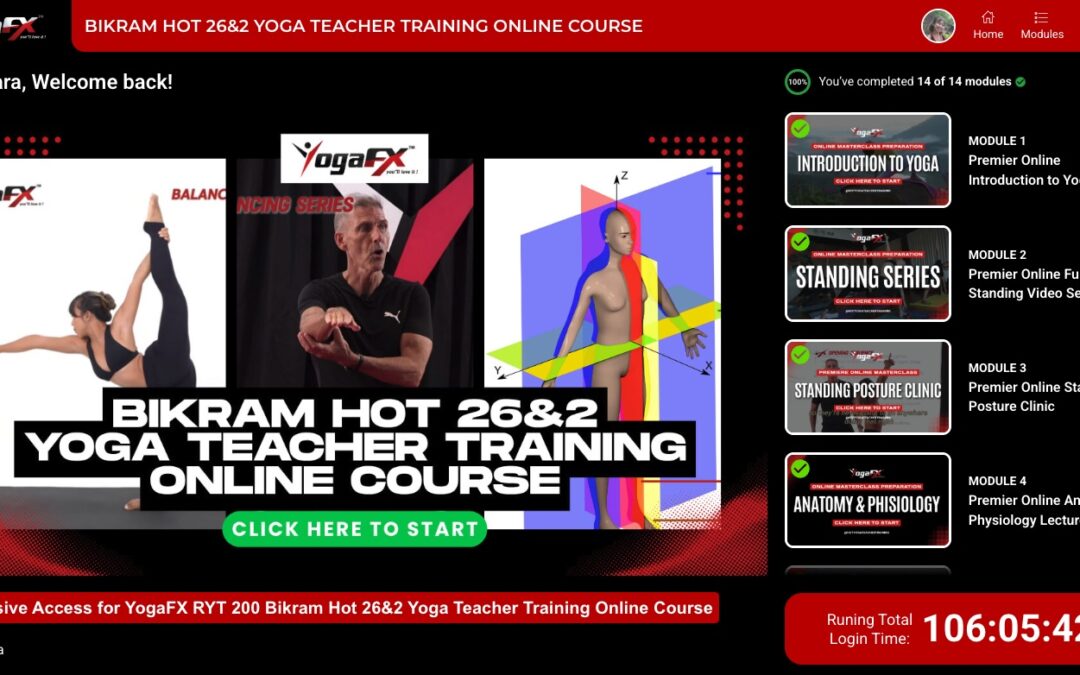
Our 6-day hybrid MasterClass starts with online pre-course study and ends with an intensive in Seminyak, Bali, leading to Yoga Alliance RYT 200 and Bikram Hot 26&2 200-hour certification. The next intake checks in on Sunday 24 January 2027. You book directly, the deposit is deliberately very low, the Early Bird price is US$1,899 (normally US$1,999), and interest-free instalments start from US$250 a month. You can see the full online programme on the Bikram yoga teacher training online homepage, and our sister site explains what really matters when choosing a training program.
Support for Tripaneer-affected deposits
If you booked yoga teacher training in Bali or elsewhere in Asia and your deposit is difficult to recover or use, email [email protected]. We may be able to offer full credit for a verified deposit towards an eligible future course, following individual review and written approval. Online-course eligibility has to be confirmed separately, so ask about the format before assuming it qualifies. This is training credit, not a cash refund from Tripaneer. You can also message Mr. Ian’s team on WhatsApp first.
FAQ: How to Choose a Yoga Teacher Training
Which yoga teacher training is best?
The best yoga teacher training is the one whose teachers, venue, reviews and terms you can verify, in the style you actually want to teach. Confirm Yoga Alliance registration, read independent reviews, test how the team responds, and compare deposit and refund terms before choosing. Price alone is a poor guide.
How do I choose a yoga teacher training online?
Check that the certificate is recognised, ideally by Yoga Alliance. Ask to preview course material, confirm how long you keep access, and find out who answers questions while you study. Compare refund terms and payment schedules, and verify the lead trainer’s credentials in the Yoga Alliance public directory before paying.
Is BookYogaTeacherTraining still safe to use?
BookYogaTeacherTraining was operated by Tripaneer B.V., which was declared bankrupt in Amsterdam in October 2026 under case F.13/26/306. New bookings through its brands carry obvious risk. Contact training providers directly instead, keep records of any existing booking, and follow the curator’s claim instructions.
What should a yoga teacher training deposit policy include?
It should name who holds the deposit, state a cooling-off period with a full refund, set out what happens if the school cancels, and give a dated payment schedule. Ask for refund timing in working days. If any of those are missing or vague, request them in writing before you pay.
Can I use a Tripaneer deposit towards an online course?
Possibly, but don’t assume it. YogaFX may offer full credit for verified Tripaneer deposits towards an eligible future course after individual review, and online-course eligibility is confirmed case by case. Email [email protected] with your booking confirmation, receipt and preferred format to check.