Hot Yoga Men vs Women: Differences That Matter When You Train to Teach
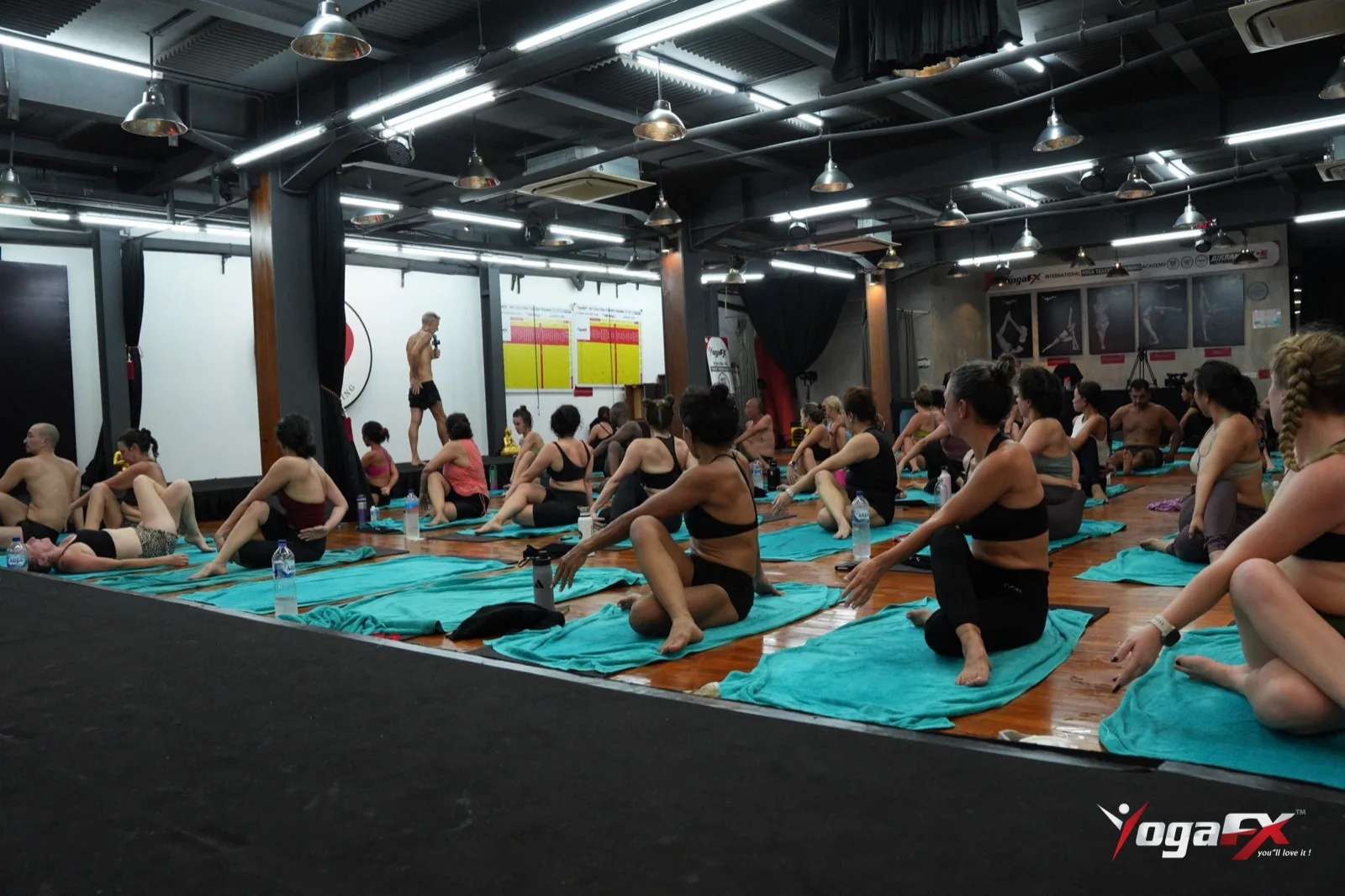
In hot yoga men vs women differences are real but small, and they are mostly about flexibility and effort, not ability. In one study, men burned about 460 calories in a 90-minute class and women about 333, at the same heart rate. Men often tolerate less stretch. A good teacher cues for the person, not the sex.
This guide comes from the training room of Mr. Ian Terry, an E-RYT 500 teacher with 12,000+ teaching hours. His trainees come from 80+ countries, and every batch has both men and women. What he teaches them first is simple: read the body in front of you, then adjust your words.
If you only want the student view of hot yoga men vs women, our teacher training site has a comparison of how men and women experience the room. This page is for a different reader. It is for the person who plans to teach, and who wants to know what to cue differently.
Hot Yoga Men vs Women: What the Research Actually Shows
Let's separate what is measured from what is assumed. Many articles on hot yoga men vs women repeat stereotypes. A few lines of data are more useful than a page of opinion, so here is what we can stand behind.
Effort and calories
Researchers at the University of Wisconsin (Porcari et al., 2014) measured healthy adults in a 90-minute Bikram class. Men burned about 460 calories on average, and women about 333. Both groups worked at roughly 80% of maximum heart rate. So the effort was high for everyone, and the calorie gap mostly reflects body size.
Stretch tolerance
A 2014 study in BMC Musculoskeletal Disorders tested 90 healthy adults, 45 men and 45 women.
Women reached 9.9 degrees further in a straight leg raise, and they rated stretch discomfort 16 mm lower on a 100 mm scale. Maximal stiffness was not different between the sexes. The authors concluded that stretch tolerance, not passive stiffness, explains hamstring extensibility, and that this link was seen only in men.
For a teacher, that matters a lot. It means a stiff man may not need a different stretch. He may need a calmer way to stay inside the stretch.
What we do not know yet
- No large trial compares hot yoga men vs women in the same room on strength, mood and injury. Most studies mix the sexes and report averages.
- Averages hide people. Some men are very flexible, and some women are very tight. Your trainee is a person, not a mean.
- A 2025 systematic review (Willmott et al.) pooled 43 studies and 942 participants and points to benefits for flexibility and well-being. It also says the evidence base is still small.
Where Men and Women Often Differ in the Hot Room
The table below mixes research with what we see in the training room. Treat it as a map of tendencies, not a rulebook. Every posture still depends on the individual.
| Area | Often seen in men | Often seen in women | A cue that helps |
|---|---|---|---|
| Forward folds | Tighter hamstrings, lower stretch tolerance, early rounding of the back. | Deeper range, sometimes too deep, with soft knees collapsing. | Bend the knees, lift the chest first, then straighten only as far as is calm. |
| Overhead and shoulder work | Tight chest and shoulders, elbows bend when arms go up. | More mobile shoulders, sometimes less control at the end of range. | Lift the arms slowly, keep the ribs down, stop where the elbows are still straight. |
| Balance postures | Strong legs but stiff ankles and hips, so the standing leg locks. | Steady hips, but a wobble when fatigue or heat builds. | Soften the standing knee and fix the eyes on one point. |
| Heat and pacing | Pushes through, skips water, hides dizziness. | More likely to rest early, sometimes feels judged for resting. | Say out loud that resting is part of the class, for everyone. |
Notice how the last row has nothing to do with muscles. In our experience, behaviour in the heat varies more by temperament than by sex. Some students hide how hot they feel. Others rest at once. A teacher who normalises resting protects both groups.
Strength, flexibility and the myth of the stiff man
The idea that men are simply stiff is only half true. The Marshall and Siegler study found no difference in maximal stiffness. So the gap was tolerance, which means it can be trained. A man who stretches calmly for a few minutes most days will usually move further within weeks.
It also means that women are not automatically safe. A very flexible student can overstretch because nothing stops her. Good cueing watches for both: the person who can't go further, and the person who goes too far.
A tale of two mats
Picture two trainees on neighbouring mats in week one. Daniel lifts weights and sits at a desk all day. Maria runs and has done yoga for years. Both are fit, so you might expect the same experience.
It isn't the same. Daniel's hamstrings stop his forward fold early, and he holds his breath. Maria folds deeply, then feels dizzy because she skipped lunch. Neither problem comes from being a man or a woman. Both come from habits, and a teacher who sees habits will cue better than one who sees sex.
That is why the hot yoga men vs women question is only a starting point. It helps you guess, but it can't replace looking. So use the research to prepare, and use your eyes to decide.
Hot Yoga for Men and Women: The First Month Compared
Newcomers of both sexes ask what the first month will feel like. The honest answer is that the heat dominates everything. After that, the differences in hot yoga for men and women become small and personal. Men who doubt the room is meant for them can start with whether men can do hot yoga.
- Week 1: everyone is surprised by the heat. Men often push too hard, and women often rest sooner. Both are fine.
- Week 2: breathing steadies. Tight students feel the back of the legs, and loose students feel the effort in the core.
- Week 3: balance postures start to hold. Stretch tolerance rises, so forward folds feel less intense.
- Week 4: most students stop comparing themselves with the room and start noticing their own progress.
If you teach, say this out loud in the first class. New students relax when they hear that the first month is about the heat, not about being good at poses.
Hot Yoga Men vs Women: Five Numbers Every Teacher Should Know
These figures come from the studies above and from our own class format. They are easy to remember, and they help you explain things to a nervous student.
The first three cards show that effort is shared. The last two show where cueing can help. The same room, the same heat and the same effort produce different experiences of stretch. That is the heart of the women vs men yoga conversation, and it is why teachers need good eyes more than good rules.
What a Future Teacher Should Cue Differently
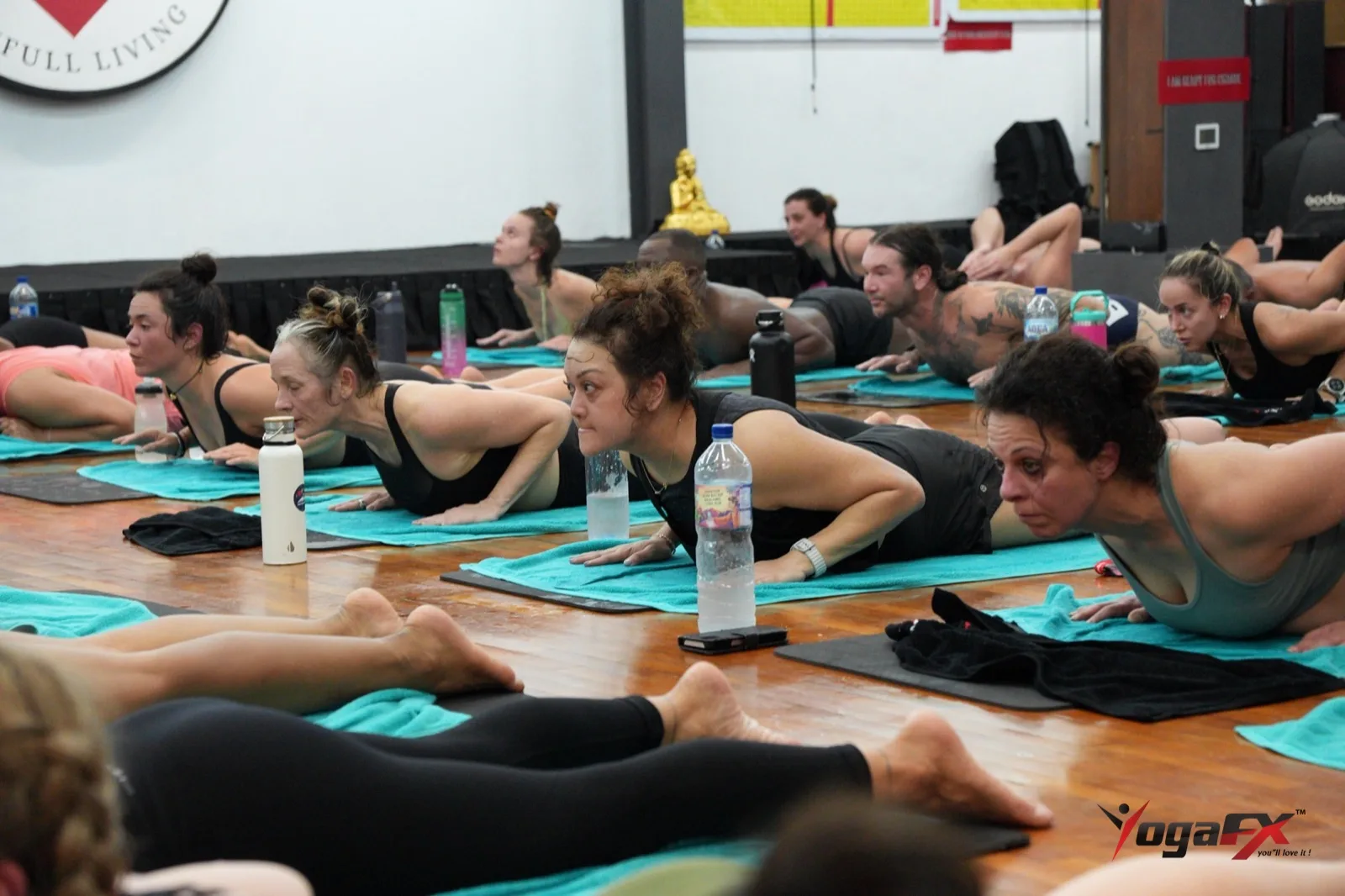
When people ask about yoga men vs women in a teaching context, they usually want one thing: what should I say? The answer is mostly the same words, delivered with attention. Still, a few habits make a big difference.
- Offer options, not corrections. Say "bend your knees if your hamstrings pull" to the whole room. Nobody feels singled out.
- Name the sensation, not the person. "You may feel a strong stretch at the back of the legs. That is normal" works for every body.
- Watch the end of range. Look for locked knees in tight students and hyperextended elbows in very flexible ones.
- Protect resting. Normalise standing still, drinking water and leaving the room.
- Keep language neutral. Avoid "ladies, do this" and "guys, do that". Use "if you are tight" and "if you are loose".
Here is a short checklist to keep on your teaching notes. It works in any room, for any mix of students.
- Scan the room from left to right before you speak.
- Name one option for tight students and one for loose students.
- Ask yourself who is quiet, because quiet students often hide struggle.
- End the posture with a rest, so heat never builds unseen.
Why neutral language wins
Sex-based cues sound helpful, but they often miss the person. A tight woman and a loose man exist in every class. If your words assume otherwise, you lose their trust. Neutral cues based on what you can see keep everyone safe and included.
This is also the standard we teach in the YogaFX MasterClass. The dialogue is scripted and the same for every student. What a trainee learns is how to watch, wait and adjust. For more on the study side, read why hot yoga often feels harder for men and the benefits men notice first. If you work full time, see hot yoga at home for working men.
Four Myths About Hot Yoga Men vs Women
Some ideas about hot yoga men vs women keep circulating, so it helps to answer them plainly. Here are four we hear most often, and what we say instead.
- "Men are too stiff for yoga." Stretch tolerance is trainable, so stiffness is a starting point, not a verdict.
- "Women don't need strength." Every posture needs strength, because balance and holding depend on it.
- "Heat affects only one sex." Heat is a load for every body, so safety advice is the same for everyone.
- "The class is built for one kind of student." The sequence is the same for all, because the teacher adapts the delivery.
When a student asks about yoga men vs women, we usually answer with a question: what do you feel in your body today? That keeps the talk practical, because feeling beats statistics in a real class.
Heat, Hormones and Honest Limits
Heat is a real load for every body. Both sexes can feel dizzy, nauseous or faint in a 40°C room, so every teacher needs the same safety script. Offer water early and often. Invite students to sit out. Remind them to leave the room if they feel unwell.
Please speak to a healthcare professional before you start hot yoga if you have a heart condition, high blood pressure, are pregnant, or take medication that affects sweating or hydration. Hormonal cycles, menopause and some conditions can change how heat feels, so personal advice matters more than any article. This page is general information, not medical advice.
What YogaFX Trainees Say About Learning to Teach
Research gives you the map. Trainees tell you how the road feels. These words come from people who trained with YogaFX, men and women alike. Their stories are teacher training reviews, not a gender study, but they show how a mixed group learns together.
Junich wrote a Google review in 2020 about the teacher who guided his group.
“He is a very passionate teacher, a great friend, a great mentor. He is always ready to help all the students.”
Junich, Google review, 2020
Ritesh left a Google review in 2019 after his training.
“Mr. Ian is one of the best teachers, I have ever met.”
Ritesh, Google review, 2019
A trainee in our 2023 YouTube review compared the course with others she had done.
“I've gone through so many yoga teacher training programs before getting into this one, and it's an actual transformation.”
A trainee in our YouTube review, 2023
Here is that short video review, if you would like to see and hear her.
From Practice to Teaching Online and in Bali
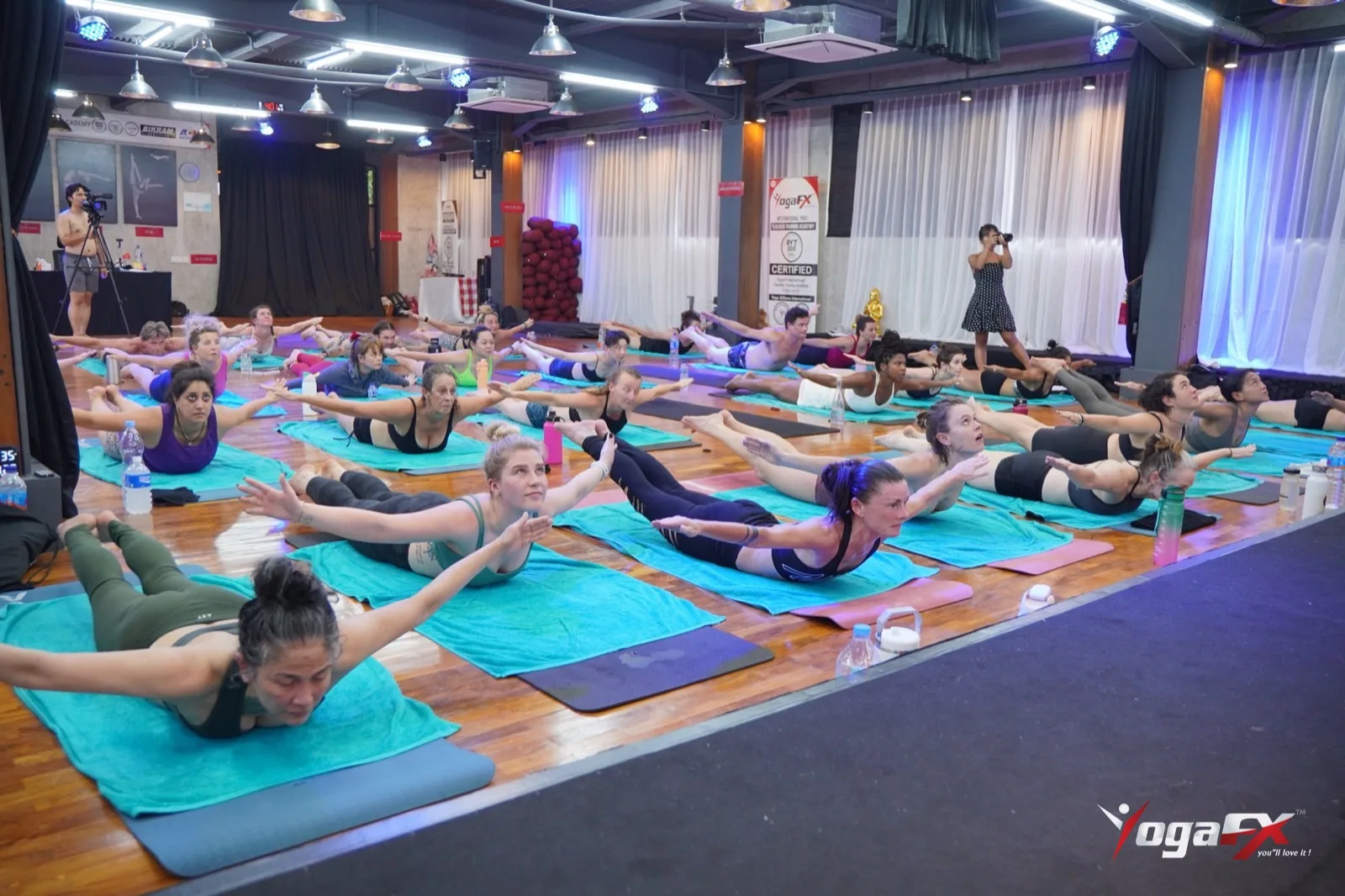
Reading a mixed room is a skill, and skills are learned in stages. YogaFX built a path where the first part happens online, around work and family, and the last part is an intensive in Bali with real students.
The Bikram Hot 26&2 Yoga Teacher Training MasterClass is a six-day hybrid course. The next batch runs from Sunday 24 January to Friday 29 January 2027 at Soham Wellness Center in Seminyak. Graduates earn a Yoga Alliance RYT 200-Hour certificate and a Bikram Hot 26&2 200-Hour International Yoga Certification.
Mr. Ian trained for five years, from 2014 to 2019, with the founder of the method.
YogaFX has graduated 1,500+ students from 80+ countries, and students have left 150 Google reviews, 50 Yoga Alliance reviews and 357 YouTube testimonials. To compare routes, read how an online yoga teacher certification works and how to train when no studio is nearby.
FAQ: Hot Yoga Men vs Women
Is hot yoga harder for men or women?
Neither, on average. In one study men and women both worked at roughly 80% of maximum heart rate in a 90-minute class. Men often tolerate less stretch, so forward folds can feel harder. Women may rest sooner. Individual fitness, flexibility and heat experience matter far more than sex.
Do men and women do the same poses in hot yoga?
Yes. The Original Hot 26&2 sequence is the same for everyone, and the dialogue is scripted. What changes is how each person adapts a posture. A teacher offers options, such as bent knees in a forward fold, so each body can work safely at its own level.
Do men burn more calories in hot yoga?
On average, yes. In a University of Wisconsin study, men burned about 460 calories in a 90-minute Bikram class and women about 333. The gap mostly reflects body size. Calories are only one measure, and the figures are averages, not promises for any one person.
Should a teacher cue men and women differently?
Mostly no. Neutral cues such as "bend your knees if your hamstrings pull" work for every body. Watch what you can see, like locked knees or overstretched elbows, and respond to that. Assumptions about sex often miss the person in front of you.
Is hot yoga safe for women who are pregnant or in menopause?
Not automatically. Heat affects pregnancy and menopause differently for each person, so speak to a doctor or midwife before attending. Many teachers advise against hot classes in pregnancy unless a healthcare professional approves. This article is general information, not medical advice.
Still have questions? Message Mr. Ian and the YogaFX team on WhatsApp and we will answer them personally.